Beware the solitons
- DP Event
- Published on 1 August 2025
- Generated on 5 October 2026
- DPE 02/25
- 2 minute read
Undesired event
1 Overview
An equipment class 2 pipelay vessel was engaged in pipelay operations in an area known for Solitons – an oceanographic phenomenon where large solitary waves of large amplitude are generated.
2 What happened?
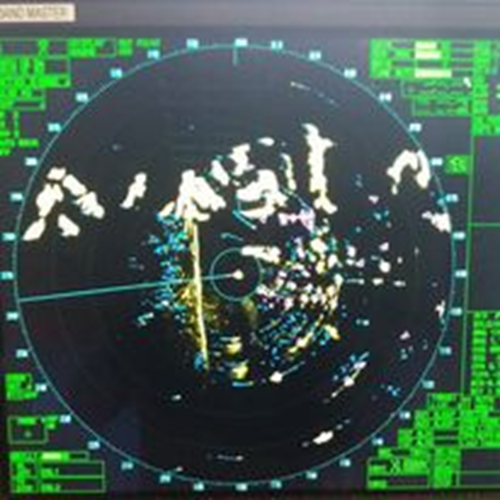
A support vessel that was operating with the pipelay vessel observed surface anomalies approximately 5 nautical miles (nm) upstream. The support vessel relayed radar imagery to the pipelay showing irregular surface banding – consistent with soliton-induced roughness.
Following standing orders and ASOG procedures the pipelay operations were immediately suspended and the pipelay vessel was purposely driven off station pre-emptively, prior to soliton arrival.
The DP system reported an excursion of approximately 9 metres from the setpoint, just within alert thresholds, as the Soliton passed the vessels location. Thruster activity spiked and the generator load increased by over 35%. The taut wire system showed inconsistent readings, and acoustic PRS began to degrade as the subsurface currents intensified.
3 Findings
The pre-emptive response likely prevented a DP incident. However, operations were delayed by 6 hours, and the event highlighted the non-existent predictive capability of standard DP models against non-linear internal waves.
4 Conclusion
The lessons learnt were:
- Early warning from support vessels can be critical.
- Radar alone may not be sufficient; a combined radar + Acoustic Doppler Current Profiler strategy is more effective.
- Standing orders and ASOG procedures must reflect soliton-specific risk scenarios.
As a result of the event presented above, IMCA has released Information Note 1710 which provides more details of what solitons are, and how to plan, predict and optimise your DP system to help ‘ride the wave’.
Latest DP incidents
-
Know your equipment, or at least where to find the answers
During an update in the Follow Target Mode, the crew noticed an anomaly with joystick control.
DPE 02/26
1 September 2026
Observation
-
New equipment, unexpected consequences
During the operation, a loss of DGNSS correction signals was experienced across multiple vessel DGNSS units.
DPE 02/26
1 September 2026
Incident
-
A chain of small failures leads to a major consequence
While conducting cargo operations on DP a vessel experienced a partial blackout caused by an unexpected shutdown of generator 3
DPE 02/26
1 September 2026
Incident
-
Holding position, losing references
While approaching a turret-moored, weather-vaning offshore installation (FPSO), in preparation for cargo operations, a DP equipment class 2 vessel experienced significant rolling of up to 15–20° due to a long-period swell close to the vessel’s natural roll period, resulting in a resonance effect
DPE 02/26
1 September 2026
Observation
-
DP drill scenario – Loss of seawater cooling pump redundancy
Exercise scenario – Loss of seawater cooling pump redundancy
DPE 02/26
1 September 2026
Drill Scenario
The case studies and observations above have been compiled from information received by IMCA. All vessel, client, and operational data has been removed from the narrative to ensure anonymity. Case studies are not intended as guidance on the safe conduct of operations, but rather to assist vessel managers, DP operators, and technical crew.
IMCA makes every effort to ensure both the accuracy and reliability of the information, but it is not liable for any guidance and/or recommendation and/or statement herein contained.
Any queries should be directed to DP team at IMCA. Share your DP incidents with IMCA online. Sign-up to receive DP event bulletins straight to your email.