Dropped object near-miss: Falling crane block
- Safety Flash
- Published on 5 February 2015
- Generated on 7 May 2026
- IMCA SF 02/15
- 3 minute read
A Member has reported an incident in which a crane wire parted and the hook block then fell to deck (approximately 15 metres) landing in close proximity to the deck crew.
What happened?
The incident occurred when a vessel was engaged in cargo operations with an offshore rig, requiring the off-loading of a food container. The rig crane was fitted with two wires; one heavy duty (which was used to off-load the container) and another wire of smaller diameter which was left hanging approximately 6 metres below the crane boom and not connected for the operation.
The rig crane attempted to lift the food container but the container was found to be too heavy, and was immediately returned to deck. Upon safe landing, the heavy duty wire was then disconnected by the deck crew. However, upon disconnection and before the deck crew had cleared the area, the crane driver started to retrieve the smaller wire instead of the heavy duty one. The smaller wire was heaved all the way up to the crane boom, at which point the hook block came into contact with the end of the boom, causing the smaller wire to part. The hook block then fell to deck and landed close to the crew on deck. There were no injuries.
Had the crane block hit anyone, the consequences could have been fatal.
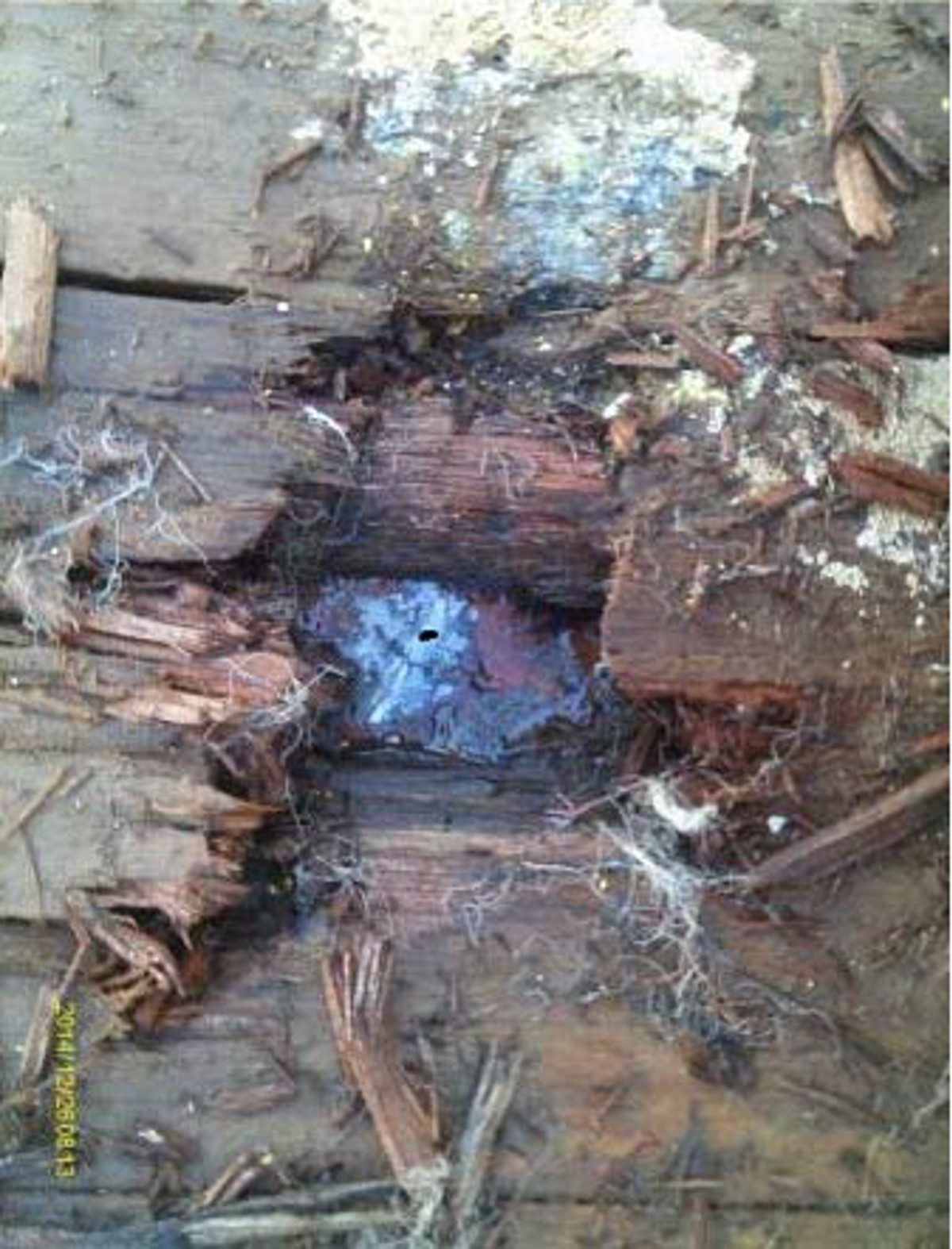
Damage to deck
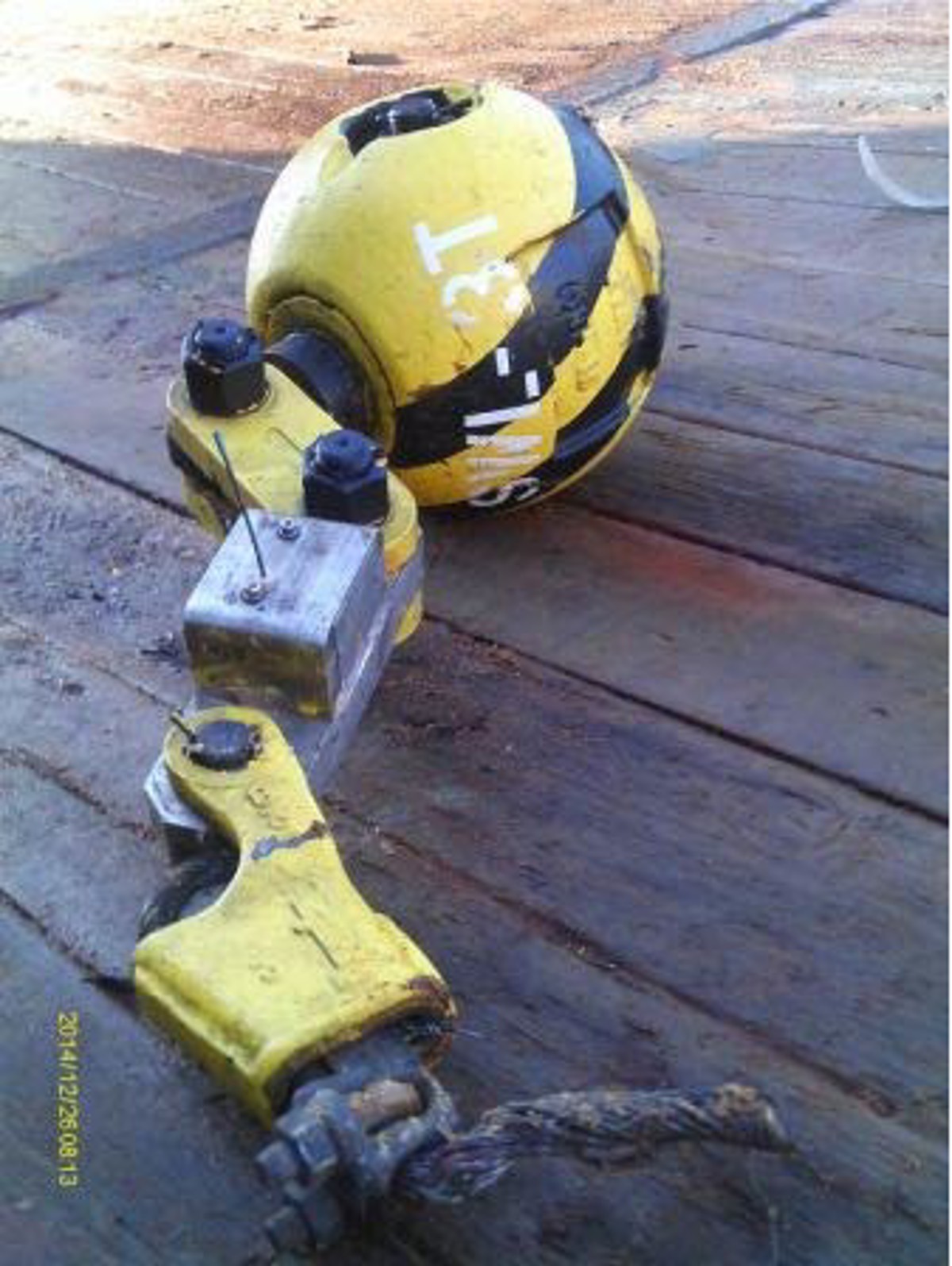
Crane block that fell
Investigation is still underway, but the following points may be noted:
- Actual damage: the crane block destroyed sections of wood planks on main deck and damaged the bunker tank top
- The rig crane’s limit switches/stops were apparently not fully operational, thereby allowing the hook block to be heaved all the way up to the boom.
Our Member took the following immediate actions:
- Time Out for Safety’ at the earliest opportunity to discuss this incident.
- emphasized the importance of a clear deck policy, and to remain clear of any suspended load or work.
- Reminded their crew to remain vigilant to human error that may affect the work being undertaken, or other works in the vicinity.
- Be aware of the operation and condition of third party equipment – see above.
- Ensure effective and immediate forms of communication were established at all times with equipment operators, to ensure safe operational practices were maintained and the Stop Work Policy could be rapidly executed and communicated if an un-safe condition occurs.
- Further inspection and testing of limit switches to ensure that no similar technical failure exists onboard;
- Emphasised the need to prepare to exercise the Stop Work Policy if third party equipment is not safe, or there are concerns about its condition and/or operation.
Members should be aware of IMCA guidance and IMCA safety promotional material on lifting equipment, as follows:
- Guidelines for lifting operations
- Lifting operations, equipment (videos and pocket card)
Related Safety Flashes
-
IMCA SF 01/13
18 January 2013
-
IMCA SF 01/12
25 January 2012
-
IMCA SF 13/11
25 November 2011
IMCA Safety Flashes summarise key safety matters and incidents, allowing lessons to be more easily learnt for the benefit of the entire offshore industry.
The effectiveness of the IMCA Safety Flash system depends on the industry sharing information and so avoiding repeat incidents. Incidents are classified according to IOGP's Life Saving Rules.
All information is anonymised or sanitised, as appropriate, and warnings for graphic content included where possible.
IMCA makes every effort to ensure both the accuracy and reliability of the information shared, but is not be liable for any guidance and/or recommendation and/or statement herein contained.
The information contained in this document does not fulfil or replace any individual's or Member's legal, regulatory or other duties or obligations in respect of their operations. Individuals and Members remain solely responsible for the safe, lawful and proper conduct of their operations.
Share your safety incidents with IMCA online. Sign-up to receive Safety Flashes straight to your email.