Winch brake failure
- Safety Flash
- Published on 2 April 2015
- Generated on 4 September 2026
- IMCA SF 05/15
- 3 minute read
A Member has reported an incident in which an ROV winch brake failed, leading to the uncontrolled movement of an ROV as approximately 800 m of umbilical ran off the winch drum in less than 90 seconds.
What happened?
The incident occurred whilst the ROV was being lowered to 1843msw depth. It was then raised to a final stopping point of 1813msw (30m off bottom), and the winch was shut down. Within moments the winch started to slip and pay out small amounts of umbilical. This quickly developed into an out of control run-away on the winch drum, resulting in all, approximately 800m of umbilical running off the winch drum in less than 90 seconds. When the winch finally stopped there was 225m (approximately 3/4 of the last layer) of umbilical left on the winch.
During those 90 seconds, the ROV control room (on the same deck as the winch) was evacuated, the bridge was notified by phone and clear communications, and the vessel was ordered to move away from any subsea assets with utmost haste. The vessel moved 18m to the north.
All electrical power to the ROV system was isolated. Due to friction, or some other unknown element, the winch drive motor caught on fire. The ROV crew extinguished the fire with portable extinguishers. The area was barricaded, a fire watch posted and all non-essential personnel except for the fire watch and his runner were cleared from the area.
There were no injuries.
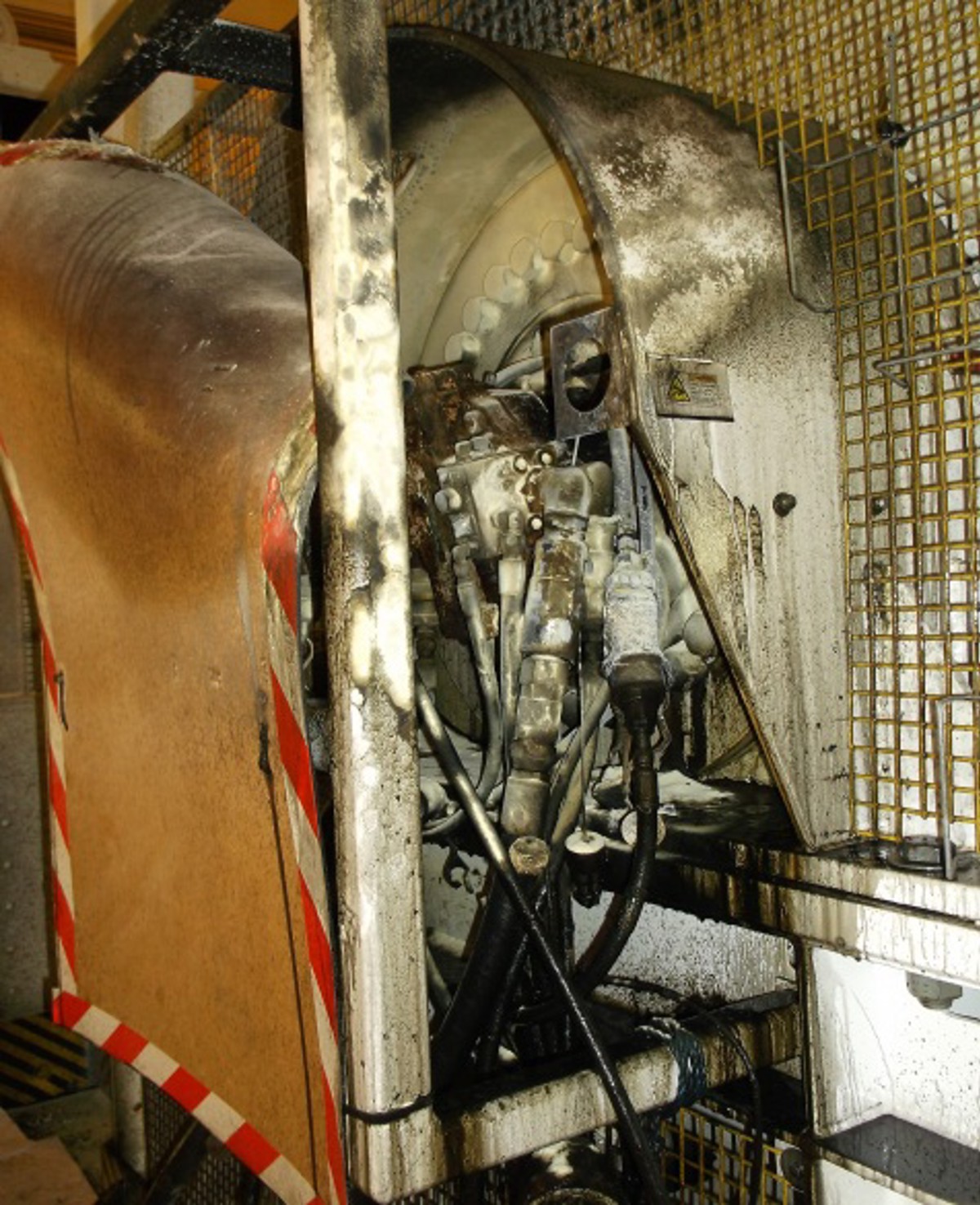
winch motor after fire
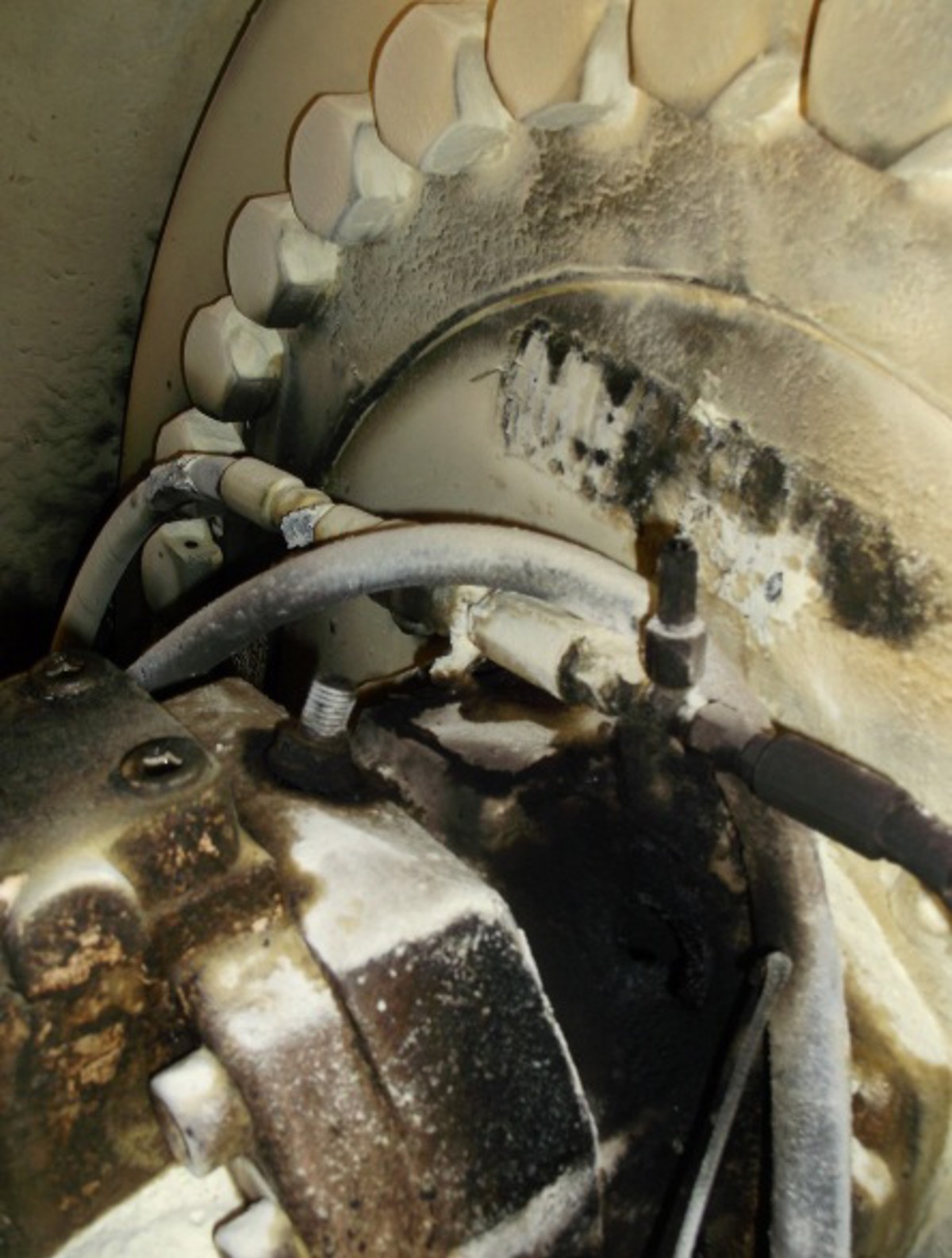
winch motor after fire
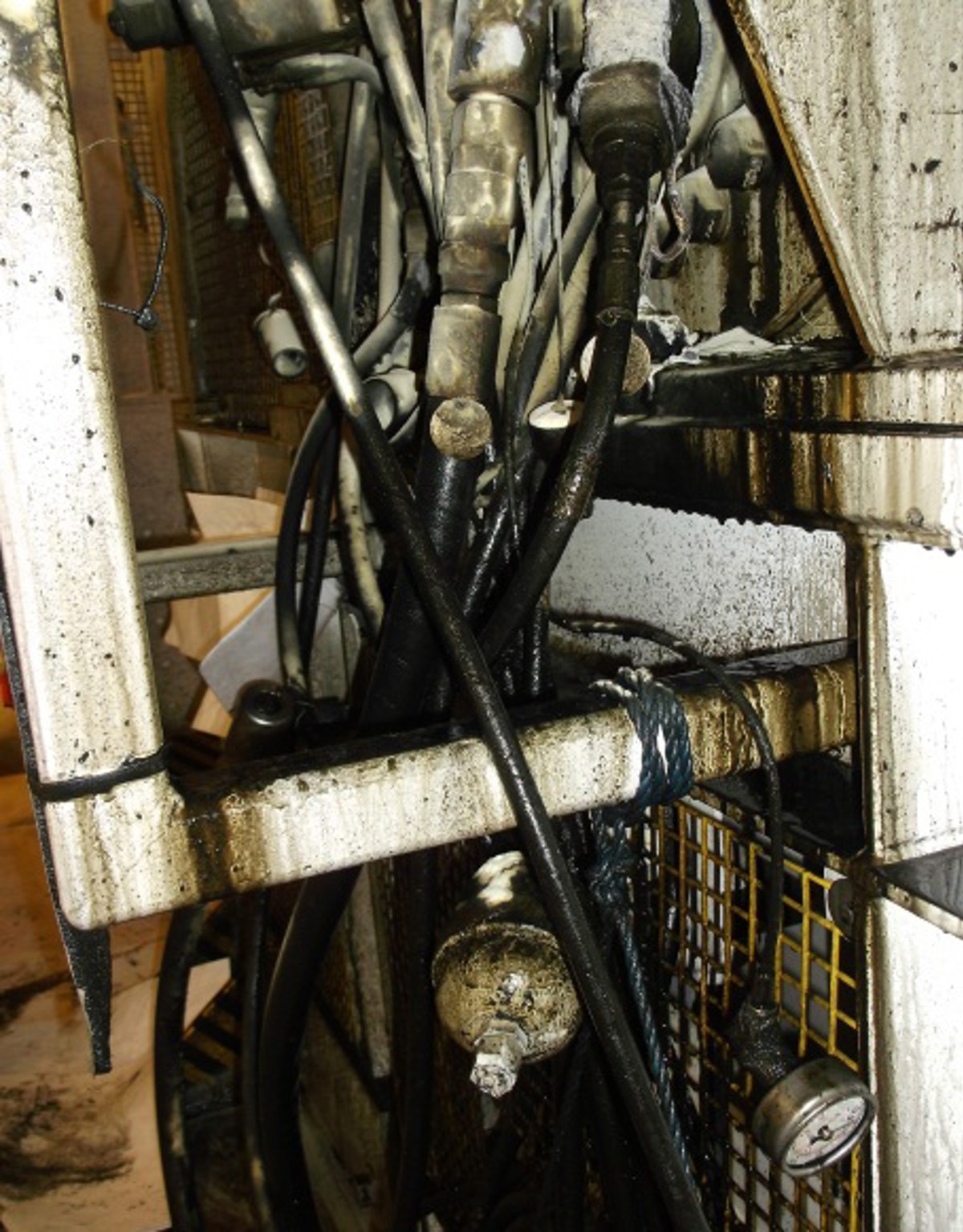
winch motor after fire
Findings
Our member’s investigation noted the following:
- A preliminary on-site investigation of the failure by the manufacturer was conducted with no conclusive root causes identified. The failed winch brake was shipped to the manufacturer for a detailed analysis to determine root cause(s).
- Following extensive testing and analysis, the manufacturer identified the most likely root cause of the run-off was probably a blockage in the winch secondary brake release line.
- Given the damage to the winch the incident investigation could not determine a definitive root cause but were able to establish through elimination a probable cause for the occurrence. A series of actions to prevent occurrence had been established these were included in the manufacturer’s technical bulletin.
Actions
The following actions were taken:
- The manufacturer released a service bulletin to all operators of winches with this type of brake advising them of two checks to perform to prevent recurrence:
- One check, the Brake Release Line Check, verifies that the release pressure was dropping in the specified time and should be performed every time the brake release line or hydraulic power unit (HPU) controls were serviced.
- The second check, the Motor-to-Brake Load Transfer Check, verifies that the load has fully transferred from the hydraulic motor to the fail-safe brake and should be performed before the HPU was purposely shut down while the winch is under load.
- One check, the Brake Release Line Check, verifies that the release pressure was dropping in the specified time and should be performed every time the brake release line or hydraulic power unit (HPU) controls were serviced.
Members may wish to refer to the following similar incidents (key words: winch, brake, failure):
- Failure of ROV lift umbilical winch brake
- Fatal incident onboard a dive support vessel
Related safety flashes
-
IMCA SF 18/09
22 December 2009
-
IMCA SF 08/01
1 August 2001
IMCA Safety Flashes summarise key safety matters and incidents, allowing lessons to be more easily learnt for the benefit of the entire offshore industry.
The effectiveness of the IMCA Safety Flash system depends on the industry sharing information and so avoiding repeat incidents. Incidents are classified according to IOGP's Life Saving Rules.
All information is anonymised or sanitised, as appropriate, and warnings for graphic content included where possible.
IMCA makes every effort to ensure both the accuracy and reliability of the information shared, but is not be liable for any guidance and/or recommendation and/or statement herein contained.
The information contained in this document does not fulfil or replace any individual's or Member's legal, regulatory or other duties or obligations in respect of their operations. Individuals and Members remain solely responsible for the safe, lawful and proper conduct of their operations.
Share your safety incidents with IMCA online. Sign-up to receive Safety Flashes straight to your email.