Permit to Work and Isolation procedure not followed
- Safety Flash
- Published on 28 February 2022
- Generated on 19 October 2026
- IMCA SF 05/22
- 3 minute read
An electrician installed fuses on a 930V DC electrical system while the system was live.
What happened?
An electrician installed fuses on a 930V DC electrical system while the system was live. Under deck carousels were mechanically and electrically isolated as a precaution for maintenance work. Several other important vessel systems were powered from the same drive cabinet. The electrical isolation was conducted by removing the fuses for the carousel drive unit.
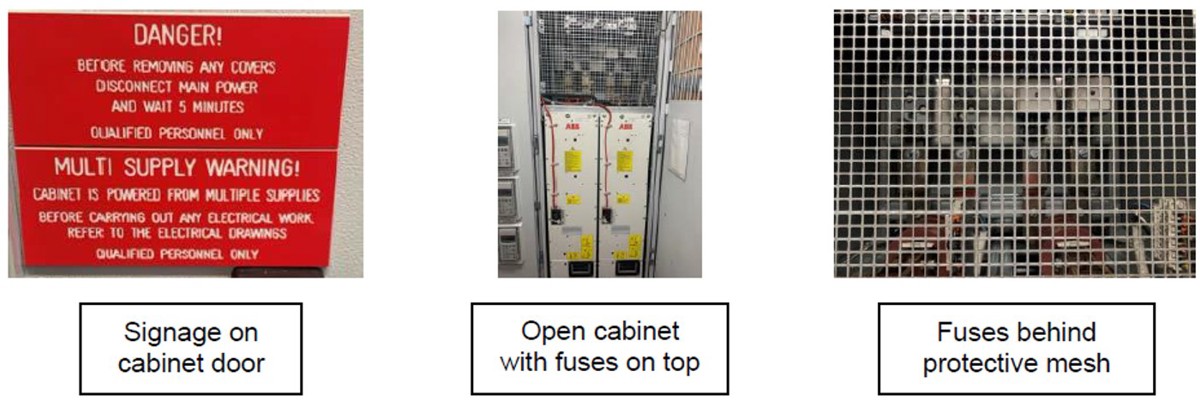
When the fuses were originally removed, the vessel was in port and none of the other vessel systems driven from this same drive cabinet were powered up. The electrician isolated the power to the entire drive cabinet by isolating the breakers and removing the fuses. The electrician then left the fuses at the bottom of the cabinet. Tags were not applied, and the cabinet was left unlocked. On completion of the maintenance work another electrician re-installed the fuses, believing the power to the cabinet was isolated. He opened the cabinet, removed the protective mesh, and installed the fuses using a fuse insertion tool rated to 1000V. When inserting the second fuse, an arc flash occurred, and the fuse blew. The electrician was not injured.
Photo
What went wrong?
- There was no Permit To Work (PTW) in place to control, communicate and co-ordinate the activities.
- Persons holding several different roles within the work team failed to understand and apply the company-required level of controls for electrical works and isolations – the isolations were incorrectly applied.
- The vessel Standard Operating Procedures (SOP) for work on the equipment powered by this drive cabinet did not consider the isolations as long-term with a requirement to protect several people working in the area.
- Procedures were not followed: the security of the electrical cabinet was not in accordance with company procedures; the electrician did not lock and tag the cabinet while the fuses were removed.
- Additional work team requirements with regard to the isolations had been discussed in the Toolbox Talk (TBT) but were not carried out.
- The electrician re-installing the fuses did not check if the power to the drive cabinet was isolated before starting work – failing to follow the instructions written on the cabinet and the work instructions given him.
Actions
- Review of procedures, work instructions, task risk assessments etc. with regard to Permit to Work and electrical isolations.
- Review of Toolbox Talks to ensure they cover all aspects of the work including PTW and isolations.
- Check that the system you are going to work on is isolated – BEFORE you start work.
- Follow the instructions and warnings signs posted in the workplace. If in doubt, ask!
Related Safety Flashes
-
IMCA SF 26/21
22 September 2021
-
-
IMCA SF 21/21
30 July 2021
-
-
IMCA SF 12/20
31 March 2020
-
IMCA Safety Flashes summarise key safety matters and incidents, allowing lessons to be more easily learnt for the benefit of the entire offshore industry.
The effectiveness of the IMCA Safety Flash system depends on the industry sharing information and so avoiding repeat incidents. Incidents are classified according to IOGP's Life Saving Rules.
All information is anonymised or sanitised, as appropriate, and warnings for graphic content included where possible.
IMCA makes every effort to ensure both the accuracy and reliability of the information shared, but is not be liable for any guidance and/or recommendation and/or statement herein contained.
The information contained in this document does not fulfil or replace any individual's or Member's legal, regulatory or other duties or obligations in respect of their operations. Individuals and Members remain solely responsible for the safe, lawful and proper conduct of their operations.
Share your safety incidents with IMCA online. Sign-up to receive Safety Flashes straight to your email.