Dropped scaffold board (kickplate) – SIF near miss
- Safety Flash
- Published on 1 October 2026
- Generated on 1 October 2026
- IMCA SF 17/26
- 2 minute read
A scaffolding kickboard was accidentally dropped falling from a height of 6.5 metres to the main deck.
What happened?
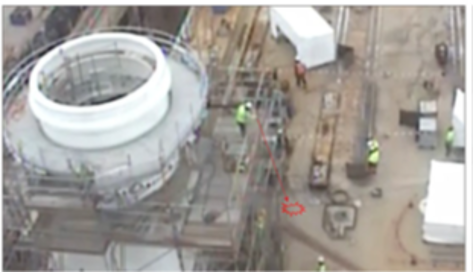
On a vessel in dry dock undergoing installation activities, a scaffolding team was in the process of completing the final adjustments to scaffolding erected around a new crane pedestal. During these final adjustments, a scaffolding kickboard weighing 2.4kg was accidentally dropped from the upper platform, falling from a height of 6.5 metres to the main deck.
Why did it happen?
- The scaffolders were using unsafe methods during the lay down process of materials.
- Simultaneous Operations (SIMOPS) were taking place, but had not been fully taken into account.
- There were no barriers erected.
What can we learn?
- Follow the procedures! Don’t take shortcuts. Safe work methods exist for a reason, in this case, to prevent dropped-object hazards.
- Ensure planning is properly coordinated and communicated in an effective way. Missing or not identifying SIMOPS shows how critical it is for all work parties to review planned activities together to understand interactions and potential conflicts.
- Do we clearly understand what other work parties are doing around us?
- Have we let everyone who needs to know, before starting work?
- Keep people out of the way! Physical barriers are primary controls to separate people from hazards (e.g., lifting zones, moving vehicles, open excavations). When they’re missing, the likelihood of a line-of-fire injury increases.
- Have we verified that all necessary barriers, signage, and exclusion zones were in place?
- Don’t forget the STOP WORK AUTHORITY – does everyone feel empowered to stop work when the process is not being followed?
Related Safety Flashes
-
IMCA SF 20/18
10 September 2018
-
-
IMCA SF 34/16
29 November 2016
IMCA Safety Flashes summarise key safety matters and incidents, allowing lessons to be more easily learnt for the benefit of the entire offshore industry.
The effectiveness of the IMCA Safety Flash system depends on the industry sharing information and so avoiding repeat incidents. Incidents are classified according to IOGP's Life Saving Rules.
All information is anonymised or sanitised, as appropriate, and warnings for graphic content included where possible.
IMCA makes every effort to ensure both the accuracy and reliability of the information shared, but is not be liable for any guidance and/or recommendation and/or statement herein contained.
The information contained in this document does not fulfil or replace any individual's or Member's legal, regulatory or other duties or obligations in respect of their operations. Individuals and Members remain solely responsible for the safe, lawful and proper conduct of their operations.
Share your safety incidents with IMCA online. Sign-up to receive Safety Flashes straight to your email.