MSF: Serious hand injury (LTI) – failure to Isolate
- Safety Flash
- Published on 18 November 2026
- Generated on 18 November 2026
- IMCA SF 20/26
- 2 minute read
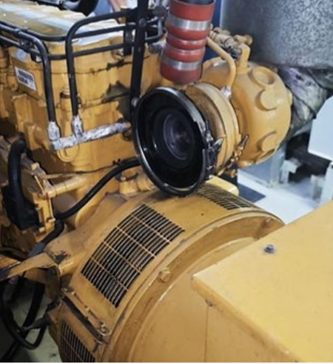
Chief Engineer attempted to adjust an air filter housing clamp, and his hand entered the exposed hazard zone, contacting the rotating turbocharger fan.
What happened?
Engineers were inspecting the emergency generator after a noise had been reported. Believing the sound originated near the turbocharger, they removed the air filter and housing to improve visibility. With the guard removed, the engine was started to observe the suspected area. During the inspection, the Chief Engineer attempted to adjust the air filter housing clamp, and his hand entered the exposed hazard zone, contacting the rotating turbocharger fan and resulting in a partial finger amputation above the last knuckle.
Why Did it Happen?
- Task seen as routine:
- The team just carried on regardless with no task-based risk assessment and no toolbox talk..
- There was no isolation, no Lock Out–Tag Out neither discussed nor actioned.
- The air filter housing was removed, exposing rotating parts, and the task continued.
- The team underestimated the risk because the activity seemed familiar and routine.
What do we learn?
- Apply positive isolations before starting work.
- Avoid working on live equipment or near open rotating machinery.
- Complacency can affect anyone, so proper planning is always essential – particularly so for experienced crews and during routine or familiar tasks.
- Isolation protects people from harm and should be considered for all tasks involving electrical, mechanical, or stored energy.
- Task-Based Risk Assessment and Toolbox Talk are not just “paperwork” or “red tape” to stop us getting the job done. They’ll save our fingers – or our lives!
- Always ensure there is specific task-based risk assessment for the work in hand, that identifies specific hazards.
- Always stop for a Toolbox Talk.
Questions to ask
- Have we fully isolated the equipment? Has it stopped moving?
- Could we be about to work near anything that is still live or moving?
- Are any guards, covers, or housings removed — and if so, have we made the job safe before continuing?
- Have we taken time to discuss the task and hazards, or are we rushing into this because it feels routine?
Members may wish to refer to:
Related Safety Flashes
-
IMCA SF 16/24
14 August 2024
-
-
IMCA SF 04/21
2 February 2021
-
IMCA Safety Flashes summarise key safety matters and incidents, allowing lessons to be more easily learnt for the benefit of the entire offshore industry.
The effectiveness of the IMCA Safety Flash system depends on the industry sharing information and so avoiding repeat incidents. Incidents are classified according to IOGP's Life Saving Rules.
All information is anonymised or sanitised, as appropriate, and warnings for graphic content included where possible.
IMCA makes every effort to ensure both the accuracy and reliability of the information shared, but is not be liable for any guidance and/or recommendation and/or statement herein contained.
The information contained in this document does not fulfil or replace any individual's or Member's legal, regulatory or other duties or obligations in respect of their operations. Individuals and Members remain solely responsible for the safe, lawful and proper conduct of their operations.
Share your safety incidents with IMCA online. Sign-up to receive Safety Flashes straight to your email.