Battery power bank explodes in cabin
- Safety Flash
- Published on 17 March 2026
- Generated on 17 March 2026
- IMCA SF 05/26
- 2 minute read
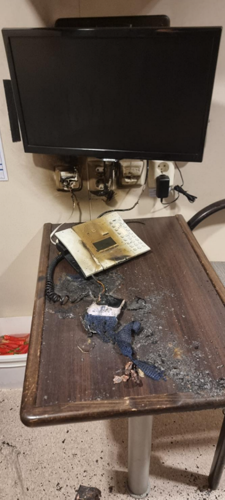
On a vessel, a power bank exploded and caught fire at night whilst it was being charged.
What happened?
The crew member to whom it belonged was woken up by the explosion and started to extinguish the fire with a soaked towel. A “pre-warning” fire alarm sounded on the bridge and crew proceeded to the cabin to investigate the alarm, but the fire was already put out. There was minor damage to fittings and furniture in the cabin.
This had the potential for escalation to a larger cabin fire, smoke damage to adjacent areas, activation of fire systems, loss of accommodation, and possible injury from burns or smoke inhalation. The fire was extinguished. The crew member reacted quickly and smothered the fire with a wet towel.
What went wrong?
Our member permits the charging of power banks — and all personal electrical equipment — only when supervised or watched. Our member prohibits unsupervised charging of power banks and all personal electrical equipment on their vessels.
Power banks and chargers sourced from third-party or uncertified suppliers may be unsafe and pose a serious hazard. Our member in this instance permits only CE-approved personal electrical devices on board their vessels.
Lessons to learn
- Leaving USB chargers and battery power banks on charge unattended should be avoided at all times, both at work and in the home.
- Charging equipment – mains plugs, mains adapters, USB cabling, and battery banks should be certified equipment sourced from a reputable supplier. Poor quality uncertified equipment of this sort obtained at modest cost can be potentially hazardous – not only “buy cheap, pay twice” as “buy cheap, maybe cause a fire”!
Related Safety Flashes
-
IMCA SF 12/25
3 July 2025
-
IMCA SF 09/22
8 April 2022
-
IMCA SF 28/23
6 December 2023
-
-
IMCA SF 16/16
27 June 2016
IMCA Safety Flashes summarise key safety matters and incidents, allowing lessons to be more easily learnt for the benefit of the entire offshore industry.
The effectiveness of the IMCA Safety Flash system depends on the industry sharing information and so avoiding repeat incidents. Incidents are classified according to IOGP's Life Saving Rules.
All information is anonymised or sanitised, as appropriate, and warnings for graphic content included where possible.
IMCA makes every effort to ensure both the accuracy and reliability of the information shared, but is not be liable for any guidance and/or recommendation and/or statement herein contained.
The information contained in this document does not fulfil or replace any individual's or Member's legal, regulatory or other duties or obligations in respect of their operations. Individuals and Members remain solely responsible for the safe, lawful and proper conduct of their operations.
Share your safety incidents with IMCA online. Sign-up to receive Safety Flashes straight to your email.