Poor maintenance and subsequent failure of welding equipment
- Safety Flash
- Published on 19 June 2009
- Generated on 7 October 2026
- IMCA SF 08/09
- 2 minute read
During a recent mobilisation on a Member’s vessel, sub-contractors were burning and welding sea fastenings on the main deck.
What happened?
Following a report that flames were coming from the contractors’ acetylene tank regulator situated inside the holding gas quad, a small fire was extinguished at the regulator, which was then cooled and removed for inspection (see Figure 1).
On examination it was found that thread tape was being used in all the connections on the contractors’ equipment.


Figure 7 – Welder’s burnt hand following oxygen/hydrocarbon fire at leaky hose clamp

Figure 8 – Welder’s burnt hand following oxygen/hydrocarbon fire at leaky hose clamp
Further incidents with welding equipment on the same vessel were:
- A ship welding cable was found to be smouldering at a connection point.
- A midway cable connector was found arcing and smoking during deck welding operations.
- A nozzle head was found detached from an oxy-acetylene torch.
The company would like to highlight the potential hazards of lack of control and maintenance of ship’s and sub-contractors’ welding equipment, as there have been a number of incidents involving welding equipment in a poor state of repair and being used whilst unfit for purpose onboard recently.
Members are also referred to the following incident report issued by the Marine Safety Forum regarding a further welding incident.
It highlights an incident involving a welder who was adjusting the pressure on an oxygen regulator. The welder had oil on his hand and there was an oxygen leak from the hose clamp. As a result the welder’s hand was badly burnt. Oxygen under pressure and hydrocarbons (oil and grease) can react violently, resulting in explosions, fire and injury to personnel and damage to property. Never allow oil or grease or any organic matter to come into contact with oxygen under pressure.
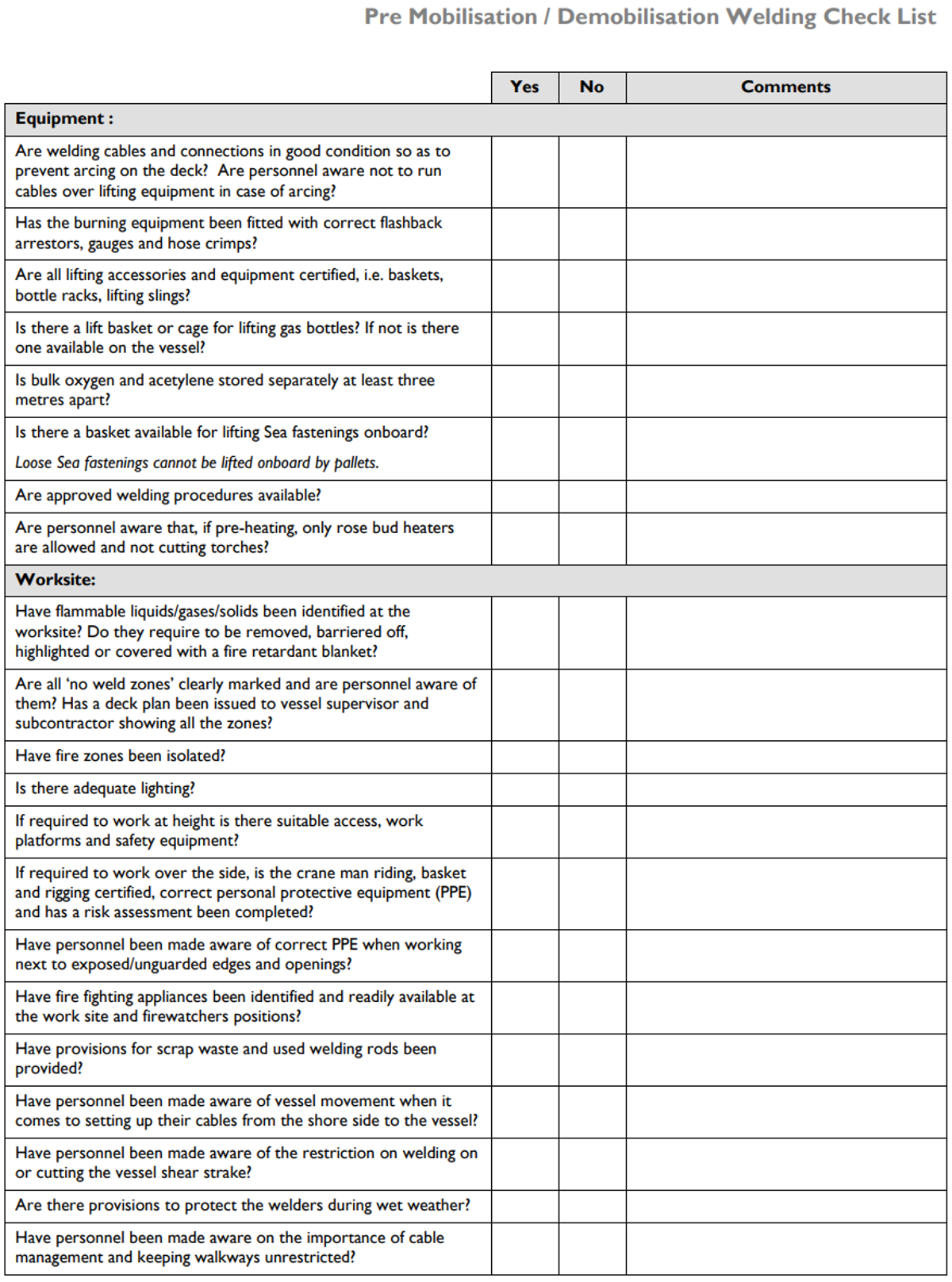
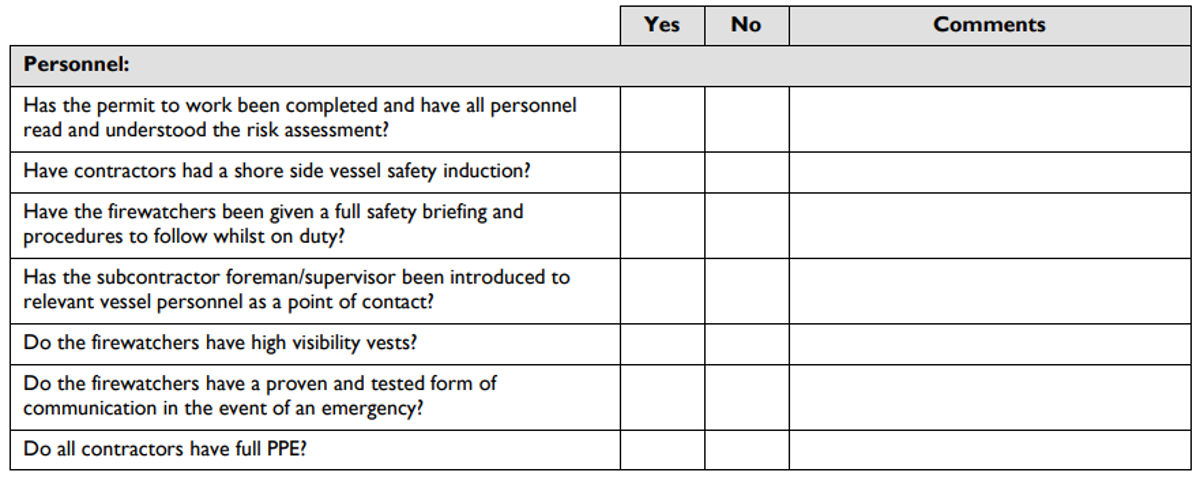
A Member has provided the accompanying checklist for welding equipment which may be useful to Members.
IMCA Safety Flashes summarise key safety matters and incidents, allowing lessons to be more easily learnt for the benefit of the entire offshore industry.
The effectiveness of the IMCA Safety Flash system depends on the industry sharing information and so avoiding repeat incidents. Incidents are classified according to IOGP's Life Saving Rules.
All information is anonymised or sanitised, as appropriate, and warnings for graphic content included where possible.
IMCA makes every effort to ensure both the accuracy and reliability of the information shared, but is not be liable for any guidance and/or recommendation and/or statement herein contained.
The information contained in this document does not fulfil or replace any individual's or Member's legal, regulatory or other duties or obligations in respect of their operations. Individuals and Members remain solely responsible for the safe, lawful and proper conduct of their operations.
Share your safety incidents with IMCA online. Sign-up to receive Safety Flashes straight to your email.