Corrosion cracking of strain-hardened type 304 stainless steel bolts
- Safety Flash
- Published on 9 May 2018
- Generated on 14 October 2026
- IMCA SF 10/18
- 2 minute read
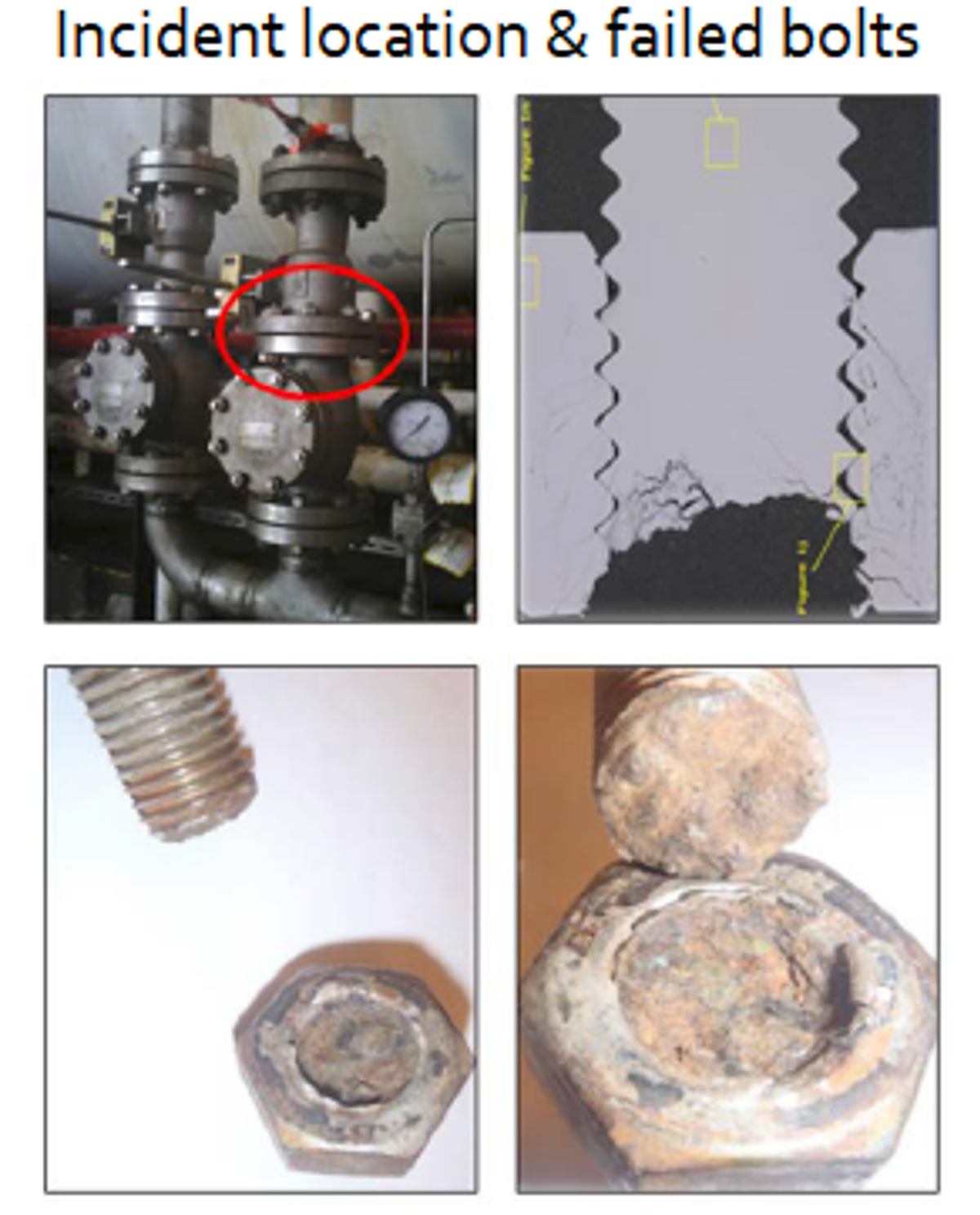
The International Association of Oil & Gas Producers (IOGP) has published Safety Alert #297 relating to the unexpected failure of certain kinds of strain-hardened Type 304 stainless steel bolts, (ASTM A193 B8, Class 2).
What happened?
The failure occurred at an offshore facility during a pneumatic leak test of gas piping exiting a test separator. The bolts that failed were operating at temperatures below 50°C. The failure has been attributed to chloride-induced stress corrosion cracking (CISCC).
The IOGP notes that:
“strain-hardening austenitic stainless-steel nuts and bolts to increase their strength may increase their sensitivity to CISCC and reduce their safe upper temperature limit. Other factors such as aggressive environments (e.g. offshore and coastal facilities and areas exposed to wet deluge testing) and increased stress/strain may also increase susceptibility to CISCC.”
What actions were taken? What lessons were learned?
The IOGP’s intent in sharing this is to help mitigate the risk of such failures occurring elsewhere in new or existing facilities. The following corrective actions and recommendations were made:
- Consider undertaking a desktop review to identify the number and location of Type 304/304L(B8) stainless steel nuts and bolts exposed to the marine environment.
- Consider conducting a visual survey to confirm the number and location of the nuts and bolts identified through the desktop review.
- Consider developing a prioritized plan to replace the nuts and bolts identified above with suitable nuts and bolts.
- Consider arranging for the disposal of all Type 304/304L nuts and bolts held in storage, both on site and off site.
Related Safety Flashes
-
IMCA SF 21/16
10 August 2016
-
IMCA SF 21/15
7 December 2015
IMCA Safety Flashes summarise key safety matters and incidents, allowing lessons to be more easily learnt for the benefit of the entire offshore industry.
The effectiveness of the IMCA Safety Flash system depends on the industry sharing information and so avoiding repeat incidents. Incidents are classified according to IOGP's Life Saving Rules.
All information is anonymised or sanitised, as appropriate, and warnings for graphic content included where possible.
IMCA makes every effort to ensure both the accuracy and reliability of the information shared, but is not be liable for any guidance and/or recommendation and/or statement herein contained.
The information contained in this document does not fulfil or replace any individual's or Member's legal, regulatory or other duties or obligations in respect of their operations. Individuals and Members remain solely responsible for the safe, lawful and proper conduct of their operations.
Share your safety incidents with IMCA online. Sign-up to receive Safety Flashes straight to your email.