Some positive findings
- Safety Flash
- Published on 28 May 2026
- Generated on 11 October 2026
- IMCA SF 10/26
- 2 minute read
- Controlled Contractor Induction Process
- Effective Gangway Induction and Documentation Control
- Safe Positioning and Good Communication During Lifting Operations
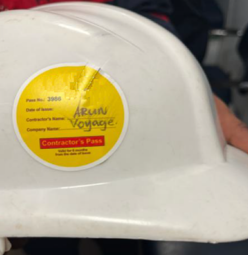
Controlled Contractor Induction Process
A centralized induction process ensures all contractors working on a vessel or at a site, are properly briefed before starting work. Upon completion, they receive clearly identifiable induction stickers for easy verification on site. This strengthens compliance, enhances safety, and demonstrates commitment to a well-controlled working environment.
Members may wish to refer to:
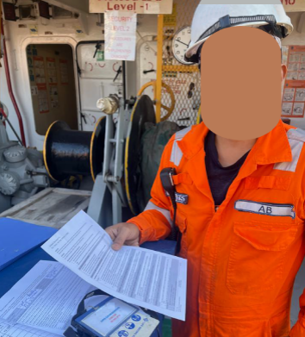
Effective Gangway Induction and Documentation Control
On a vessel alongside, crew demonstrated a high standard of safety awareness by effectively delivering visitor induction at the gangway. Relevant policies, procedures, and induction checklists were readily available and properly maintained at the gangway station. This ensured that personnel boarding the vessel could be briefed on safety requirements and vessel rules prior to access, supporting strong access control and promoting a safe working environment onboard.
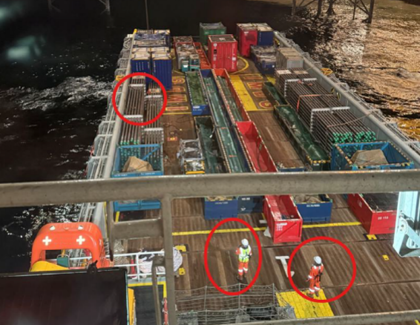
Safe Positioning and Good Communication During Lifting Operations
Lifting crew maintained a safe distance from moving cargo during deck lifting operations. Good use of hand tools was observed to guide the load and minimize potential cargo impact. This demonstrates strong safety awareness and adherence to safe lifting practices.
Members may wish to refer to:
- IMCA HSS 019 Guidelines for lifting operations
IMCA Safety Flashes summarise key safety matters and incidents, allowing lessons to be more easily learnt for the benefit of the entire offshore industry.
The effectiveness of the IMCA Safety Flash system depends on the industry sharing information and so avoiding repeat incidents. Incidents are classified according to IOGP's Life Saving Rules.
All information is anonymised or sanitised, as appropriate, and warnings for graphic content included where possible.
IMCA makes every effort to ensure both the accuracy and reliability of the information shared, but is not be liable for any guidance and/or recommendation and/or statement herein contained.
The information contained in this document does not fulfil or replace any individual's or Member's legal, regulatory or other duties or obligations in respect of their operations. Individuals and Members remain solely responsible for the safe, lawful and proper conduct of their operations.
Share your safety incidents with IMCA online. Sign-up to receive Safety Flashes straight to your email.