Emergency escape hatch found blocked
- Safety Flash
- Published on 20 August 2026
- Generated on 5 October 2026
- IMCA SF 15/26
- 2 minute read
Emergency escape hatch to the deck could not be opened.
What happened?
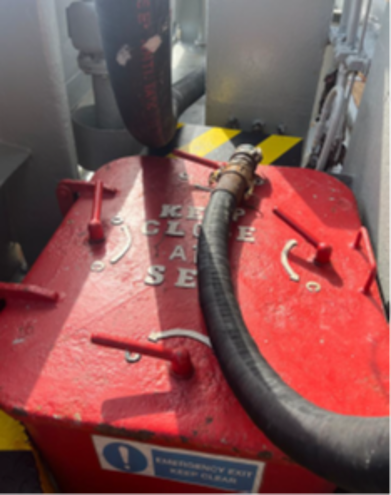
During a management visit walk-around, an attempt was made to exit the steering room through the emergency escape hatch to the deck. However, the hatch could not be opened. After checking the hatch from the deck side, it was found that a fuel hose had been left on top of the emergency exit hatch and obstructed the hatch cover and prevented it from being opened. This created a serious unsafe condition, as personnel inside the steering room may have been unable to escape quickly in the event of an emergency.
Why did it happen?
- Post-operation housekeeping and checks were not effective or sufficient.
- Routine activity was carried out without sufficient thought to the follow-up safety requirements. After offshore transfer, the fuel hose was left on top of the emergency hatch instead of being returned to its designated storage location.
- Temporary placement of equipment on the hatch was accepted without considering emergency escape access.
- Previous regular walk-arounds had not identified this unsafe condition, indicating they were not effective.
What do we learn?
- A routine job is not complete until all equipment is removed, secured, and the area is restored to a safe condition.
- Temporary placement of hoses or equipment can become a serious emergency-access hazard if not challenged.
- Walk-arounds and audits must be purposeful and thorough: check critical safety barriers such as escape routes, hatches, firefighting equipment, and access ways.
- Emergency escape arrangements should be verified practically on regular basis, not only visually. Open the hatch!
- Clear ownership is required after transfer operations: it should be clear who is responsible for confirming hose recovery, stowage, and area clearance. Small housekeeping failures can create high-consequence risks during an emergency.
Related Safety Flashes
-
IMCA SF 02/23
11 January 2023
-
-
IMCA SF 12/21
27 April 2021
-
-
IMCA SF 20/25
7 November 2025
-
IMCA Safety Flashes summarise key safety matters and incidents, allowing lessons to be more easily learnt for the benefit of the entire offshore industry.
The effectiveness of the IMCA Safety Flash system depends on the industry sharing information and so avoiding repeat incidents. Incidents are classified according to IOGP's Life Saving Rules.
All information is anonymised or sanitised, as appropriate, and warnings for graphic content included where possible.
IMCA makes every effort to ensure both the accuracy and reliability of the information shared, but is not be liable for any guidance and/or recommendation and/or statement herein contained.
The information contained in this document does not fulfil or replace any individual's or Member's legal, regulatory or other duties or obligations in respect of their operations. Individuals and Members remain solely responsible for the safe, lawful and proper conduct of their operations.
Share your safety incidents with IMCA online. Sign-up to receive Safety Flashes straight to your email.