Bunker hose obstructing emergency exit
- Safety Flash
- Published on 7 November 2025
- Generated on 5 October 2026
- IMCA SF 20/25
- 2 minute read
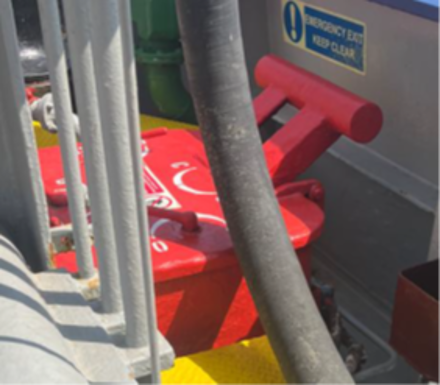
On an offshore vessel, a bunker hose was discovered routed in a way that partially obstructed the stern emergency exit hatch.
What happened?
The heavy hose lay over the corner of the hatch cover. It proved impossible to lift the hatch with the hose laid against it, and it would certainly have been impossible to open the hatch in an emergency situation. This created a very serious safety hazard by potentially delaying or blocking emergency egress.
How could they have done things better?
- They could have planned the routing of the hose.
- There could have been better supervision of the crew doing the work.
- They could have had a better awareness of the need to consider emergency access requirements.
- Engine room escape, and the need to discuss where to route the hose in this context, could easily be added to the risk assessment and toolbox talk for bunkering.
What were the lessons?
- To keep emergency exits clear at all times – there’s no exceptions, ever.
- Stop and have a quick visual check during all deck operations – could we be blocking any emergency exits?
- Can we install physical barriers or signage to demarcate emergency escape paths clearly and prevent accidental obstruction?
Related Safety Flashes
-
IMCA SF 02/23
11 January 2023
-
-
IMCA SF 26/21
22 September 2021
-
IMCA SF 12/21
27 April 2021
-
IMCA Safety Flashes summarise key safety matters and incidents, allowing lessons to be more easily learnt for the benefit of the entire offshore industry.
The effectiveness of the IMCA Safety Flash system depends on the industry sharing information and so avoiding repeat incidents. Incidents are classified according to IOGP's Life Saving Rules.
All information is anonymised or sanitised, as appropriate, and warnings for graphic content included where possible.
IMCA makes every effort to ensure both the accuracy and reliability of the information shared, but is not be liable for any guidance and/or recommendation and/or statement herein contained.
The information contained in this document does not fulfil or replace any individual's or Member's legal, regulatory or other duties or obligations in respect of their operations. Individuals and Members remain solely responsible for the safe, lawful and proper conduct of their operations.
Share your safety incidents with IMCA online. Sign-up to receive Safety Flashes straight to your email.