MSF: Manual Handling Injury During Bulk Hose Operations
- Safety Flash
- Published on 4 May 2022
- Generated on 25 October 2026
- IMCA SF 11/22
- 2 minute read
The Marine Safety Forum (MSF) has published Safety Alert 22/07 regarding an incident where a crewman was injured during hose handling operations.
What happened?
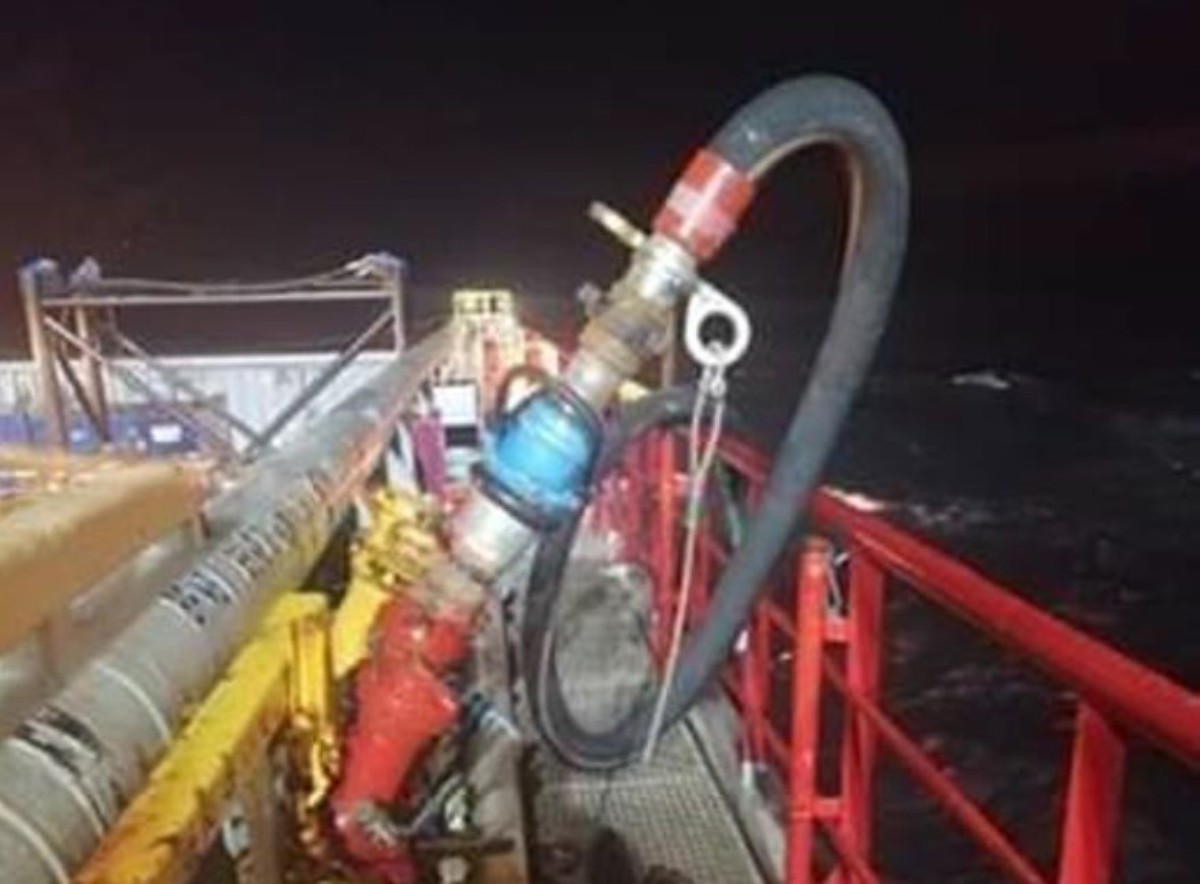
The incident occurred when a vessel was preparing for bulk cargo operations at an offshore installation. The installation crane operator lowered a bulk hose with dry break connection to the vessel where the crew were standing by to connect. Once received, the crew attempted to connect the dry break connection to the midships manifold on top of the safe haven, but the hose was too heavy to manoeuvre due to residual liquid inside. The crew further struggled to connect due to the angle of the vessel manifold and an awkward series of rigid connectors and adapters on the hose end. The crewmember was forced to put the hose over his shoulder and raise onto the balls of his feet to line up the connecting parts, resulting in a muscle sprain injury to his right calf muscle. The crewmember required first aid attention and a period of restricted work duties.
What went wrong?
The crewmember was forced into an awkward manual handling position causing additional strain and overexertion due to the following contributing factors:
- The angle of the vessel manifold in relation to the connections, deck and surrounding pipework.
- The length of the hose end including a series of rigid connectors and adapters.
- The weight of the hose due to residual liquid inside the hose length.
Hose connections are a common weak link and most likely to experience fatigue which could result in a leak. An increased number of connections and adapters, increases the risk of manual handling injury to crew and environmental pollution. Good practice would suggest that the number of connections on the hose should be kept to a minimum and efforts ought be made to drain back the liquid contents of the hose on completion of operations and prior to transfer.
Actions
- Reviewed manifold arrangement and made proposal for modification and improvement on other similar vessels.
- Suggested to installation operator that they
- Review the hose connection arrangement with opportunity for improvements.
- Review internal procedures for draining back hoses.
- Proposed recommendations to be included in the review of relevant chapter of the Guidelines for Offshore Marine Operations (GOMO).
Related Safety Flashes
-
IMCA SF 14/21
20 May 2021
-
-
IMCA SF 11/21
16 April 2021
-
IMCA Safety Flashes summarise key safety matters and incidents, allowing lessons to be more easily learnt for the benefit of the entire offshore industry.
The effectiveness of the IMCA Safety Flash system depends on the industry sharing information and so avoiding repeat incidents. Incidents are classified according to IOGP's Life Saving Rules.
All information is anonymised or sanitised, as appropriate, and warnings for graphic content included where possible.
IMCA makes every effort to ensure both the accuracy and reliability of the information shared, but is not be liable for any guidance and/or recommendation and/or statement herein contained.
The information contained in this document does not fulfil or replace any individual's or Member's legal, regulatory or other duties or obligations in respect of their operations. Individuals and Members remain solely responsible for the safe, lawful and proper conduct of their operations.
Share your safety incidents with IMCA online. Sign-up to receive Safety Flashes straight to your email.