Head Injury in Engine Room
- Safety Flash
- Published on 14 August 2025
- Generated on 5 October 2026
- IMCA SF 14/25
- 2 minute read
A Chief Engineer sustained a head laceration injury.
What happened?
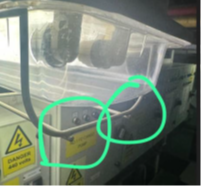
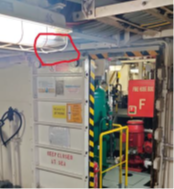
A Chief Engineer sustained a head laceration injury after accidentally striking his head on the sharp edge of a lighting protection grille rod installed at a height of 168 cm in the engine room.
 |
 |
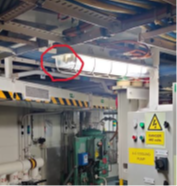 |
Location of lighting and lighting protection grille rod hazards.
Why did it happen?
- The head-room was low, and the lighting protection grille was lower still at 168 cm above deck, posing a physical hazard at head level.
- The “protective” grille was itself harmful, with sharp, unprotected rod ends which created a risk of laceration or impact injury.
- No adequate PPE (safety helmet) was worn at the time of the impact, increasing injury severity.
- This obvious hazard was overlooked during installation and routine checks following installation.
Learning
- Consider a hazard hunt to identify all snagging points (risk to head/body)
- Could there be some you hadn’t thought of, or that were missed the first time around?
- Reassess familiar spaces, not just obvious major equipment areas. What about the mess, the corridor in the accommodation etc etc.
- Can the hazard be engineered or designed out – that’s ideal but not always practical;
- Can some form of protective pad be applied?
- Can sharp edges or low-hanging objects be appropriately marked?
- Does everyone know about the hazard? Is it worth a reminder at the tool box talk? “Watch out when you go past here, there’s a low bit where you have to duck to get through.”
- Think through hazard awareness and reiterate PPE use (such as helmets in machinery spaces).
Related Safety Flashes
-
IMCA SF 13/21
6 May 2021
-
IMCA SF 06/19
5 April 2019
-
-
IMCA SF 06/19
5 April 2019
-
-
IMCA SF 09/20
6 March 2020
-

IMCA Safety Flashes summarise key safety matters and incidents, allowing lessons to be more easily learnt for the benefit of the entire offshore industry.
The effectiveness of the IMCA Safety Flash system depends on the industry sharing information and so avoiding repeat incidents. Incidents are classified according to IOGP's Life Saving Rules.
All information is anonymised or sanitised, as appropriate, and warnings for graphic content included where possible.
IMCA makes every effort to ensure both the accuracy and reliability of the information shared, but is not be liable for any guidance and/or recommendation and/or statement herein contained.
The information contained in this document does not fulfil or replace any individual's or Member's legal, regulatory or other duties or obligations in respect of their operations. Individuals and Members remain solely responsible for the safe, lawful and proper conduct of their operations.
Share your safety incidents with IMCA online. Sign-up to receive Safety Flashes straight to your email.