LTI – Struck when anchor wire end pulled free of drum clamps
- Safety Flash
- Published on 4 July 2022
- Generated on 27 October 2026
- IMCA SF 16/22
- 2 minute read
A person was seriously injured when he was struck by the end of a 58mm anchor wire.
What happened?
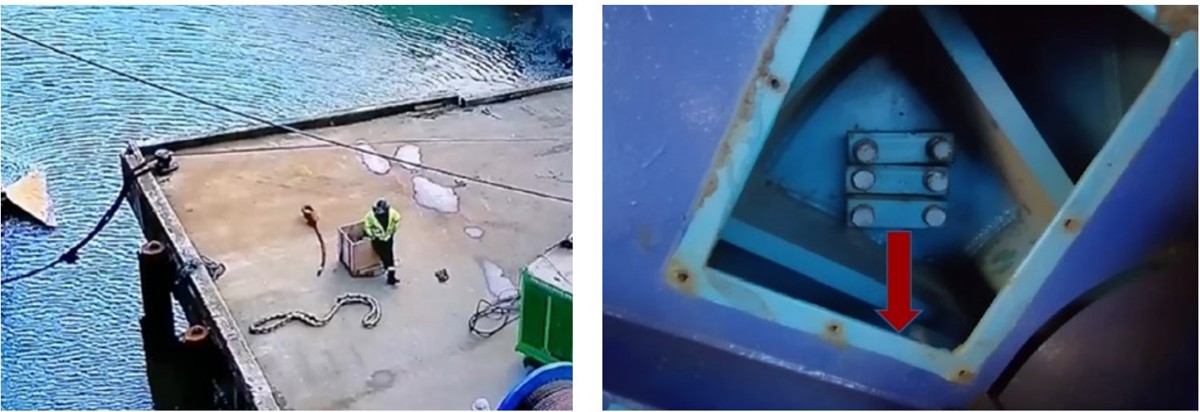
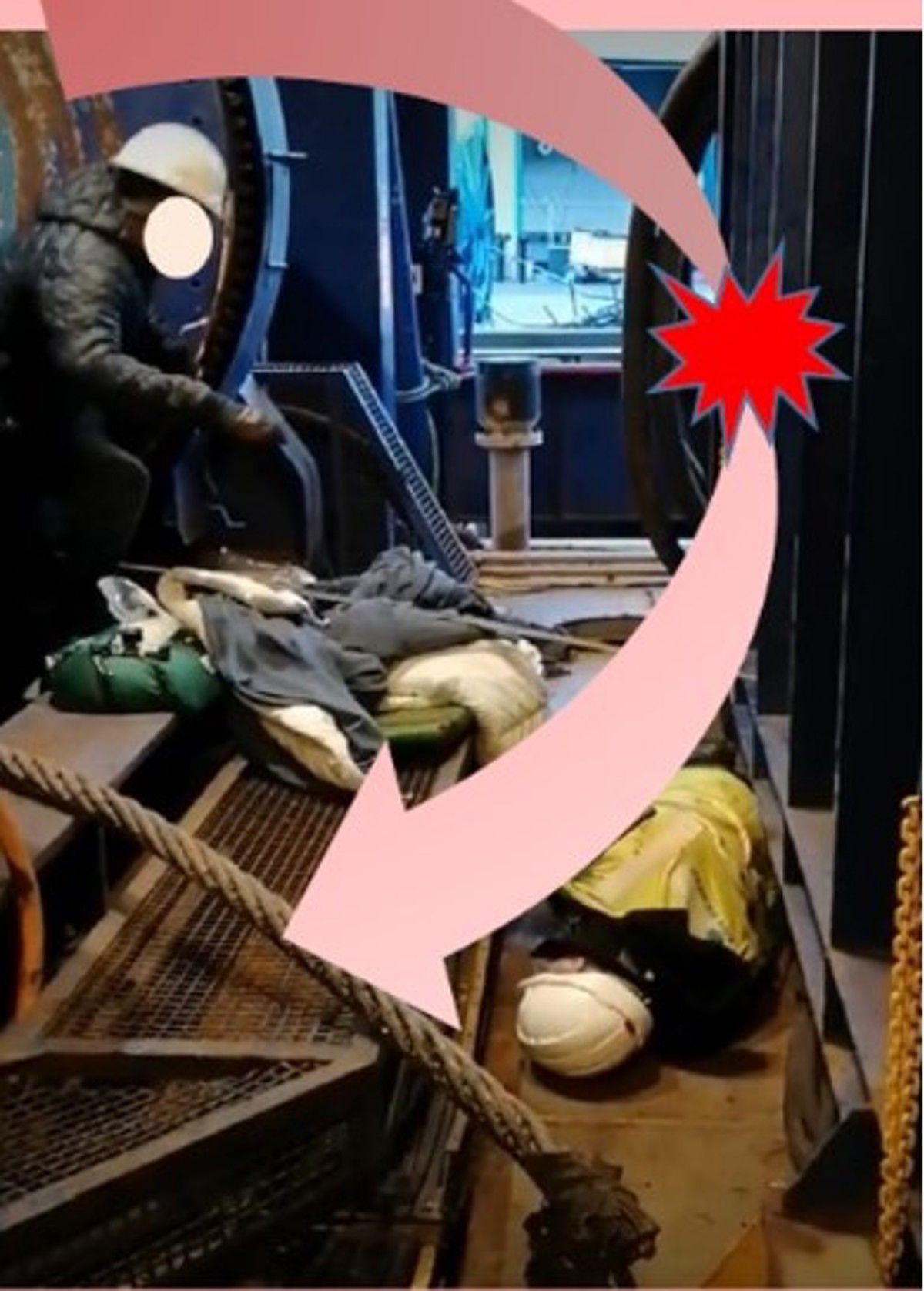
The incident occurred when crew were working on replacing out several 58mm anchor wires. The injured person was walking behind an anchor winch which had a single turn of wire remaining on it. The vessel moved off the quay. Tension came on the wire, which was connected to a spooler ashore. The stoppers in use failed, and the wire end pulled free of the already loosened clamps, whipping over the drum. He was struck across the shoulders/lower neck and suffered several skull fractures when he was pushed into an adjacent bulkhead by the impact, before falling to the deck semi-conscious.
What went right?
- The crew had safely replaced three of the 58mm wires over the previous five days without incident.
- The first aid and subsequent hospital care were excellent, and the injured person left hospital three days later with no lasting ill effects.
What went wrong?
- A generic ‘mooring operations’ risk assessment was being used. Toolbox Talks had been conducted and documented, but these were based around a clearly inadequate risk assessment (and nobody questioned it during the TBT).
- The stopper arrangement was inadequate. Wires must only ever be stoppered to a suitable strong point using chain stoppers, as detailed in the Code of safe working practices for merchant seafarers (COSWP) 2021.
- Safety chains had not been deployed behind the winch. At that stage of the operation, there was a ‘Line of Fire’ hazard (an alternative route would only have taken about twenty seconds more).
- Insufficient attention was being paid to the tension on the wire by the spooler operators.
- Perceived time pressures and fatigue may also have been factors.
Lessons learned
- More thorough planning and more thorough risk assessment would have eliminated most of the several factors which contributed to this incident.
- Adequate time and resources should be allowed in operational plans to allow for effective risk assessment; both vessel crew, project crew and shore-based management have responsibilities in this respect.
Related Safety Flashes
-
IMCA SF 34/21
9 December 2021
-
-
IMCA SF 28/21
15 October 2021
-
IMCA Safety Flashes summarise key safety matters and incidents, allowing lessons to be more easily learnt for the benefit of the entire offshore industry.
The effectiveness of the IMCA Safety Flash system depends on the industry sharing information and so avoiding repeat incidents. Incidents are classified according to IOGP's Life Saving Rules.
All information is anonymised or sanitised, as appropriate, and warnings for graphic content included where possible.
IMCA makes every effort to ensure both the accuracy and reliability of the information shared, but is not be liable for any guidance and/or recommendation and/or statement herein contained.
The information contained in this document does not fulfil or replace any individual's or Member's legal, regulatory or other duties or obligations in respect of their operations. Individuals and Members remain solely responsible for the safe, lawful and proper conduct of their operations.
Share your safety incidents with IMCA online. Sign-up to receive Safety Flashes straight to your email.