LTI: fingers severed by spinning fan blade
- Safety Flash
- Published on 14 August 2024
- Generated on 6 October 2026
- IMCA SF 16/24
- 3 minute read
Worker tried to move the portable blower by hand, grabbing the side of the fan instead of using the designated handle resulting in severed fingers.
Hand and finger injuries
Members continue to report hand and finger injuries. In last year’s safety statistics, 42% of LTIs reported by IMCA members involved injuries caused when workers got into the Line of Fire. What do we need to do to stop workers putting their hands and fingers in dangerous places? We all want to get the job done – but that one quick pause, whilst we stop to think, could make ALL the difference. Think:
- Is there a better way to do this?
- Could I use a tool instead?
- Should there be a guard? Should I have gloves on?
- Is this still too hot to touch? Is it live or is it still spinning?
- Think carefully before putting your hands where you can’t see them.
What happened?
A worker on a vessel suffered life-changing hand injuries. The incident occurred during housekeeping in the engine room. After turning off power to a portable blower (used for ventilation of a confined space), the worker tried to move the portable blower by hand, grabbing the side of the fan instead of using the designated handle. Unfortunately, he was unaware that the fan blade was still spinning, and he stuck his fingers into the blade housing area to get a grip. There was no sufficient blade guard, and the spinning fan blade severed his index, middle, and ring fingers.
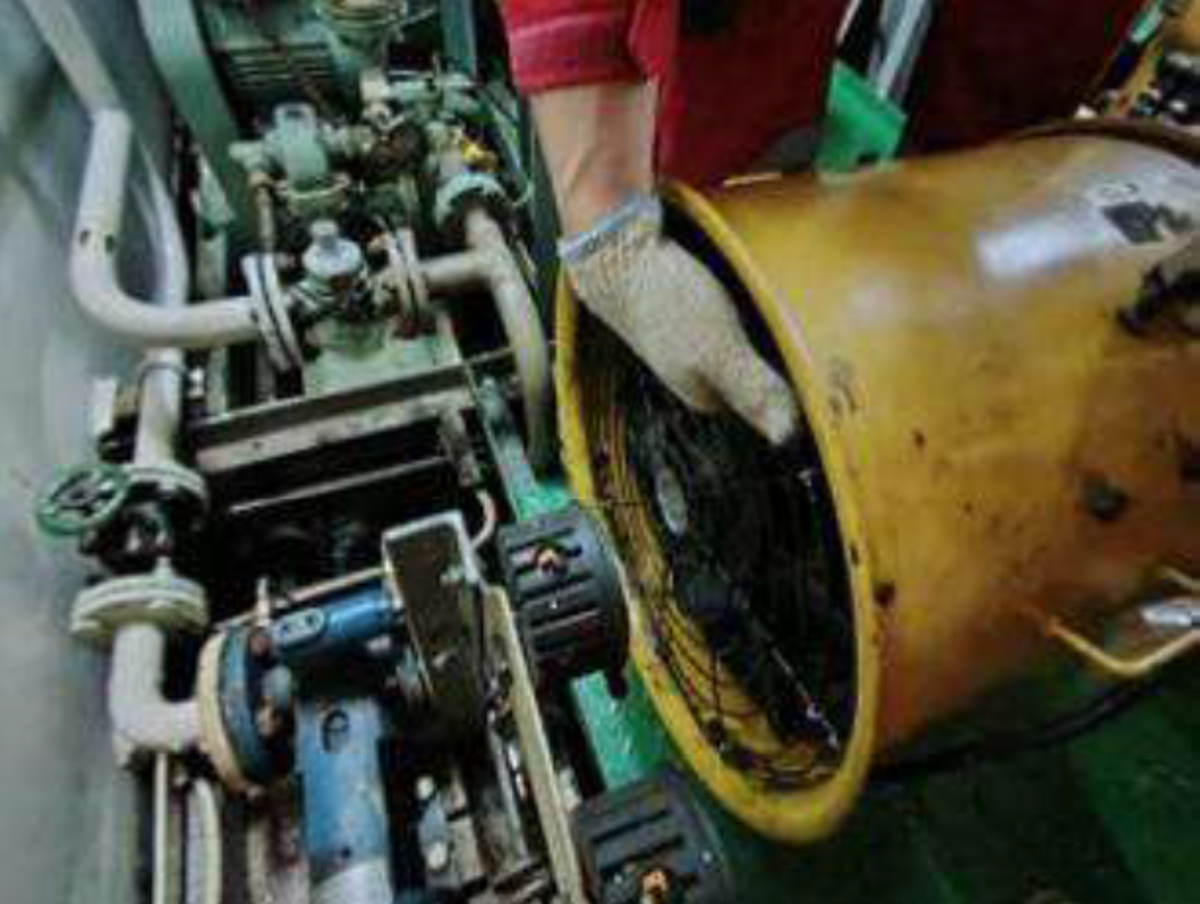
Demonstration after the fact of what happened.
What went wrong?
- The equipment used was neither suitable nor safe:
- the handle for the portable blower was obstructed with rope and webbing sling.
- the portable blower had been modified since appropriate air ducting was not available on board.
- the opening into the blade housing area was big enough to allow access to fingers.
- The worker was unaware that the fan blades continue to spin for a time after the power is turned off.
- The noise made by the spinning blade (which would have been a warning) was inaudible due to the noise of the engine.
- The worker could not see the spinning blades due to the position of the portable blower.
- There was no toolbox talk carried out, nor control of work.
Lessons learned
- Always assume rotating machinery can cause harm, even after the power is off. Residual momentum can keep blades spinning for a significant time.
- Never reach into blind areas. Know where you put your hands, do not try to reach into places where you can’t see your hands or fingers.
- Never bypass designated handles or guards. They are there to protect you.
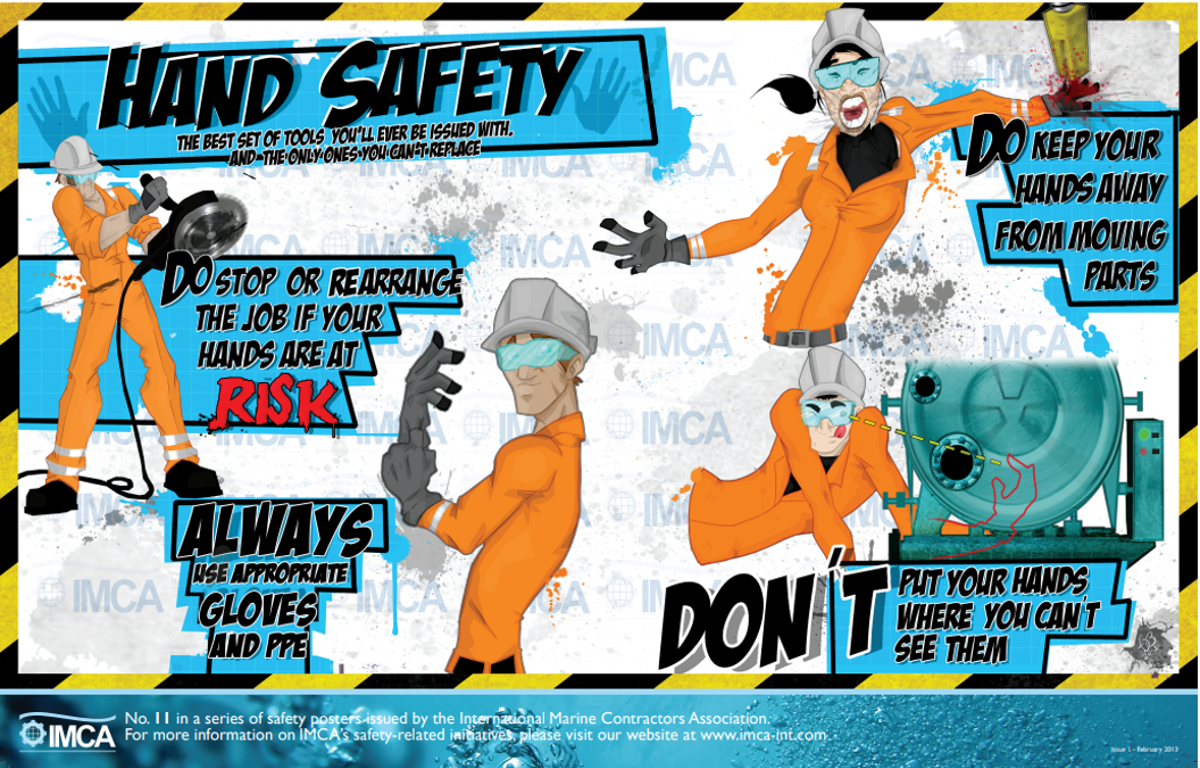
Members may wish to refer to:
Related Safety Flashes
-
IMCA SF 22/22
3 October 2022
-
-
IMCA SF 04/21
2 February 2021
-
-
IMCA SF 08/17
12 April 2017
-
-
IMCA SF 28/16
18 October 2016
IMCA Safety Flashes summarise key safety matters and incidents, allowing lessons to be more easily learnt for the benefit of the entire offshore industry.
The effectiveness of the IMCA Safety Flash system depends on the industry sharing information and so avoiding repeat incidents. Incidents are classified according to IOGP's Life Saving Rules.
All information is anonymised or sanitised, as appropriate, and warnings for graphic content included where possible.
IMCA makes every effort to ensure both the accuracy and reliability of the information shared, but is not be liable for any guidance and/or recommendation and/or statement herein contained.
The information contained in this document does not fulfil or replace any individual's or Member's legal, regulatory or other duties or obligations in respect of their operations. Individuals and Members remain solely responsible for the safe, lawful and proper conduct of their operations.
Share your safety incidents with IMCA online. Sign-up to receive Safety Flashes straight to your email.