Two hand injuries caused during mooring
- Safety Flash
- Published on 4 September 2025
- Generated on 18 October 2026
- IMCA SF 16/25
- 2 minute read
A member shares two incidents of hand injuries during mooring operations; one was very serious and resulted in the loss of a finger.
What happened – hand injury
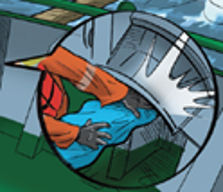
Following the replacement of a damaged mooring line on an FPSO, two crew members installed protection to secure the new line. The task occurred during rough weather. As the mooring line slackened, one of the workers grabbed it to position the protective material. As they did so, the swell caused the vessel to move. The mooring line tightened, trapping and injuring the hand of the worker, who was not wearing suitable gloves at that point.
What happened - finger crushed
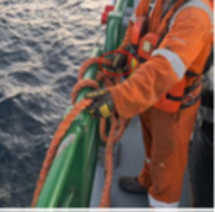
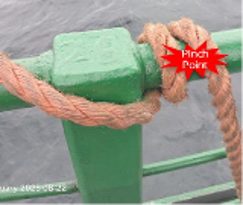
A deck foreman and riggers were at the aft mooring station port side, adjusting the floating aft Yokohama fenders to start mooring. The Deck foreman took over one of the rigger’s positions and while securing the mooring rope to the guardrail got his finger trapped between the handrail and the rope by a sudden movement of the rope. His middle finger was crushed and had to be amputated.
What went wrong?
- Hand rails were being used to secure the Yokohama fender because there was no dedicated mooring point.
- Manual adjustment of the arrangement for the Yokohama fender was not covered in the job safety analysis/risk assessment.
- The Deck foreman directly intervened in the operation rather than supervising.
- The Deck foreman was not wearing appropriate Impact Gloves at the time.
- Opportunities to stop the job were not taken.
Lessons to learn
- Dedicated and proper designed mooring points should be available and used to secure fenders.
- Supervisors need to supervise and resist the temptation to involve themselves in the actual task.
- Be ready to STOP THE JOB – stay proactive and alert during mooring operations.
- Be aware of risks to your hands and fingers when mooring – it takes only a split second for something to go wrong.
- Take great care if the weather is causing the vessel to move: if possible, consider doing the task later;
Members may wish to refer to:
IMCA Safety Flashes summarise key safety matters and incidents, allowing lessons to be more easily learnt for the benefit of the entire offshore industry.
The effectiveness of the IMCA Safety Flash system depends on the industry sharing information and so avoiding repeat incidents. Incidents are classified according to IOGP's Life Saving Rules.
All information is anonymised or sanitised, as appropriate, and warnings for graphic content included where possible.
IMCA makes every effort to ensure both the accuracy and reliability of the information shared, but is not be liable for any guidance and/or recommendation and/or statement herein contained.
The information contained in this document does not fulfil or replace any individual's or Member's legal, regulatory or other duties or obligations in respect of their operations. Individuals and Members remain solely responsible for the safe, lawful and proper conduct of their operations.
Share your safety incidents with IMCA online. Sign-up to receive Safety Flashes straight to your email.