LTI: serious injury to thumb when pipe fell during maintenance
- Safety Flash
- Published on 27 October 2025
- Generated on 7 April 2026
- IMCA SF 19/25
- 2 minute read
A 2nd engineer on a vessel suffered a serious injury to the left thumb whilst dismantling a grey water pipe.
What happened?
The 2nd engineer and 3rd engineer began dismantling the vertical section of the grey water pipe in the engine room; they first removed bolts from both flanges (top & bottom) and left two bolts of top flange in loose position to keep the pipe in position. Whilst removing the lower U-clamp, the pipe unexpectedly fell about 1.4m. The weight of the pipe was about 25 kg. The left thumb of the 2nd engineer was caught between the falling pipe and the supporting U-clamp’s plate. This accident resulted in a partial amputation of the thumb.
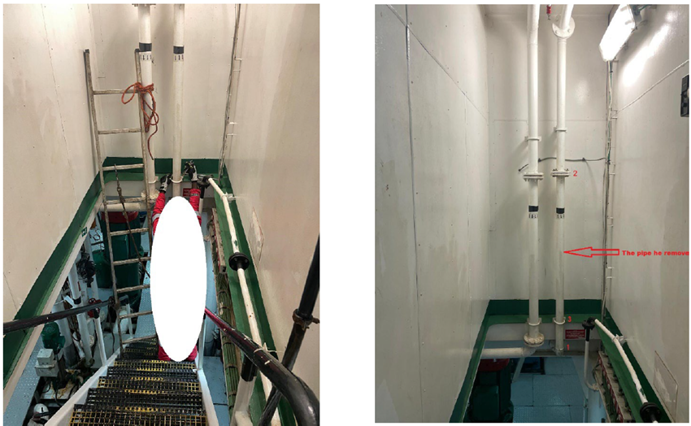
A daily pre-job and toolbox meeting were carried out with all people involved. The maintenance of the grey water pipe was discussed and there was a corresponding Permit to Work and risk assessment issued.
What could have gone better?
- The vertical section of the pipe was secured using only two loose bolts on the upper flange – had it been better secured, it might not have fallen.
- The 2nd Engineer used his left hand to maintain his balance while slackening the U-clamps. In doing so, his hand was placed in the line of fire – something that ideally would either be obvious – or impossible to do.
- A secondary arrangement to secure the pipe could have saved the day – and the thumb.
- A culture of curiosity and questioning might have meant that one of the two engineers said, “Hold on a minute – we’re doing this unsafely! Let’s STOP the job and rerig it.”
Lessons
- Arrange primary and secondary securing when dismantling suspended loads.
- Create a workplace culture where junior staff – ANY staff – can speak up and challenge unsafe practices.
Related Safety Flashes
-
IMCA SF 13/11
25 November 2011
-
IMCA SF 05/25
19 March 2025
-
-
IMCA SF 13/19
4 June 2019
-
-
IMCA SF 28/16
18 October 2016
-
IMCA SF 05/23
16 February 2023
-

IMCA Safety Flashes summarise key safety matters and incidents, allowing lessons to be more easily learnt for the benefit of the entire offshore industry.
The effectiveness of the IMCA Safety Flash system depends on the industry sharing information and so avoiding repeat incidents. Incidents are classified according to IOGP's Life Saving Rules.
All information is anonymised or sanitised, as appropriate, and warnings for graphic content included where possible.
IMCA makes every effort to ensure both the accuracy and reliability of the information shared, but is not be liable for any guidance and/or recommendation and/or statement herein contained.
The information contained in this document does not fulfil or replace any individual's or Member's legal, regulatory or other duties or obligations in respect of their operations. Individuals and Members remain solely responsible for the safe, lawful and proper conduct of their operations.
Share your safety incidents with IMCA online. Sign-up to receive Safety Flashes straight to your email.