Use of surge protected devices on-board vessels
- Safety Flash
- Published on 12 November 2019
- Generated on 27 October 2026
- IMCA SF 26/19
- 2 minute read
A surge protected extension lead failed, resulting in it overheating and burning.
What happened?
Surveyors heard an audible ‘snap’ and then observed that three of their monitors had lost power.
The vessel electrician was called to investigate and noted that a circuit breaker in the switchboard had tripped.
The electrician reset the breaker, which was then followed by a distinct burning smell coming from a 4-way extension lead on the survey desk.
The extension lead was immediately isolated and removed. This equipment was the property of the third-party survey contractor.
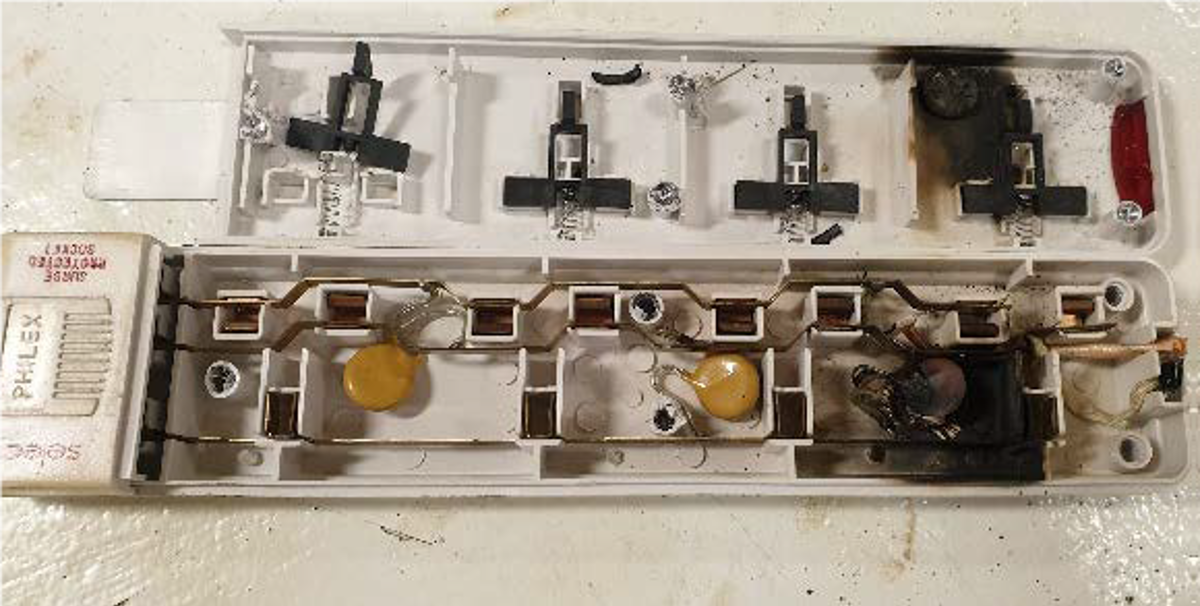
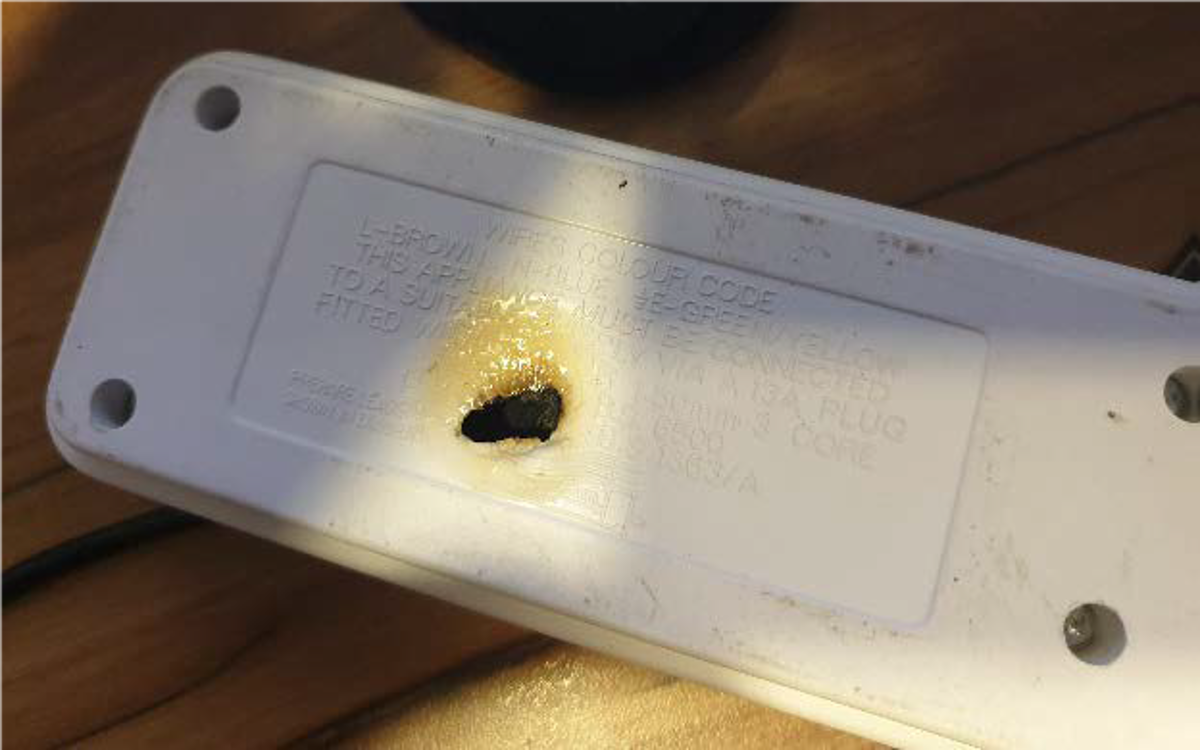
What went wrong?
The extension cable was protected by an anti-surge system that relied on a fixed earth and varistors to allow passage of current to earth in the event of a power spike or surge.
This design is to protect the equipment connected to the extension lead during very short power spikes, typically lightning strikes, not prolonged events where overheating could occur.
Vessels use residual current devices (RCDs). These devices effectively need to see balance on each phase and in the instance of a short on either phase, will trip the breaker/RCD. When the extension lead was connected to the ships power supply, the varistors heated up until one of the phases saw more or less current, thus tripping the breaker/RCD.
What actions were taken?
- Ensure all electrical extension leads are examined to confirm compatibility with vessel electrical system.
- Remove all unsafe items from use immediately.
Note: The United States Coast Guard (USCG) Marine Safety Alert on surge protective devices referenced in the safety flashes below has since been updated as Marine Safety Alert 03-13b.
Featured Safety Flashes
-
IMCA SF 10/13
25 June 2013
-
IMCA SF 05/10
28 July 2010
IMCA Safety Flashes summarise key safety matters and incidents, allowing lessons to be more easily learnt for the benefit of the entire offshore industry.
The effectiveness of the IMCA Safety Flash system depends on the industry sharing information and so avoiding repeat incidents. Incidents are classified according to IOGP's Life Saving Rules.
All information is anonymised or sanitised, as appropriate, and warnings for graphic content included where possible.
IMCA makes every effort to ensure both the accuracy and reliability of the information shared, but is not be liable for any guidance and/or recommendation and/or statement herein contained.
The information contained in this document does not fulfil or replace any individual's or Member's legal, regulatory or other duties or obligations in respect of their operations. Individuals and Members remain solely responsible for the safe, lawful and proper conduct of their operations.
Share your safety incidents with IMCA online. Sign-up to receive Safety Flashes straight to your email.