NTSB: Collision leading to loss of life and damage
- Safety Flash
- Published on 1 October 2021
- Generated on 24 October 2026
- IMCA SF 27/21
- 2 minute read
The National Transportation Safety Board of the United States (NTSB) has published Marine Accident Brief 21/16 relating to a collision on the Mississippi river in January 2020. The collision led to damage and loss of life, and learnings from the causes of the collision are applicable to the operations of IMCA members.
What happened?
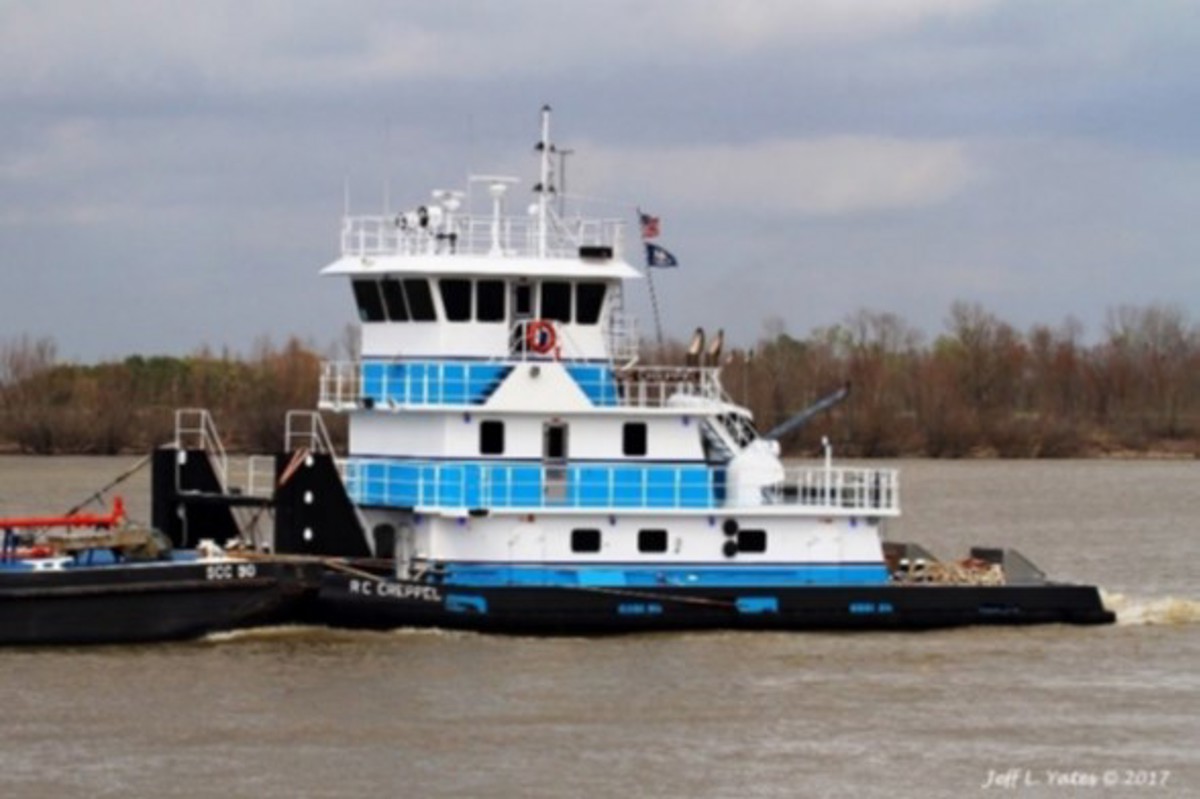
One towing vessel was moving 40 barges upriver, and another was moving two barges downriver, when they collided. As a result, one of the towing vessels capsized. Minutes later, a third vessel going upriver made contact with the some of the barges being towed. All 42 barges from both tows broke free and were later recovered.
One of the four members of the crew of the capsized vessel was rescued; the remaining three were never recovered and are presumed dead. The accident resulted in the release of about 8,000 gallons (US) of diesel fuel into the river and sulphuric acid vapours into the atmosphere, and property damage to three vessels and 11 barges, costing an estimated US$3.8 million.
What was the cause?
The NTSB’s investigation found that the probable causes of the collision were (IMCA bold for emphasis):
- The two pilots’ insufficient radio communication before meeting in a bend of the river.
- Not broadcasting accurate AIS information regarding tow size.
Lessons learned
- Ensuring adequate communications – whilst this incident is about communications as an aspect of seamanship, the same principles apply to communications between:
- Shifts at shift change time
- Crews at crew handover time
- Departments within the vessel – bridge team, lifting personnel etc.
- Departments within a company – project, crewing, human resources, engineering etc.
- Client and contractor, and contractor and sub-contractor.
- Shifts at shift change time
- Up to date information – ensuring that all appropriate and up to date information is available to all stakeholders, is likewise a lesson applicable not only to the bridge operation but to all. To do so helps to alleviate possible misinterpretation and enhances situational awareness.
Related Safety Flashes
-
IMCA SF 25/21
13 September 2021
-
-
IMCA SF 23/21
19 August 2021
-
-
IMCA SF 19/20
23 June 2020
-
-
IMCA SF 10/20
17 March 2020
-

IMCA Safety Flashes summarise key safety matters and incidents, allowing lessons to be more easily learnt for the benefit of the entire offshore industry.
The effectiveness of the IMCA Safety Flash system depends on the industry sharing information and so avoiding repeat incidents. Incidents are classified according to IOGP's Life Saving Rules.
All information is anonymised or sanitised, as appropriate, and warnings for graphic content included where possible.
IMCA makes every effort to ensure both the accuracy and reliability of the information shared, but is not be liable for any guidance and/or recommendation and/or statement herein contained.
The information contained in this document does not fulfil or replace any individual's or Member's legal, regulatory or other duties or obligations in respect of their operations. Individuals and Members remain solely responsible for the safe, lawful and proper conduct of their operations.
Share your safety incidents with IMCA online. Sign-up to receive Safety Flashes straight to your email.