Watch your hands!! Person injured while using an angle grinder
- Safety Flash
- Published on 2 December 2021
- Generated on 26 October 2026
- IMCA SF 33/21
- 2 minute read
A member of the crew was badly injured whilst cutting a piece of wood using an angle grinder fitted with a cutting blade.
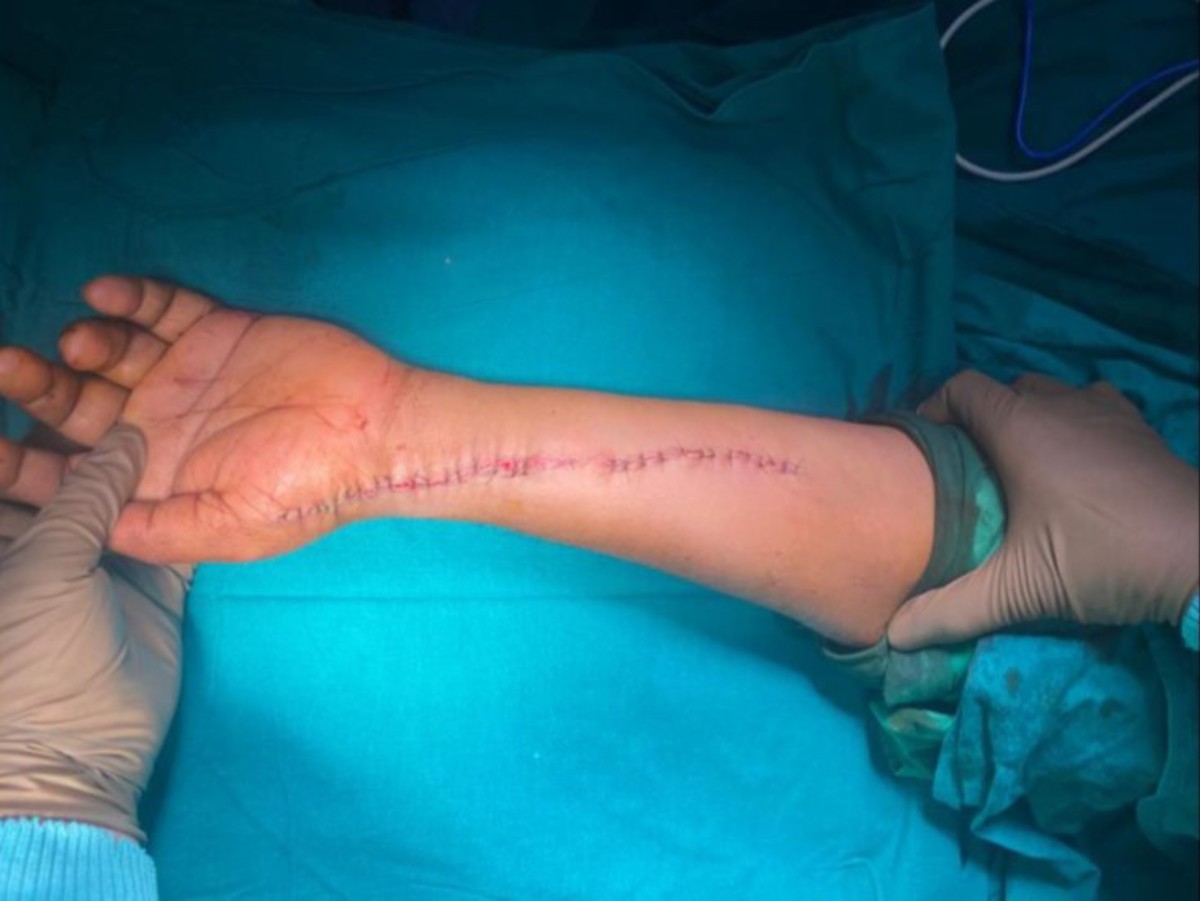
The crew member was cutting dunnage for a new washing machine. The vessel rolled and the injured person lost control of the grinder, such that it caught his left arm causing a deep laceration from his left thumb to his elbow.
He was given first aid and transferred to a nearby rig, and from there evacuated by helicopter to hospital ashore.
On examination there were two major lacerated cuts with crush injury and damage to the muscles and tendons underneath and his left radial artery was completely cut. All this was repaired in surgery and the patient made a full recovery.
The injured person was an experienced hand who well understood how to safely operate portable hand tools of this sort.
What went wrong?
- The crew member was using a hand-operated power tool in rough weather.
- He was using a wood cutting disc in an angle grinder.
- He started work with no job hazard analysis nor a toolbox talk.
- There was no guard on the grinder nor an automatic “dead man” switch cut-off.
- The wood he was cutting was not supported nor held firm, but just placed on deck. The injured person was using his left hand to hold the job still whilst applying the spinning blade with his right hand.
What were the causes?
Our Member notes:
- Improper handling of hand tools.
- Human Element – poor perception of risk and inadequate supervision.
- The sea conditions – not directly responsible but remaining part of the chain of causation of the event.
Some of the lessons learned
- Risk assessment and toolbox talk before starting work – no matter how routine the job.
- Correct and proper management of hand tools.
- Use the right tool for the right job, use guards; use “dead man” switches.
- When using powered tools, ensure the job is secured and cannot move before starting work.
- Appropriate supervision of crew – in this case the chief engineer was unaware that the injured person was doing this work.
Members may wish to refer to:
- IMCA video: Be prepared to work safely – Watch your hands
Related Safety Flashes
-
IMCA SF 04/21
2 February 2021
-
-
IMCA SF 27/20
15 September 2020
-
-
IMCA SF 23/18
2 October 2018
-
-
IMCA SF 28/16
18 October 2016
-
IMCA SF 03/05
1 March 2005

IMCA Safety Flashes summarise key safety matters and incidents, allowing lessons to be more easily learnt for the benefit of the entire offshore industry.
The effectiveness of the IMCA Safety Flash system depends on the industry sharing information and so avoiding repeat incidents. Incidents are classified according to IOGP's Life Saving Rules.
All information is anonymised or sanitised, as appropriate, and warnings for graphic content included where possible.
IMCA makes every effort to ensure both the accuracy and reliability of the information shared, but is not be liable for any guidance and/or recommendation and/or statement herein contained.
The information contained in this document does not fulfil or replace any individual's or Member's legal, regulatory or other duties or obligations in respect of their operations. Individuals and Members remain solely responsible for the safe, lawful and proper conduct of their operations.
Share your safety incidents with IMCA online. Sign-up to receive Safety Flashes straight to your email.