Main bell wire rope failed destructive test
- Safety Flash
- Published on 16 April 2024
- Generated on 26 October 2026
- IMCA SF 08/24
- 3 minute read
A main bell wire rope sample from a DSV failed to an adequate safety factor after 245 bell runs since installation.
What happened?
A main bell wire rope sample from a DSV failed to an adequate safety factor after 245 bell runs since installation. Following this failure of the annual breaking load test the DSV reported a premature retirement of the main dive bell wire after it had been in service for approximately eighteen months from March 2021 to October 2022.
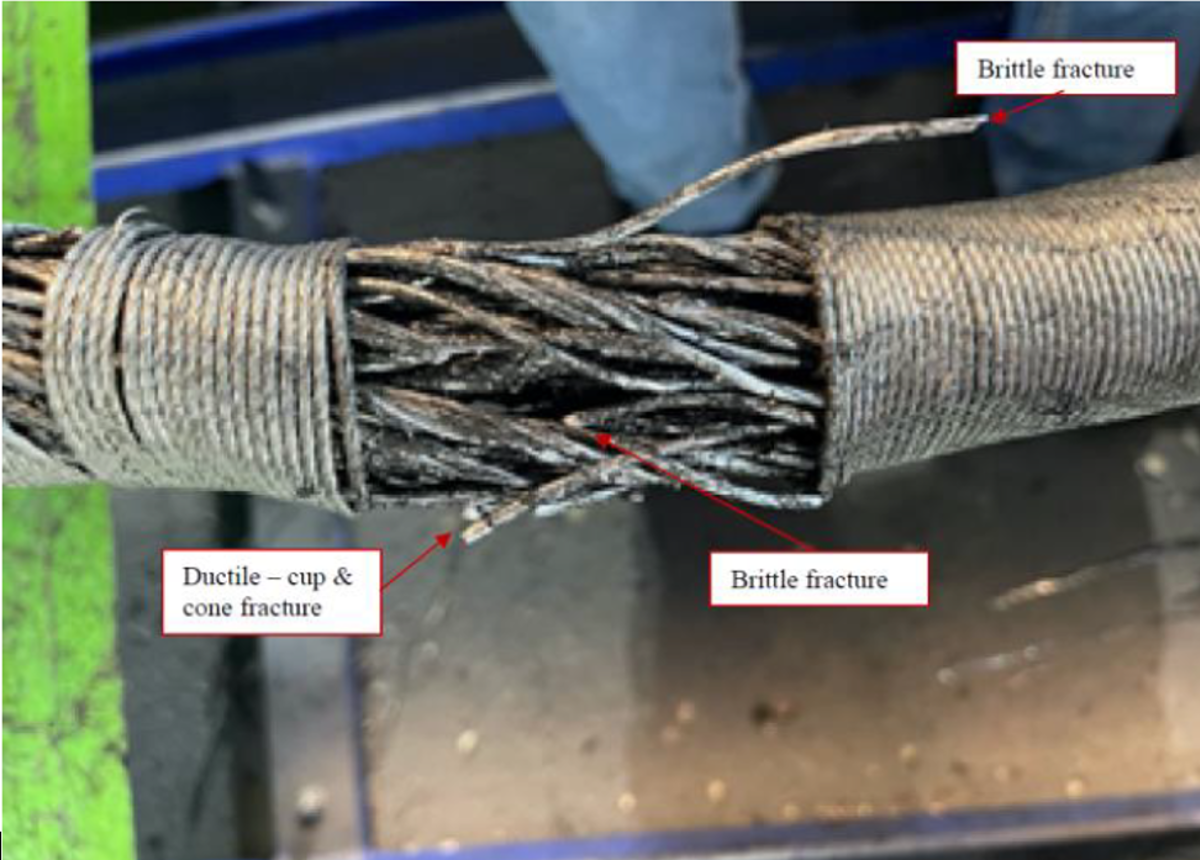
Showing fracture point of destructive test
IMCA D018 Code of Practice for the Initial and Periodic Examination, Testing, and Certification of Diving Plant and Equipment guidelines are to perform visual inspection every 6 months and perform destructive tests (DT) upon installation and on an annual basis. IMCA D018 guidelines allow up to 10% reduction in minimum breaking load (MBL). Visual inspection and DT were carried out on board in line with IMCA guidelines.
The scheduled maintenance annual breaking load test completed in October 2022 achieved a breaking load of 99.9 tonnes (980 kN) 30% below MBL. In accordance with IMCA guidelines, a second test was permitted and achieved a breaking load of 108.6 tonnes (1065 kN) 24% below MBL.
Findings
A purchase order was raised by the DSV owners in December 2020 to procure the bell wire rope when the vessel was reactivated. The purchase was made without consultation with the company’s wire rope integrity management team, without an approved company wire rope specification, and from a non-approved supplier.
From the review of the wire fractures at the rope destruction test, it was apparent there was a number of shear fractures present indicating poor ductility. A reduced ductility was also apparent following individual wire testing as part of the investigation. Component wires of reduced ductility cause a lack of elongation in the complete wire rope, resulting in a reduced load bearing capacity.
The lack of ductility was explained by the phenomenon of strain aging, which is a change in steel microstructure leading to a change in wire properties including a reduction in ductility. The occurrence of strain aging is initially influenced by steel chemistry and manufacturing methods and is then dependent on a time and temperature relationship which can be influenced by storage conditions.
Actions to be taken
- Ensure that wire rope integrity management requirements are followed at all times.
- Ensure that sufficient and appropriate management and oversight of chartered third-party vessels.
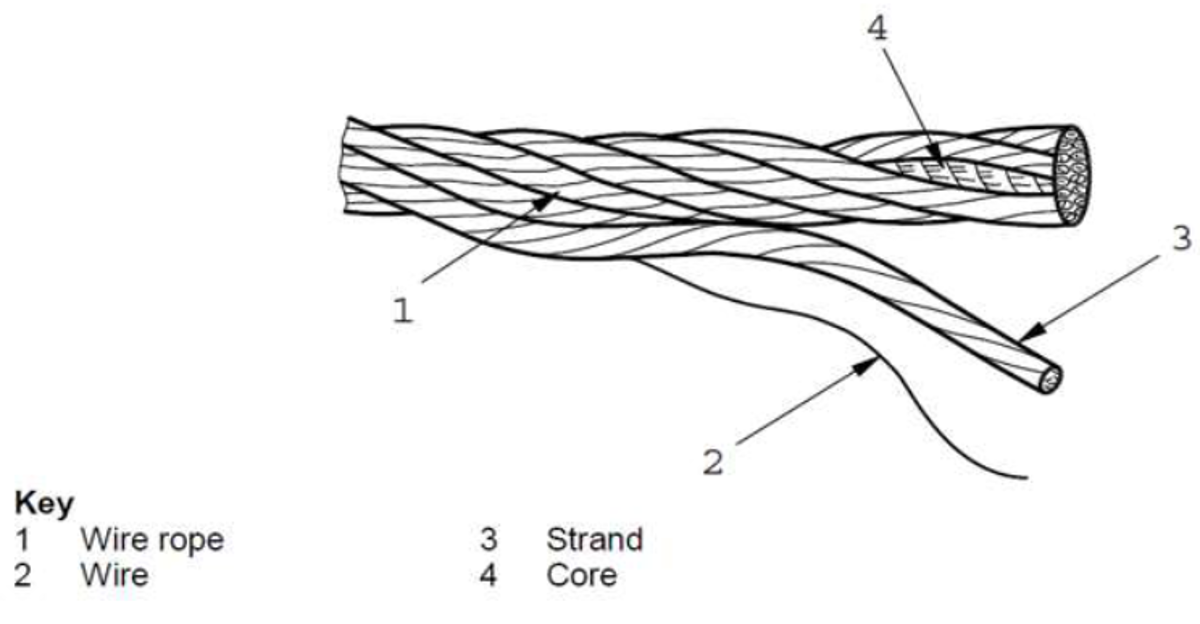
IMCA notes: This flash has been amended to reflect correct terminology with respect to the components of a wire rope: see diagram below. However, for purely practical reasons relating to internet links, the links to previous safety flash incidents relating to wire rope incidents have not been amended.
Related Safety Flashes
-
IMCA SF 08/21
17 March 2021
-
IMCA Safety Flashes summarise key safety matters and incidents, allowing lessons to be more easily learnt for the benefit of the entire offshore industry.
The effectiveness of the IMCA Safety Flash system depends on the industry sharing information and so avoiding repeat incidents. Incidents are classified according to IOGP's Life Saving Rules.
All information is anonymised or sanitised, as appropriate, and warnings for graphic content included where possible.
IMCA makes every effort to ensure both the accuracy and reliability of the information shared, but is not be liable for any guidance and/or recommendation and/or statement herein contained.
The information contained in this document does not fulfil or replace any individual's or Member's legal, regulatory or other duties or obligations in respect of their operations. Individuals and Members remain solely responsible for the safe, lawful and proper conduct of their operations.
Share your safety incidents with IMCA online. Sign-up to receive Safety Flashes straight to your email.