Punctured aerosol results in chemical burns
- Safety Flash
- Published on 1 January 2003
- Generated on 18 October 2026
- IMCA SF 01/03
- 2 minute read
A Member has reported the following incident which occurred in a crane repair workshop, where pieces of lifting equipment are routinely inspected for cracks and/or deformities.
What happened?
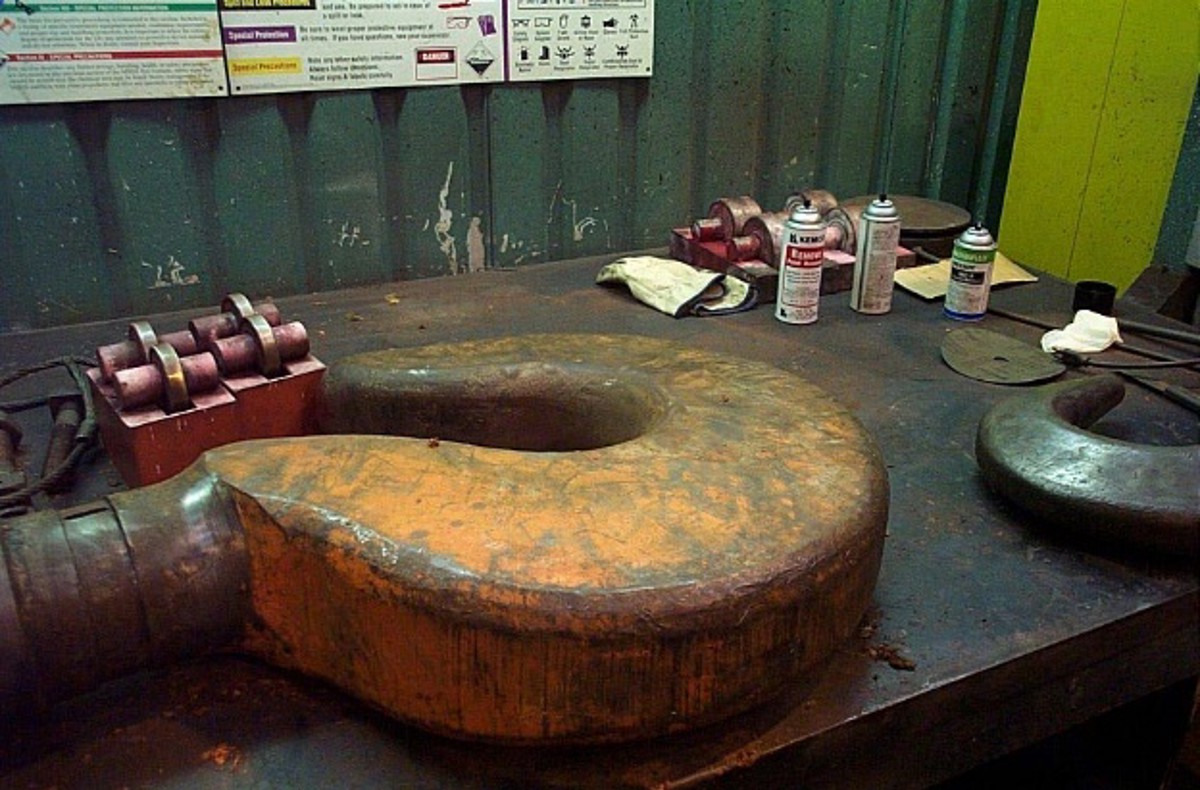
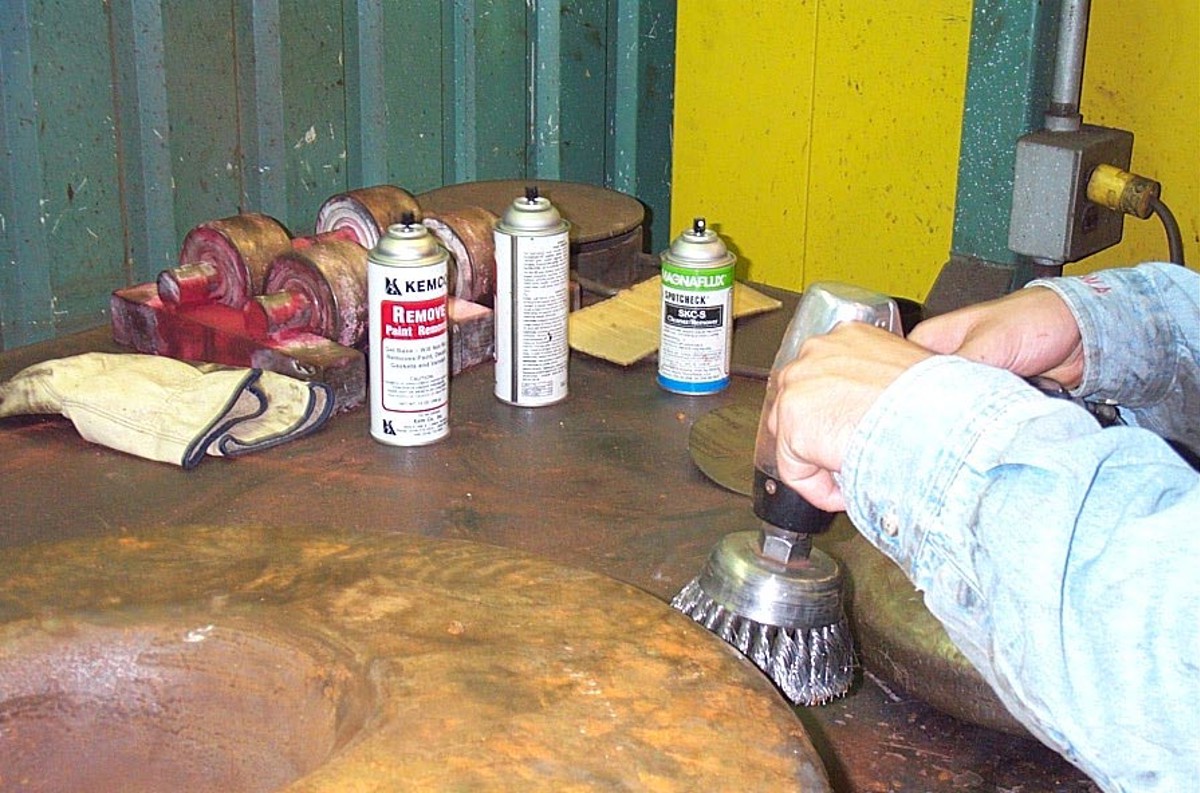
A large hook was being stripped of paint in preparation for inspection. Aerosol paint stripper was being used, with a technician then using a 6000rpm grinder with wire brush cup attachment. The work area is shown below, including the relative positions of the hook and the aerosol.
As the technician was brushing the bottom of the hook, hard particles or brush wires were projected, striking one of the nearly full paint remover aerosol cans sitting on the bench nearby. The particle punctured the can about 1″ up from its base and caused the contents to violently spew from the can while it spun wildly on the bench. This happened so quickly that the technician was sprayed around his head, shoulders and back with paint remover before he could move away.
He moved as quickly as he could to the wash basin in the workshop and thoroughly rinsed himself off which, along with the protection of his safety glasses, hard hat and shirt contributed to him only experiencing slight chemical burns on the upper portions of his body.
Fortunately, the gaseous contents of the aerosol can did not ignite as they spewed from the can. If they had, the employee could have been engulfed in fire and suffered much more extreme injuries.
Recommendations
The company concerned has restated the importance of removing aerosol cans, returning them to proper flammable storage areas/containers when carrying out work of this nature. Returning to the picture above – to the right of the work bench is a yellow flammable container storage locker. Had it been used, this incident would not have happened.
IMCA Safety Flashes summarise key safety matters and incidents, allowing lessons to be more easily learnt for the benefit of the entire offshore industry.
The effectiveness of the IMCA Safety Flash system depends on the industry sharing information and so avoiding repeat incidents. Incidents are classified according to IOGP's Life Saving Rules.
All information is anonymised or sanitised, as appropriate, and warnings for graphic content included where possible.
IMCA makes every effort to ensure both the accuracy and reliability of the information shared, but is not be liable for any guidance and/or recommendation and/or statement herein contained.
The information contained in this document does not fulfil or replace any individual's or Member's legal, regulatory or other duties or obligations in respect of their operations. Individuals and Members remain solely responsible for the safe, lawful and proper conduct of their operations.
Share your safety incidents with IMCA online. Sign-up to receive Safety Flashes straight to your email.