Near-miss: Safe use of chains in rigging
- Safety Flash
- Published on 16 January 2015
- Generated on 26 October 2026
- IMCA SF 01/15
- 2 minute read
A Member has reported an incident which a chain link parted when a shock load was introduced to the chains. The inappropriate use of chains was a major failing in a series of events which resulted in a high potential near miss incident. The incident serves to communicate the safe and appropriate use of chains in rigging operations.
What happened?
The incident occurred during pipelay operations onboard a vessel. A constant tension winch was being used to transfer the first end of the pipe from the reel to the pipelay system. Because of earlier winch and sheave failures, a temporary rigging solution using chains, shackle and snatch-block was used to control the winch wire’s position.
The chains in question were of the grommet type, grade 80 lifting chains. They had the required certification and had been inspected by a third party during the six monthly lifting inspections. Although the chains were rated for the loads involved in this operation, the complete assembly was not rated accordingly. This did not have a direct impact on the incident in question, although it was seen as bad practice.
During the operation, a shock load was introduced to the chains, leading to a chain link parting and in turn to a catastrophic series of events.
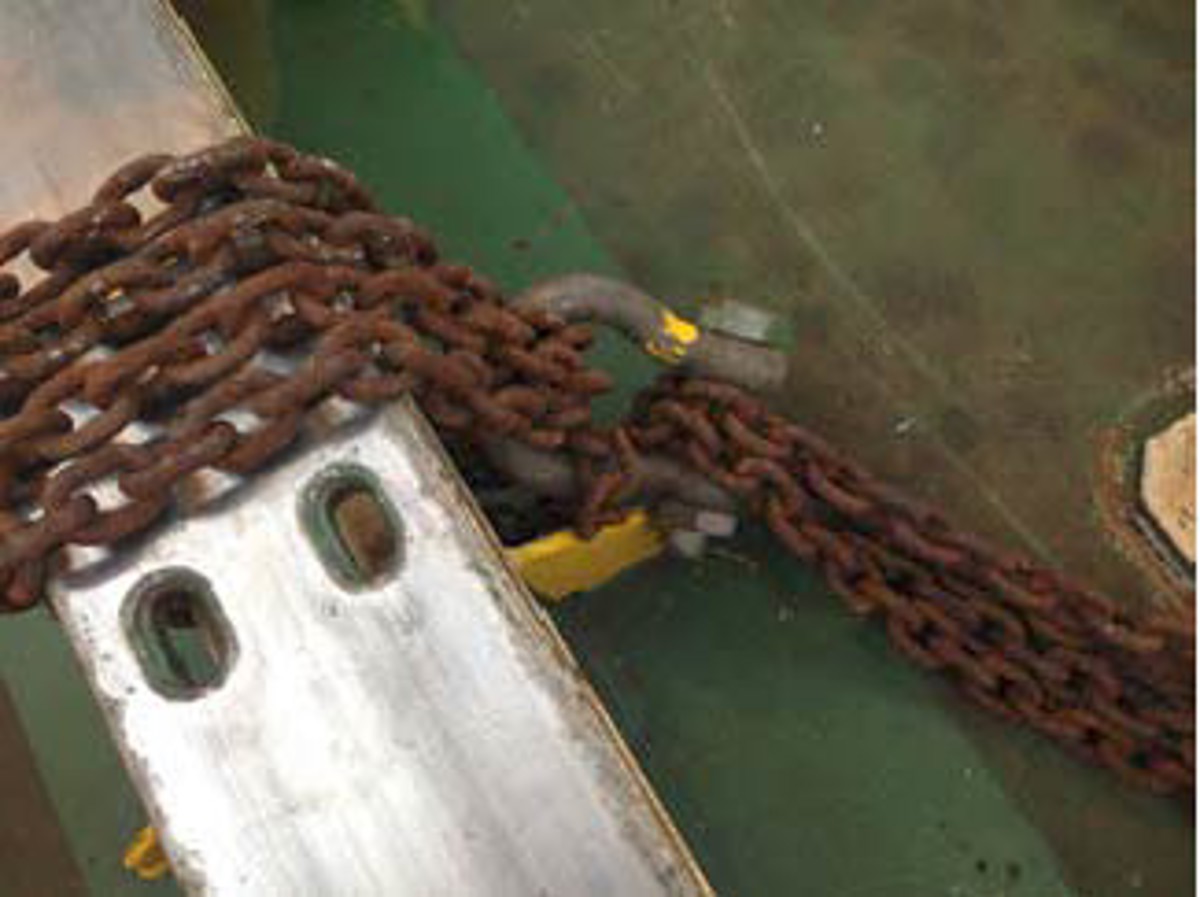
reconstruction of how the chains were rigged
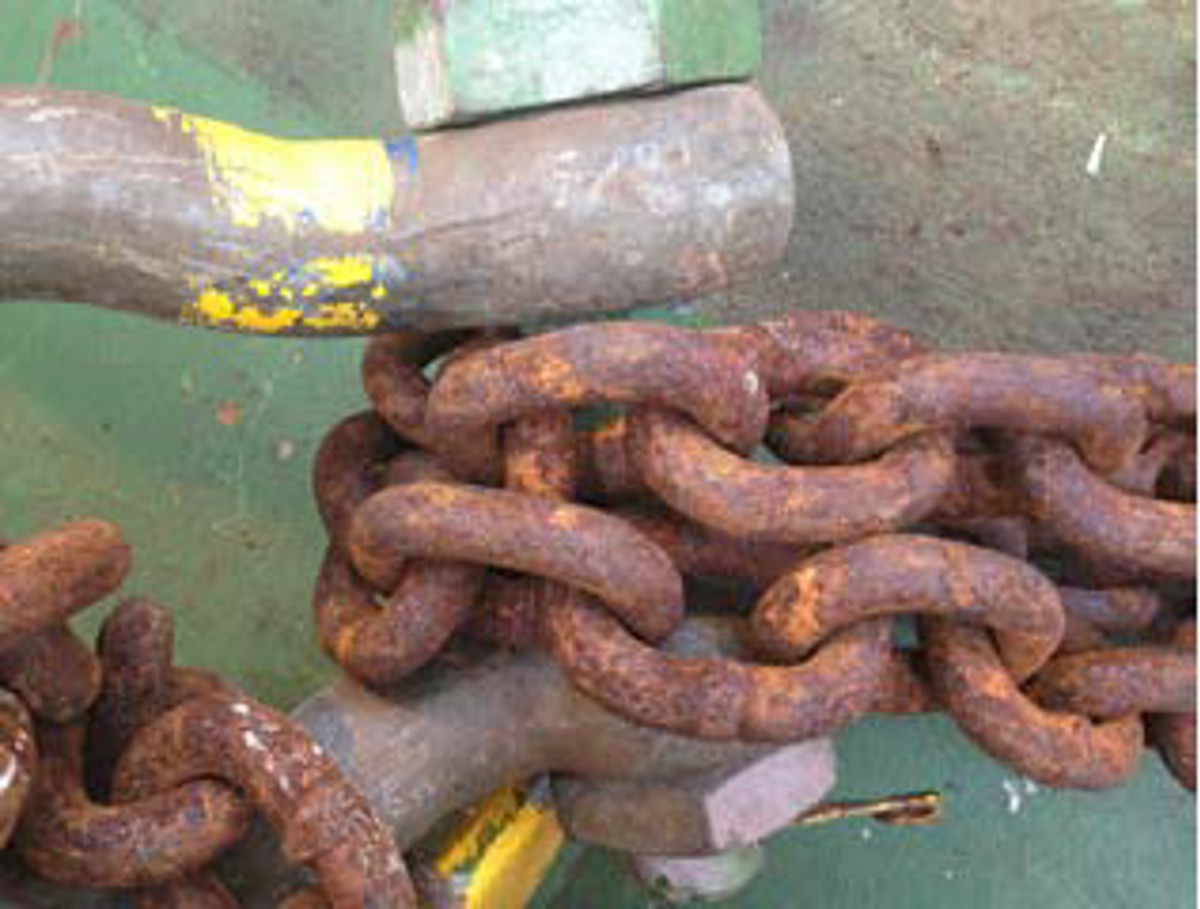
reconstruction of how the chains were rigged
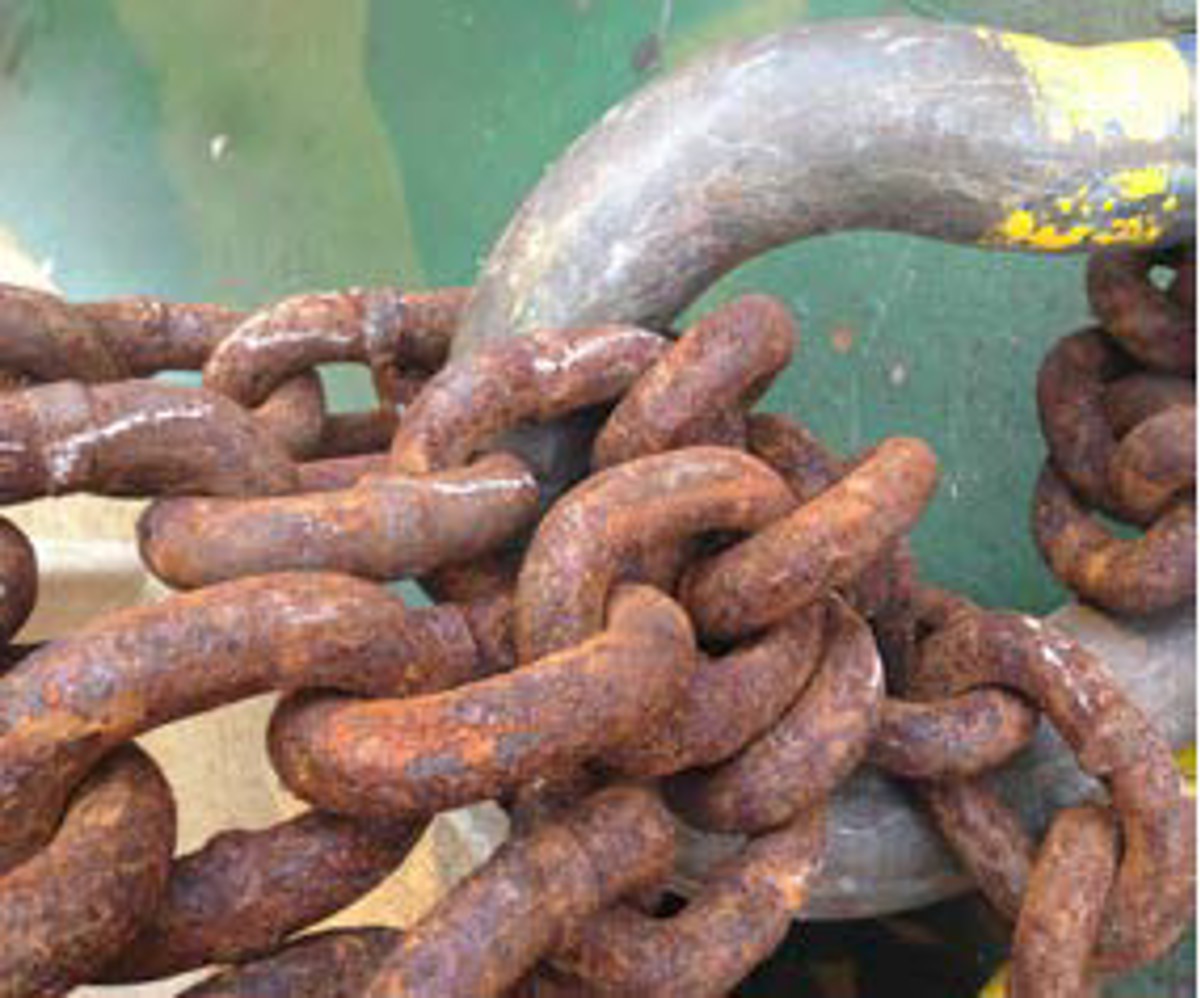
reconstruction of how the chains were rigged
Findings
Our member’s investigation established that:
- The chain was exposed to a shock load.
- The chains were wrapped around edges which were the incorrect radius for the chain diameter.
- As the chains overlapped each other within the shackle they had no chance of equalising the load when it was applied.
Lessons learnt
Our member drew the following lessons:
- Never wrap a chain around a diameter which is less than twice the diameter of the chain link.
- Never twist, knot or trap chain slings.
- Packing should be used on edges to reduce the side loading on chain links.
- When attaching more than one chain to a shackle/hook, always avoid overcrowding or use a master link.
- Never use a chain where there is potential for it to be exposed to dynamic or shock loads.
Related safety flashes
-
IMCA SF 06/12
25 June 2012
-
IMCA SF 12/11
1 November 2011
IMCA Safety Flashes summarise key safety matters and incidents, allowing lessons to be more easily learnt for the benefit of the entire offshore industry.
The effectiveness of the IMCA Safety Flash system depends on the industry sharing information and so avoiding repeat incidents. Incidents are classified according to IOGP's Life Saving Rules.
All information is anonymised or sanitised, as appropriate, and warnings for graphic content included where possible.
IMCA makes every effort to ensure both the accuracy and reliability of the information shared, but is not be liable for any guidance and/or recommendation and/or statement herein contained.
The information contained in this document does not fulfil or replace any individual's or Member's legal, regulatory or other duties or obligations in respect of their operations. Individuals and Members remain solely responsible for the safe, lawful and proper conduct of their operations.
Share your safety incidents with IMCA online. Sign-up to receive Safety Flashes straight to your email.