Hand injury sustained by diver
- Safety Flash
- Published on 27 February 2006
- Generated on 14 October 2026
- IMCA SF 02/06
- 2 minute read
One of our Members reports an accident wherein a diver sustained severe crush injuries to the fingers of his right hand.
What happened?
The diver was working in saturation at a depth of around 70 metres. The injury occurred whilst he was disconnecting a chain shackle (connected to a crane on a surface vessel) from a pipeline end manifold (PLEM) pile.
Whilst removing the shackle pin from one side of the PLEM pile with his hand was on the pad eye on the other side of the pile, there was an upward heave of the vessel. The chain connected to the vessel crane therefore tightened and the diver’s hand was trapped between the shackle and pad-eye, causing crush injuries on his fore, middle and ring fingers of his right hand.
On the advice of the diver medic, the diver’s wound was treated during decompression, which took four days. The wound was dressed at regular intervals and successfully kept uninfected until the diver could be hospitalised. In subsequent surgery, two injured fingers were saved, but part of the diver’s middle finger had to be amputated. The diver would be able to carry out normal diving activities in future and pursue a career in diving.

Diver’s hand after injury

Similar PLEM pile
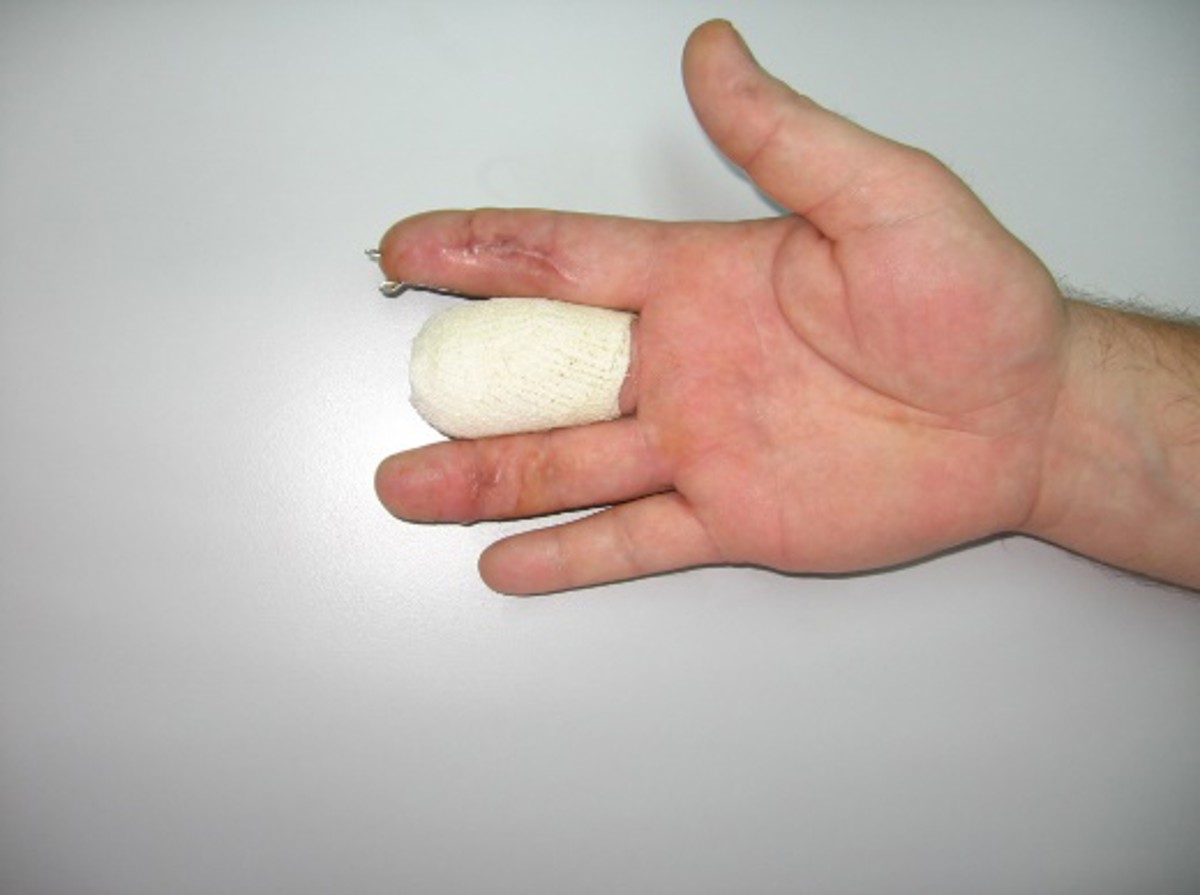
Post surgery and top phalange amputation
The company’s investigation report noted that:
- there had been proper co-ordination b etween the diver, diving supervisor, field engineer and crane operator.
- the accident could have been averted had the diver better placed his hand to avoid the possibility of it being caught between the shackle and the pad-eye.
The company sent a safety alert to all its offshore sites highlighting the incident. Awareness of the potential for hand injuries was emphasised through toolbox meetings, presentations and discussion of the incident during safety inductions.
IMCA Safety Flashes summarise key safety matters and incidents, allowing lessons to be more easily learnt for the benefit of the entire offshore industry.
The effectiveness of the IMCA Safety Flash system depends on the industry sharing information and so avoiding repeat incidents. Incidents are classified according to IOGP's Life Saving Rules.
All information is anonymised or sanitised, as appropriate, and warnings for graphic content included where possible.
IMCA makes every effort to ensure both the accuracy and reliability of the information shared, but is not be liable for any guidance and/or recommendation and/or statement herein contained.
The information contained in this document does not fulfil or replace any individual's or Member's legal, regulatory or other duties or obligations in respect of their operations. Individuals and Members remain solely responsible for the safe, lawful and proper conduct of their operations.
Share your safety incidents with IMCA online. Sign-up to receive Safety Flashes straight to your email.