Dropped object: Failure of lump hammer
- Safety Flash
- Published on 5 February 2015
- Generated on 3 August 2026
- IMCA SF 02/15
- 3 minute read
A Member has reported an incident in which a wooden hammer shaft failed and the head fell to deck.
What happened?
Two personnel were located at the upper main tensioner level of a pipelay tower, removing dowels from the tensioner gear boxes using a spanner wrench, dowel removal tool and the 2kg lump hammer. During this process the personnel were striking the spanner wrench with the lump hammer. On a downward swing of the hammer and at impact with the spanner wrench, the hammer head detached from the shaft and fell approximately 25 metres vertically through the tensioner to the deck below. There were no injuries. Had the falling hammer head struck a person, according to the DROPS calculator it would have caused a fatality.
The purpose of this safety flash is to highlight the hazards of using tools at height which are not specifically designed for use at height, and to reiterate the importance of preventive measures to eliminate the risk of dropped objects.
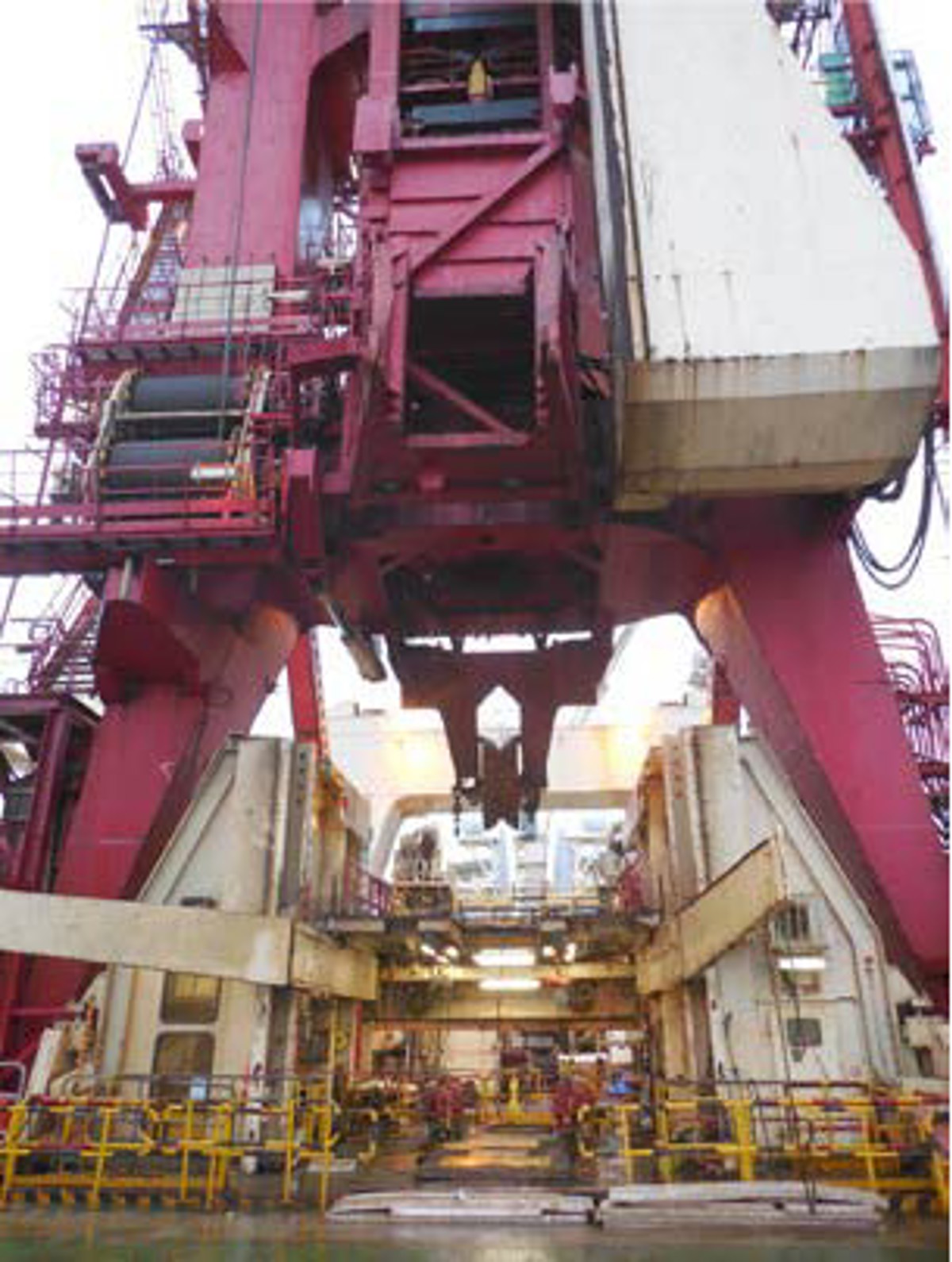
Pipelay tower showing where hammer fell
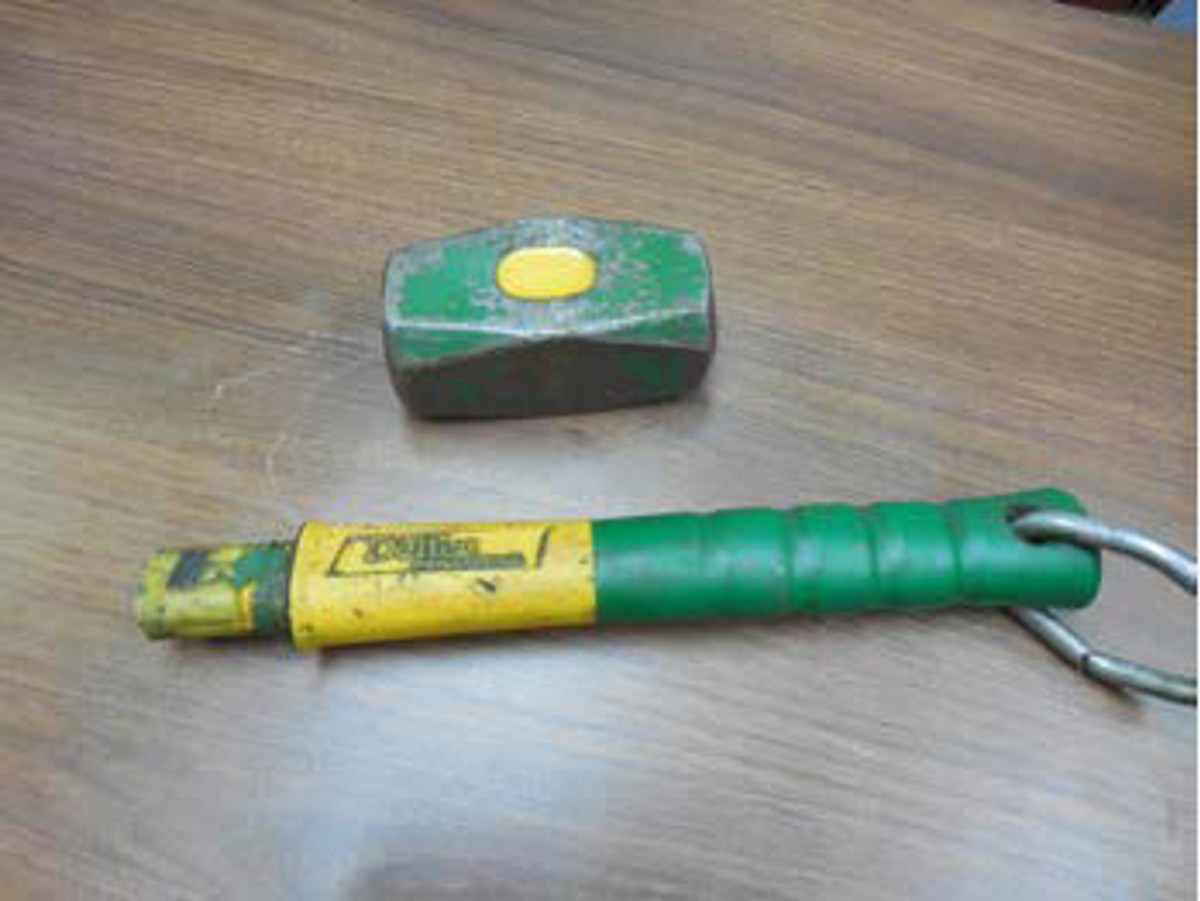
Broken lump hammer
Our member’s investigation noted the following:
- This particular brand of hammer had been ordered in 2011 following a similar incident in which a wooden hammer shaft failed and the head fell to deck. These hammers were deemed suitable for use at height at that time due to the design of the wedging system for the hammer head giving a high degree of securing. This particular hammer had been stored on the vessel and brought into service six months prior to the incident.
- The area below had been barriered off and sentries were posted to prevent personnel entering the area.
- The hammer appeared to be sound and the head was not loose prior to use.
- The hammer was not specifically designed for use at height, and the head can (and did) separate from the shaft.
- The reason for the failure was not yet known, the manufacturer claimed to have a design that requires 20% more force to pull the head from the handle than a conventional wedged hammer, but it had nevertheless failed whilst in use.
- Despite inspection prior to use, the hammer showed no defects. A specifically designed hammer for working at height such as from Stop-Drop Tooling, would not have failed in this way as the head cannot come free from the shaft.
- The shaft of the hammer was fitted with a lanyard, there was however no way to prevent the head dropping with this type of hammer.
Our member took the following actions:
- Ensured that this particular brand of hammer was NOT used at height subsequently.
- Supervisors to ensure that tools used for working at height offer complete dropped object prevention, and liaise with their Health & Safety Executive (HSE) Superintendent for advice if new tools are required.
- Continued liaison with hammer manufacturer regarding the failure.
Further information on safe working at heights can be found in the following IMCA safety promotional material:
- Working at height (pocket card, video with subtitles in Arabic, Filipino, French, Indonesian, Italian, Malay, Portuguese and Spanish
- Avoiding dropped objects (pocket card, poster)
Related Safety Flashes
-
IMCA SF 02/12
29 February 2012
-
IMCA SF 12/11
1 November 2011
-
IMCA SF 01/06
31 January 2006
IMCA Safety Flashes summarise key safety matters and incidents, allowing lessons to be more easily learnt for the benefit of the entire offshore industry.
The effectiveness of the IMCA Safety Flash system depends on the industry sharing information and so avoiding repeat incidents. Incidents are classified according to IOGP's Life Saving Rules.
All information is anonymised or sanitised, as appropriate, and warnings for graphic content included where possible.
IMCA makes every effort to ensure both the accuracy and reliability of the information shared, but is not be liable for any guidance and/or recommendation and/or statement herein contained.
The information contained in this document does not fulfil or replace any individual's or Member's legal, regulatory or other duties or obligations in respect of their operations. Individuals and Members remain solely responsible for the safe, lawful and proper conduct of their operations.
Share your safety incidents with IMCA online. Sign-up to receive Safety Flashes straight to your email.