Lost time injury (LTI): Stored pressure release – Crewman lost an eye
- Safety Flash
- Published on 27 January 2016
- Generated on 25 October 2026
- IMCA SF 03/16
- 3 minute read
A Member has reported an incident in which a crewman lost an eye during a stored pressure release incident.
What happened?
The incident occurred during maintenance work on the UV disinfection unit for the freshwater system on an offshore vessel. The job was installation of the emitter protection tube. As the injured person started to tighten the tension screw, it appears that he inadvertently touched the inlet valve handle – opening it by a third. This led to water running into the UV disinfection unit, building up pressure below the emitter protection tube and forcing it out through the opening. The glass element hit the injured person on the forehead and smashed. He was hit in the face and eyes by pieces of glass, and was brought to hospital for surgery. The doctors were unable to save the left eye.
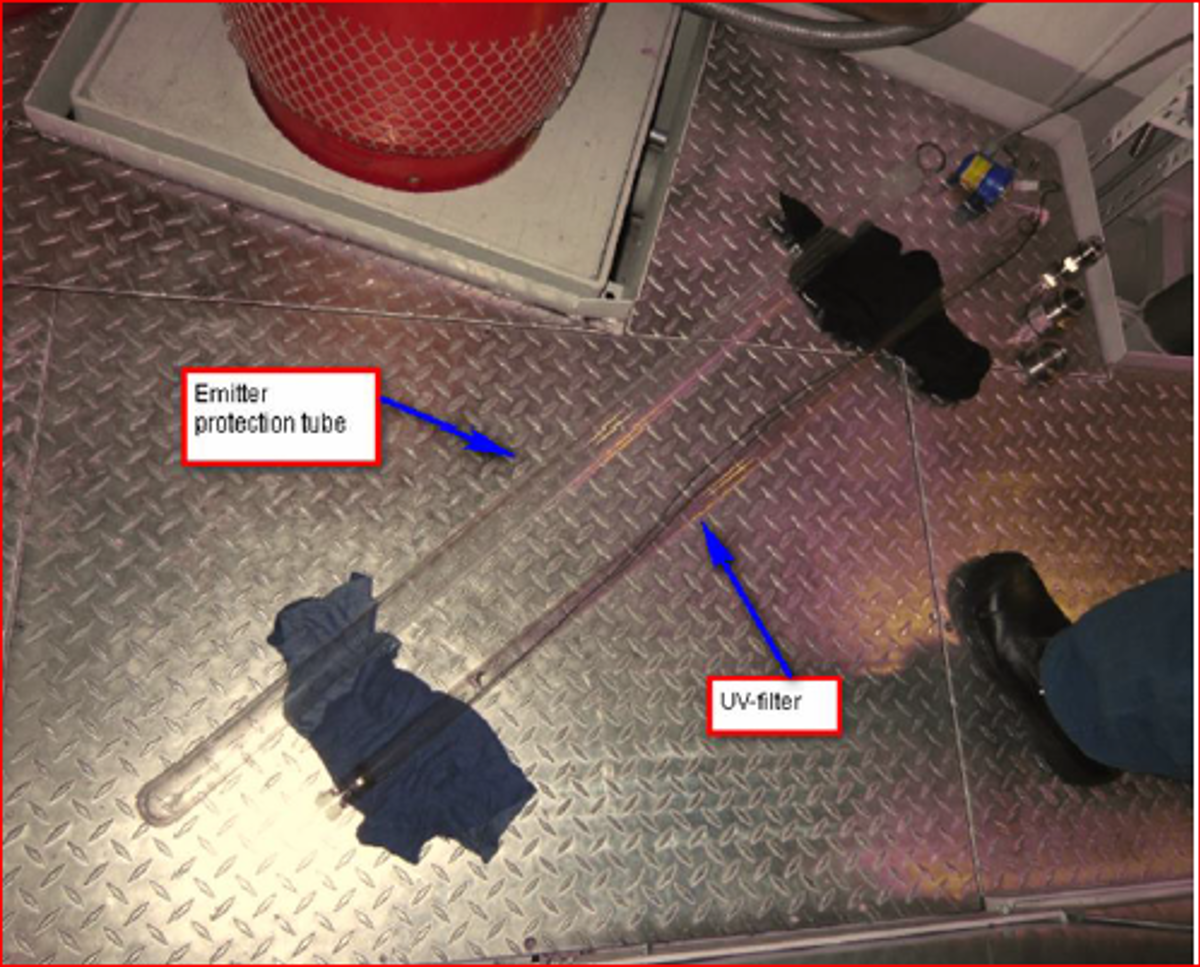
Emitter tube and UV-filter ready to be inserted
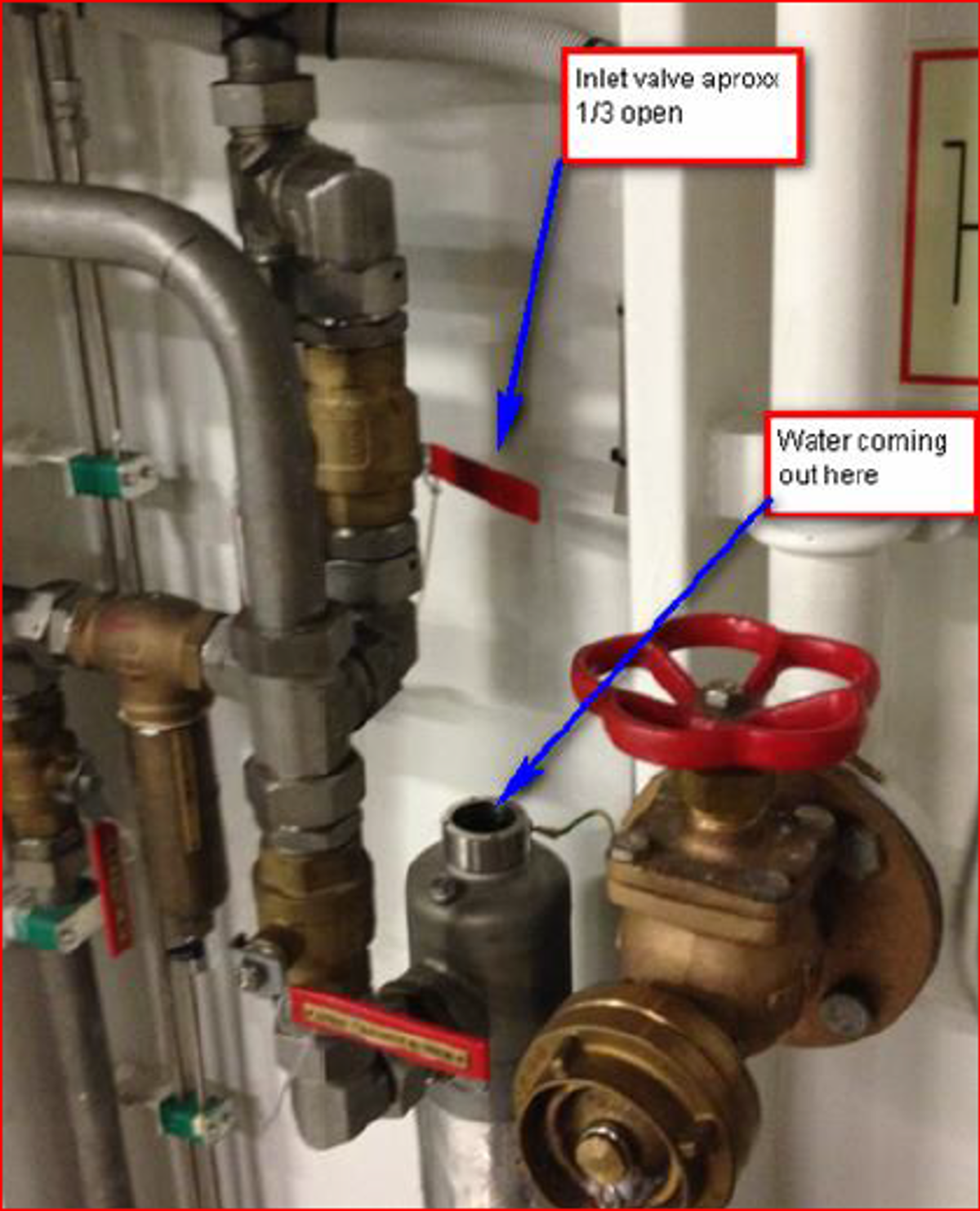
Investigations revealed the inlet valve was approximately 1/3 open
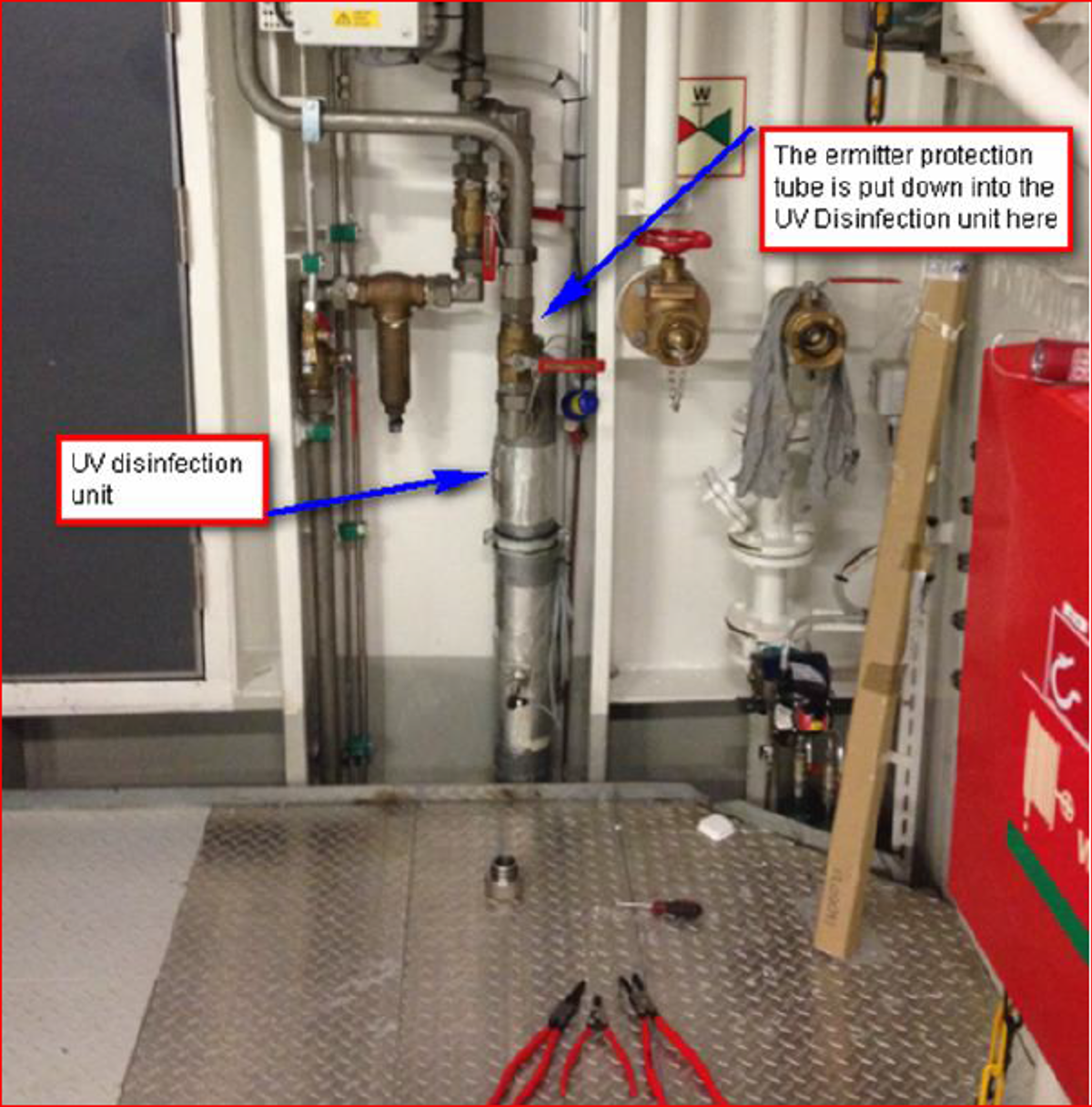
Actual system on-board
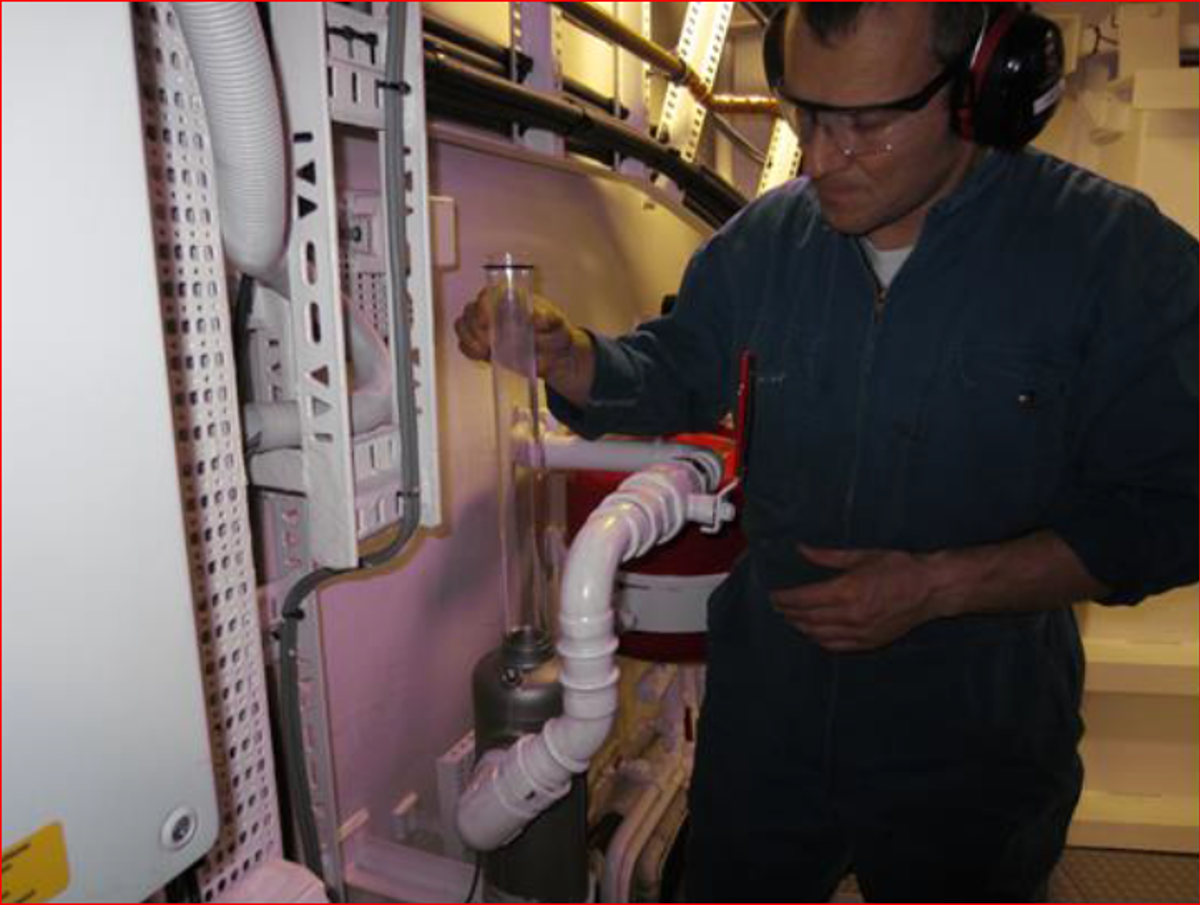
Emitter protection tube lowered into the filter (picture from another vessel)
Our member’s investigation revealed the following:
- The injured person (a 2nd Engineer) had dismantled the UV disinfection unit on other occasions and was therefore familiar with the equipment; . The UV sterilizer has a vendor user manual which indicates which valves to close and how to change out the filter; . The shut off valves before and after the UV disinfection unit were closed. The bypass valve was open. The valve upstream of the shut off valve ahead of the unit was open. The fresh water inlet supply was also not shut off; . The following direct causes were identified: . The hydrophore pump was running and building pressure into the system . The 2nd Engineer wanted to verify the correct position of the seal ring so he used a torch and bent over and placed his head directly over the tube
- Type of valves – It was possible to open the water inlet valve by accident due to the type of valve handle, which led to water running into the UV disinfection unit and building up a pressure below the emitter protection tube. This resulted in the emitter protection tube being forced out through the opening in the tension screw with high speed, hitting the 2nd Engineer in the face.
The following indirect causes were identified:
- Location/layout of pipes and valves: Tight space and difficult ergonomics
- There was no system description in place for this maintenance task
- There was poor risk awareness related to this specific job
- There are gaps in compliance with vessel company requirements
- A permit to work including a Lock out Tag out (LOTO) or isolation of the pump should have been issued for the job in accordance with company work permit system – this was not done
- Failure to use Proper Personal Protective Equipment (PPE) – The injured person was not wearing safety glasses, as required in company procedures when working on high pressure systems.
Related Safety Flashes
-
IMCA SF 22/15
15 December 2015
-
IMCA SF 16/15
22 October 2015
IMCA Safety Flashes summarise key safety matters and incidents, allowing lessons to be more easily learnt for the benefit of the entire offshore industry.
The effectiveness of the IMCA Safety Flash system depends on the industry sharing information and so avoiding repeat incidents. Incidents are classified according to IOGP's Life Saving Rules.
All information is anonymised or sanitised, as appropriate, and warnings for graphic content included where possible.
IMCA makes every effort to ensure both the accuracy and reliability of the information shared, but is not be liable for any guidance and/or recommendation and/or statement herein contained.
The information contained in this document does not fulfil or replace any individual's or Member's legal, regulatory or other duties or obligations in respect of their operations. Individuals and Members remain solely responsible for the safe, lawful and proper conduct of their operations.
Share your safety incidents with IMCA online. Sign-up to receive Safety Flashes straight to your email.