Subcontractor ROV control room damaged by fire
- Safety Flash
- Published on 27 February 2019
- Generated on 14 October 2026
- IMCA SF 03/19
- 2 minute read
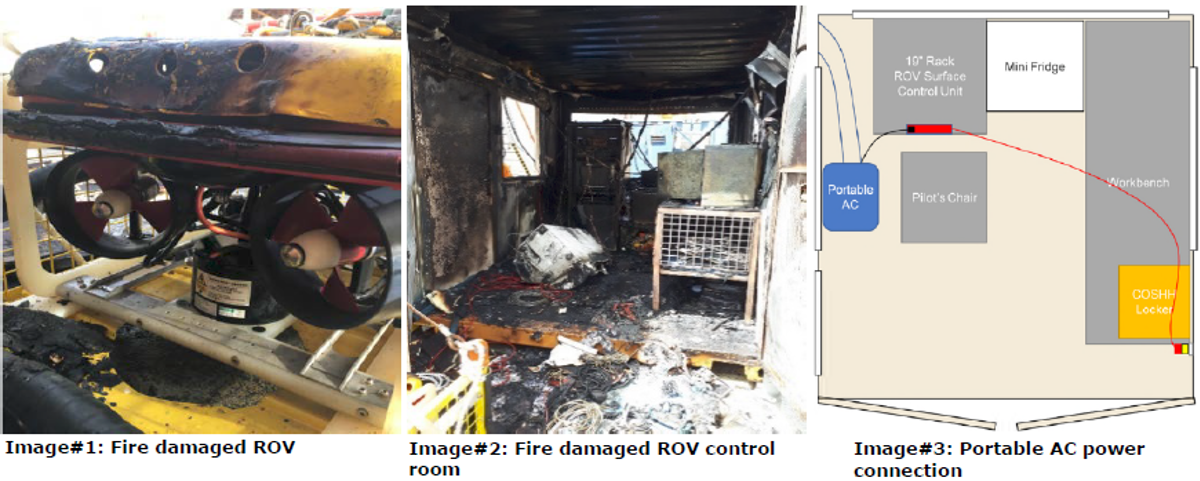
An unmanned ROV control room container, located on the deck of an accommodation jack-up, caught fire.
What happened?
The fire team extinguished the on-board fire without any injury to personnel.
However, the ROV control room, as well as the ‘suitcase ROV’ (buoyancy fairing and chassis) were badly damaged.
What went wrong? What were the causes?
- The temporary container was not adequately fitted with fire protection. Only one battery-operated smoke detector and two portable extinguishers were in place.
- The layout of equipment and materials within the container, including the presence of oily rags, created a fire risk which was not identified or managed during mobilisation or pre-use inspections. There was no evidence of ROV System audit/pre-mobilisation checklists being completed.
- A portable air-conditioning (AC) unit that was being used within the container was not fit for purpose. The portable AC unit (that was fitted with a 13A fuse) was incorrectly connected using a British-to-M type adaptor, connected to a 16A outlet. An electrical fault from this connection was found to be the most likely source of the fire.
Lessons learned
- Scope of work requirements issued to subcontractors should include project specific requirements and industry standards relating to the electrical safety and fire protection of portable electric equipment.
- Ensure that all third-party electrical equipment is inspected upon mobilisation to the vessel and confirmed fit for purpose, prior to use.
- Site inspections and safety inspections should include checking the condition of portable electrical equipment and electrical connections.
Members may wish to refer to:
- Guidelines for installing ROV systems on vessels or platforms
- ROV mobilisation
- Fire in the accommodation: electronic items in cabins
Related Safety Flashes
-
IMCA SF 18/18
23 August 2018
-
IMCA Safety Flashes summarise key safety matters and incidents, allowing lessons to be more easily learnt for the benefit of the entire offshore industry.
The effectiveness of the IMCA Safety Flash system depends on the industry sharing information and so avoiding repeat incidents. Incidents are classified according to IOGP's Life Saving Rules.
All information is anonymised or sanitised, as appropriate, and warnings for graphic content included where possible.
IMCA makes every effort to ensure both the accuracy and reliability of the information shared, but is not be liable for any guidance and/or recommendation and/or statement herein contained.
The information contained in this document does not fulfil or replace any individual's or Member's legal, regulatory or other duties or obligations in respect of their operations. Individuals and Members remain solely responsible for the safe, lawful and proper conduct of their operations.
Share your safety incidents with IMCA online. Sign-up to receive Safety Flashes straight to your email.