Burns suffered in confined space
- Safety Flash
- Published on 2 April 2009
- Generated on 21 October 2026
- IMCA SF 04/09
- 2 minute read
An ROV pilot technician suffered burns to his hands, face and knee as a result of a fire in a confined space.
What happened?
The pilot technician entered the hub of a five ton ROV umbilical winch drum through a very small opening and attempted to remove moisture that had accumulated in the rotary junction box inside the hub.
The pilot technician opened the cover of the rotary junction box and sprayed CRC 2016 contact cleaner into the box in an attempt to remove moisture. Subsequently he used a heat gun to speed up the process of drying the moisture in the box. The instant he switched on the heat gun, flammable gases from the contact cleaner ignited and the subsequent fire burned both his hands and his face. The pilot technician managed to get to the opening of the drum, put his head and hands out and call for help.
He was removed from the hub of the drum with difficulty and subsequently evacuated to shore for treatment.
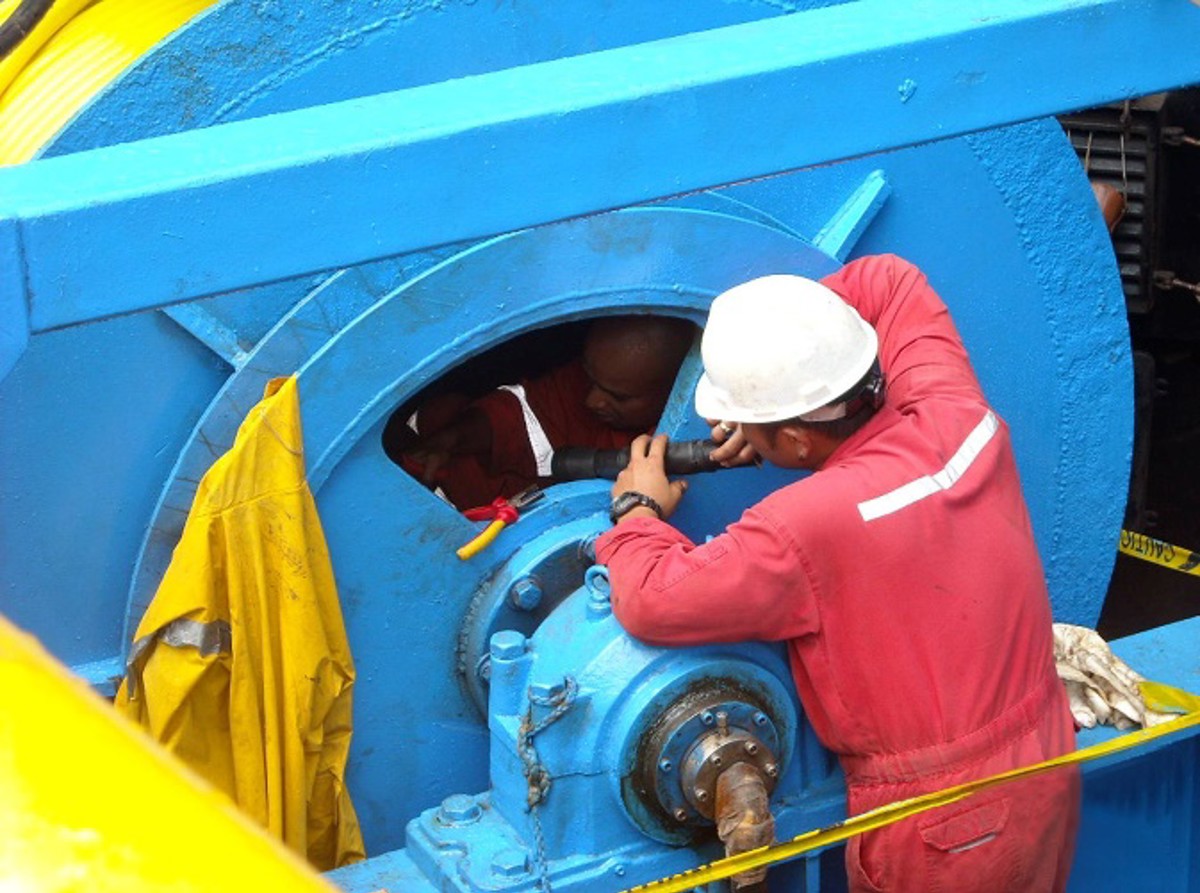
umbilical winch drum and small opening
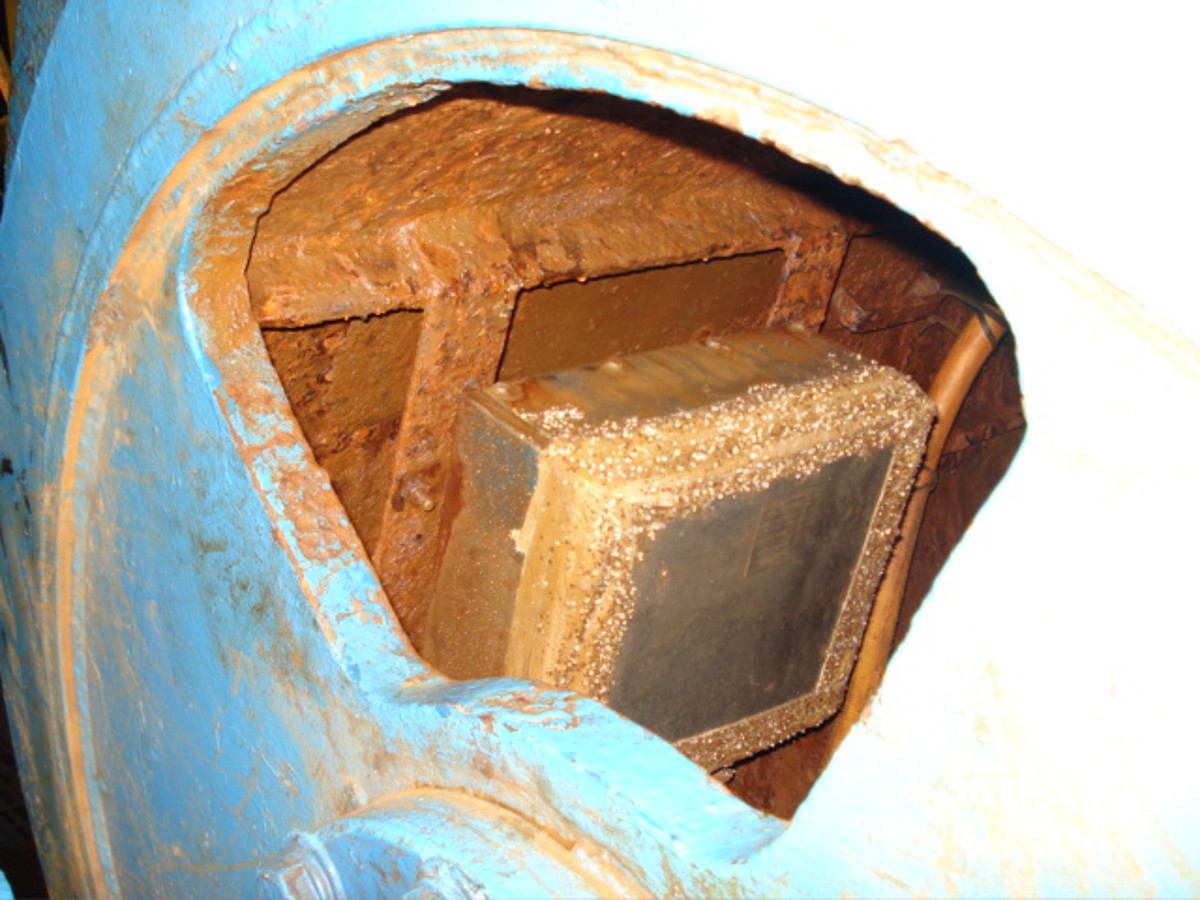
opening into drum and rotary junction box
What were the causes?
Following investigation the immediate causes of the incident were determined to be:
- The pilot technician applied a heat source directly to a flammable substance – CRC 2016 contact cleaner.
- The pilot technician was in a confined space with inadequate ventilation and illumination.
Further factors noted were:
- The pilot technician entered a confined space with no permit to work and with nobody present.
- There was no job safety analysis or toolbox talk conducted before the job started and no proper control measures or personal protective equipment (e.g. gloves, breathing apparatus, etc) for the task were identified.
- There was inadequate supervision and no communication – the pilot technician did not notify anyone that he was entering a confined space.
- The pilot technician was not fully aware of the flammable nature of aerosol contact cleaner.
It was concluded that relocation of the rotary junction box to a location where it could be accessed easily for maintenance should be considered, so that people do not need to work in confined space.
IMCA Safety Flashes summarise key safety matters and incidents, allowing lessons to be more easily learnt for the benefit of the entire offshore industry.
The effectiveness of the IMCA Safety Flash system depends on the industry sharing information and so avoiding repeat incidents. Incidents are classified according to IOGP's Life Saving Rules.
All information is anonymised or sanitised, as appropriate, and warnings for graphic content included where possible.
IMCA makes every effort to ensure both the accuracy and reliability of the information shared, but is not be liable for any guidance and/or recommendation and/or statement herein contained.
The information contained in this document does not fulfil or replace any individual's or Member's legal, regulatory or other duties or obligations in respect of their operations. Individuals and Members remain solely responsible for the safe, lawful and proper conduct of their operations.
Share your safety incidents with IMCA online. Sign-up to receive Safety Flashes straight to your email.