MAIB: Flooding, capsize and foundering of small vessel after issues with towing wires
- Safety Flash
- Published on 22 March 2022
- Generated on 21 October 2026
- IMCA SF 07/22
- 3 minute read
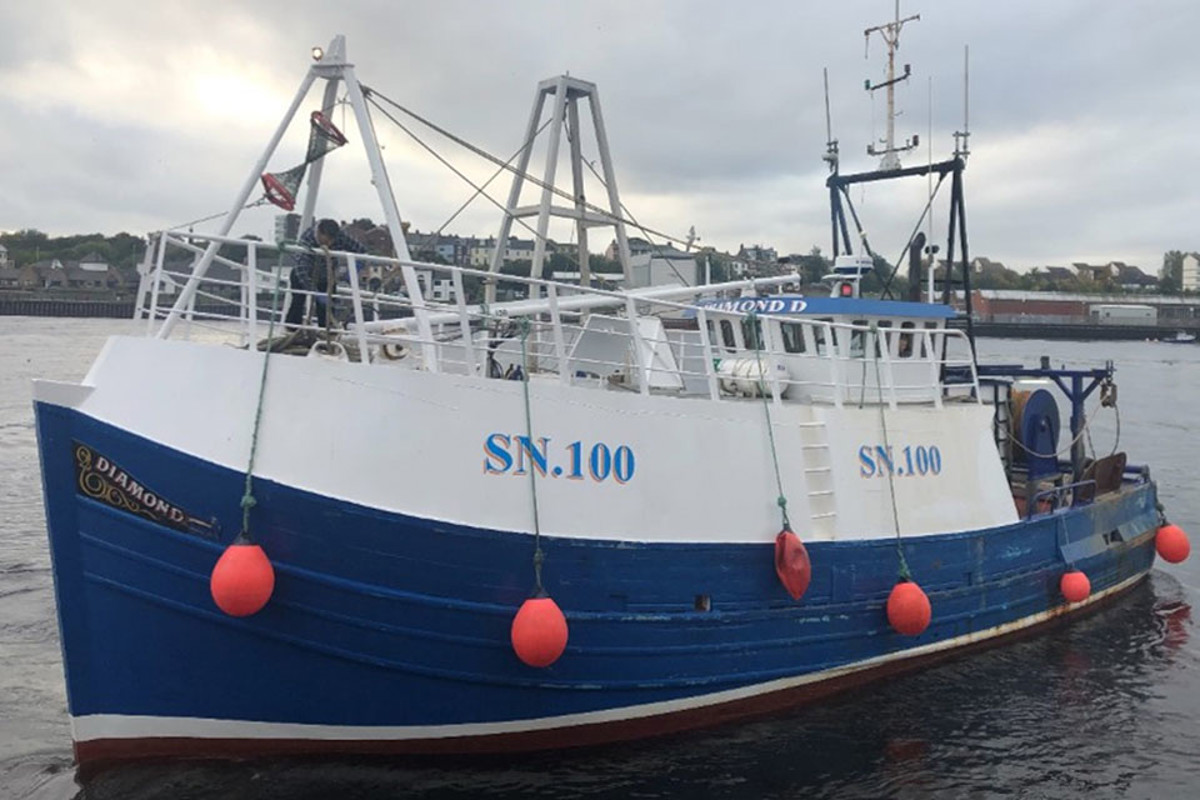
The UK Marine Accident Investigation Branch (MAIB) has published its Accident Report 2/2022 into the loss of a fishing boat in August 2020.
What happened?
The skipper and the vessel’s owner were relocating the boat in order to carry out planned survey and maintenance work. While on route, the two crew carried out a trawl to catch fish, during which the net snagged on the seabed. The vessel took on a list as the crew attempted to recover the net by hauling it. The list worsened considerably, and the vessel sank. The crew abandoned to a life raft and activated the boat’s emergency position indicating radio beacon. The two crew were subsequently rescued by the local lifeboat service.
What went wrong?
- The vessel foundered because the flooding of the hull went unnoticed until it was too late for the crew to take remedial action.
- Hull damage (this was a wooden boat) was caused by trawl doors hitting the hull as crew attempted to uncross towing wires. Flood water was able to spread through the vessel as there were no watertight bulkheads to contain it.
- While uncrossing the towing wires, the crew considered the trawl doors hitting the hull to be a normal occurrence (IMCA’s emphasis) and did not recognise the danger of damage. Consequently, they did not verify the vessel’s watertight integrity.
- The crew did not hear the bilge alarm because they left the wheelhouse unmanned and were totally focused on recovering the gear. Had there been a third crew member on board and the wheelhouse not left unmanned for seven hours, the bilge alarms may have alerted the crew to the flooding of the hull. This could have given the crew time to use the additional pumping capacity available.
- There was no evidence that any emergency training drills had been completed on board the vessel, or that the crew routinely wore personal flotation devices (PFD) while working on deck.
What went right?
- The wearing of lifejackets undoubtedly saved lives. The two crew were fortunate that the life raft inflated correctly and that they did not end up in the water, as neither was wearing a lifejacket when the vessel capsized.
- When it became apparent that the vessel was in difficulties, a VHF call to alert the coastguard and the signal from the EPIRB assisted the rescue services in locating the crew in the life raft in a timely manner.
The MAIB has released a Safety Flyer to the fishing industry about this incident. The main principles therein are repeated here in bullet point form:
- Any change of agreed plans or deviation from a standard operation should involve a brief step back and a reassessment of the risks.
- All unattended spaces should be regularly checked.
- WEAR A LIFE-JACKET!
- Know how to use emergency equipment in your workplace – the crew’s activation of the EPIRB led directly to their timely rescue.
IMCA Safety Flashes summarise key safety matters and incidents, allowing lessons to be more easily learnt for the benefit of the entire offshore industry.
The effectiveness of the IMCA Safety Flash system depends on the industry sharing information and so avoiding repeat incidents. Incidents are classified according to IOGP's Life Saving Rules.
All information is anonymised or sanitised, as appropriate, and warnings for graphic content included where possible.
IMCA makes every effort to ensure both the accuracy and reliability of the information shared, but is not be liable for any guidance and/or recommendation and/or statement herein contained.
The information contained in this document does not fulfil or replace any individual's or Member's legal, regulatory or other duties or obligations in respect of their operations. Individuals and Members remain solely responsible for the safe, lawful and proper conduct of their operations.
Share your safety incidents with IMCA online. Sign-up to receive Safety Flashes straight to your email.