USCG: hazard from discarded munitions
- Safety Flash
- Published on 27 March 2024
- Generated on 16 October 2026
- IMCA SF 07/24
- 2 minute read
The United States Coastguard (USCG) had published Safety Alert 02-24 relating to hazards presented by discarded ammunition.
The alert was issued to raise awareness of lurking hazards caused by discarded munitions, which often contain active explosives or chemical agents. Although the practice of dumping munitions into the sea ceased in 1970, a significant amount remains hidden in coastal waters, posing a safety hazard to commercial fisherman, dredge operators, and others who trawl and work the ocean floor.
What happened?
A deckhand on a clamming vessel was severely burned when a canister was dredged up and brought onboard with clams and other debris. The canister likely contained mustard gas or another blistering agent, but did not display any obvious visual, audible, or odour indicators of discharging content. A member of the crew discovered the canister and threw it back overboard. Several hours later he developed a severe rash that required professional medical treatment. Mustard gas is a chemical weapon developed during World War I. Millions of pounds of this product, other chemical weapons, bombs, torpedoes, artillery shells, and munitions were routinely disposed of and remain in U.S. coastal waters.
Although many munition dump areas are well marked on navigation charts, numerous areas where munitions were discarded remain unmarked. There is also evidence suggesting that munitions were frequently “short dumped,” meaning dumped outside of the designated areas by contractors hired to take them to the intended locations.
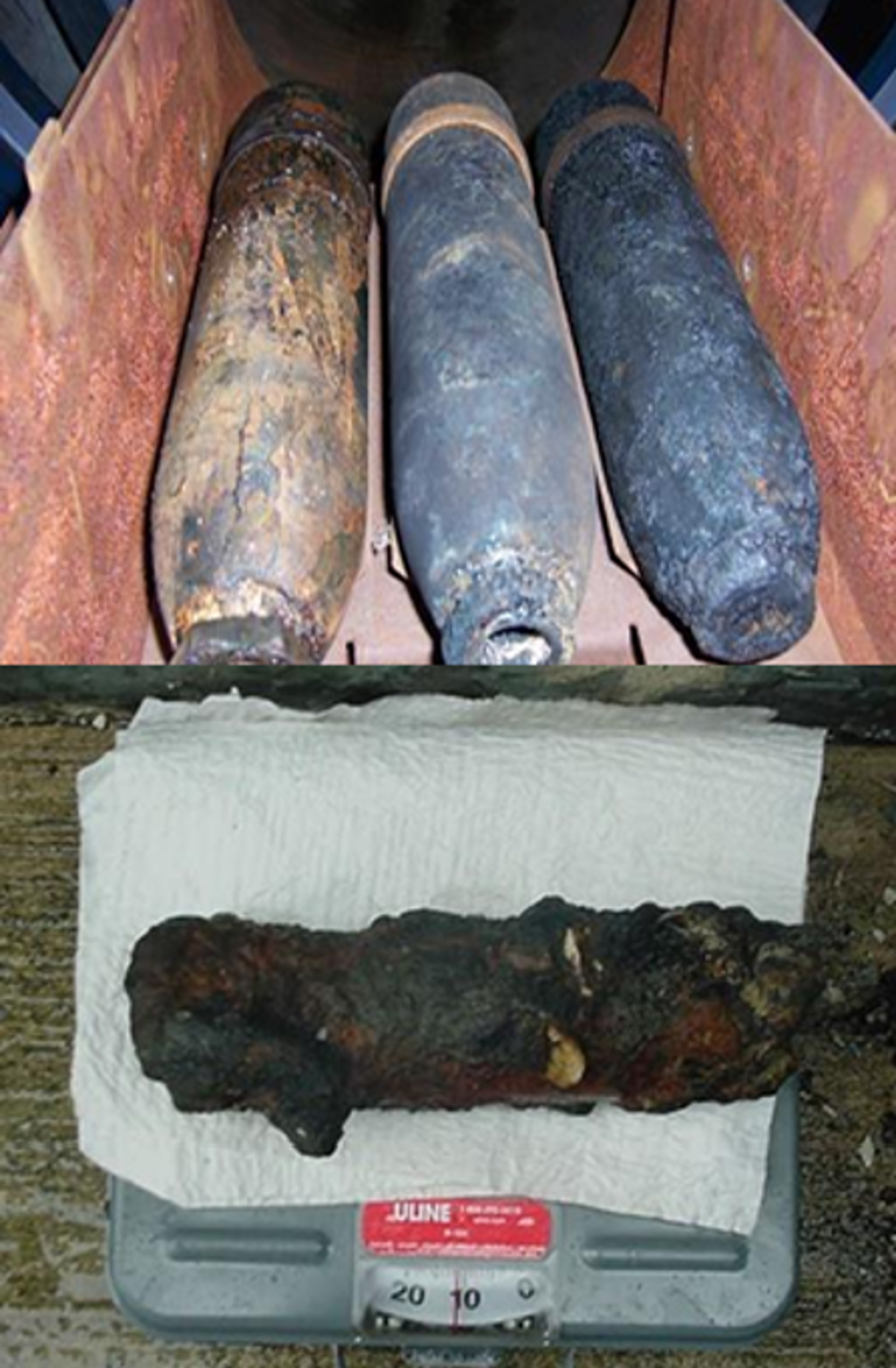
The US Coast Guard previously issued Safety Alert 11-16 and Safety Alert 6-10 on this same topic and continues to strongly recommend that persons involved in the fishing and dredging industries:
- Review their navigational charts to ensure the areas in which they are working are not near labelled “Explosives Dumping Areas.” Such areas should be given a wide berth and seafarers should recognize that seabed topography can change and that objects can move significant distances from their original disposal areas.
- Carefully record the position of any munitions encountered and returned to the sea.
- Immediately report discovery of unexploded munitions to the appropriate local authorities.
Members may wish to refer to:
Related Safety Flashes
-
IMCA SF 07/22
22 March 2022
-
IMCA SF 17/18
3 August 2018
-
-
IMCA SF 30/19
17 December 2019
-



IMCA Safety Flashes summarise key safety matters and incidents, allowing lessons to be more easily learnt for the benefit of the entire offshore industry.
The effectiveness of the IMCA Safety Flash system depends on the industry sharing information and so avoiding repeat incidents. Incidents are classified according to IOGP's Life Saving Rules.
All information is anonymised or sanitised, as appropriate, and warnings for graphic content included where possible.
IMCA makes every effort to ensure both the accuracy and reliability of the information shared, but is not be liable for any guidance and/or recommendation and/or statement herein contained.
The information contained in this document does not fulfil or replace any individual's or Member's legal, regulatory or other duties or obligations in respect of their operations. Individuals and Members remain solely responsible for the safe, lawful and proper conduct of their operations.
Share your safety incidents with IMCA online. Sign-up to receive Safety Flashes straight to your email.