Life raft secured incorrectly on cradle
- Safety Flash
- Published on 27 March 2023
- Generated on 23 October 2026
- IMCA SF 08/23
- 1 minute read
During an onshore visit to a vessel, a life raft was observed to be attached/connected incorrectly to the life raft cradle.
What happened?
The life raft painter rope was connected to the cradle instead of to the weak link on the Hydrostatic Release Unit.
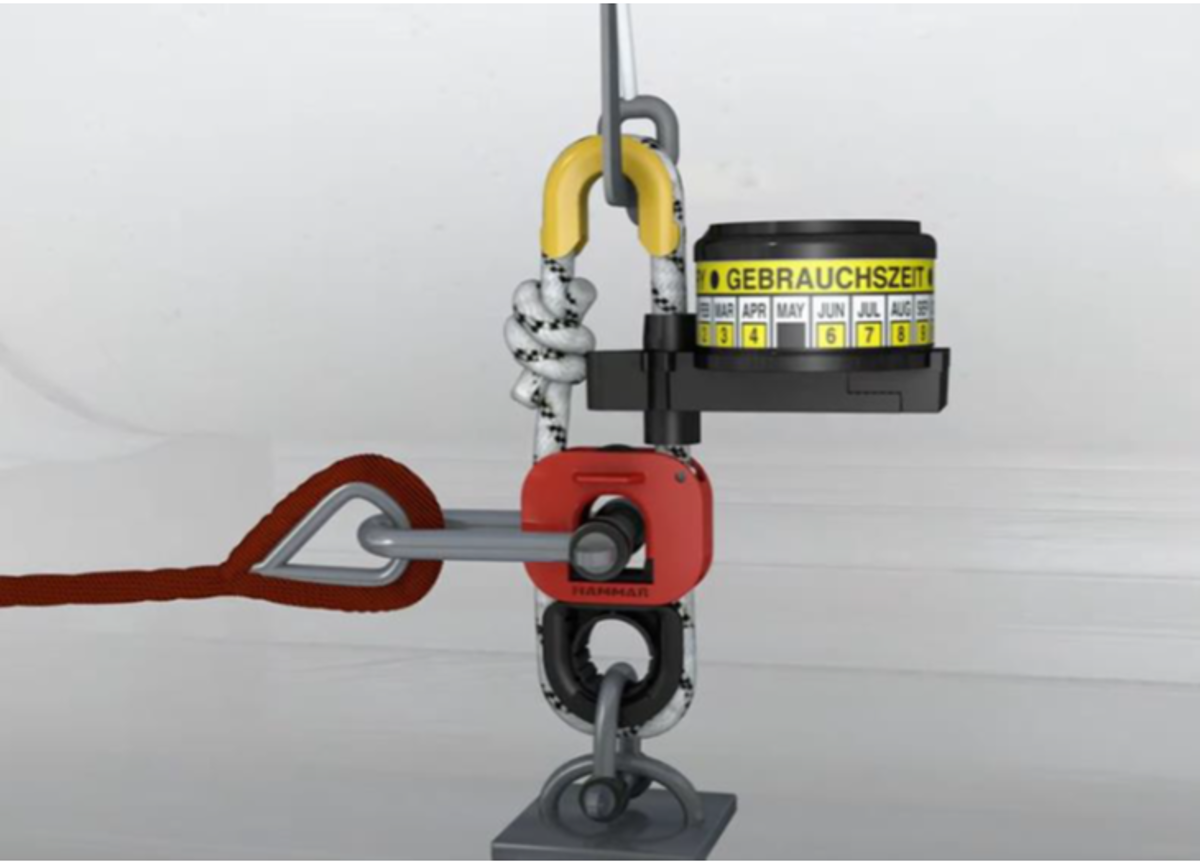
Correct life raft securing arrangement
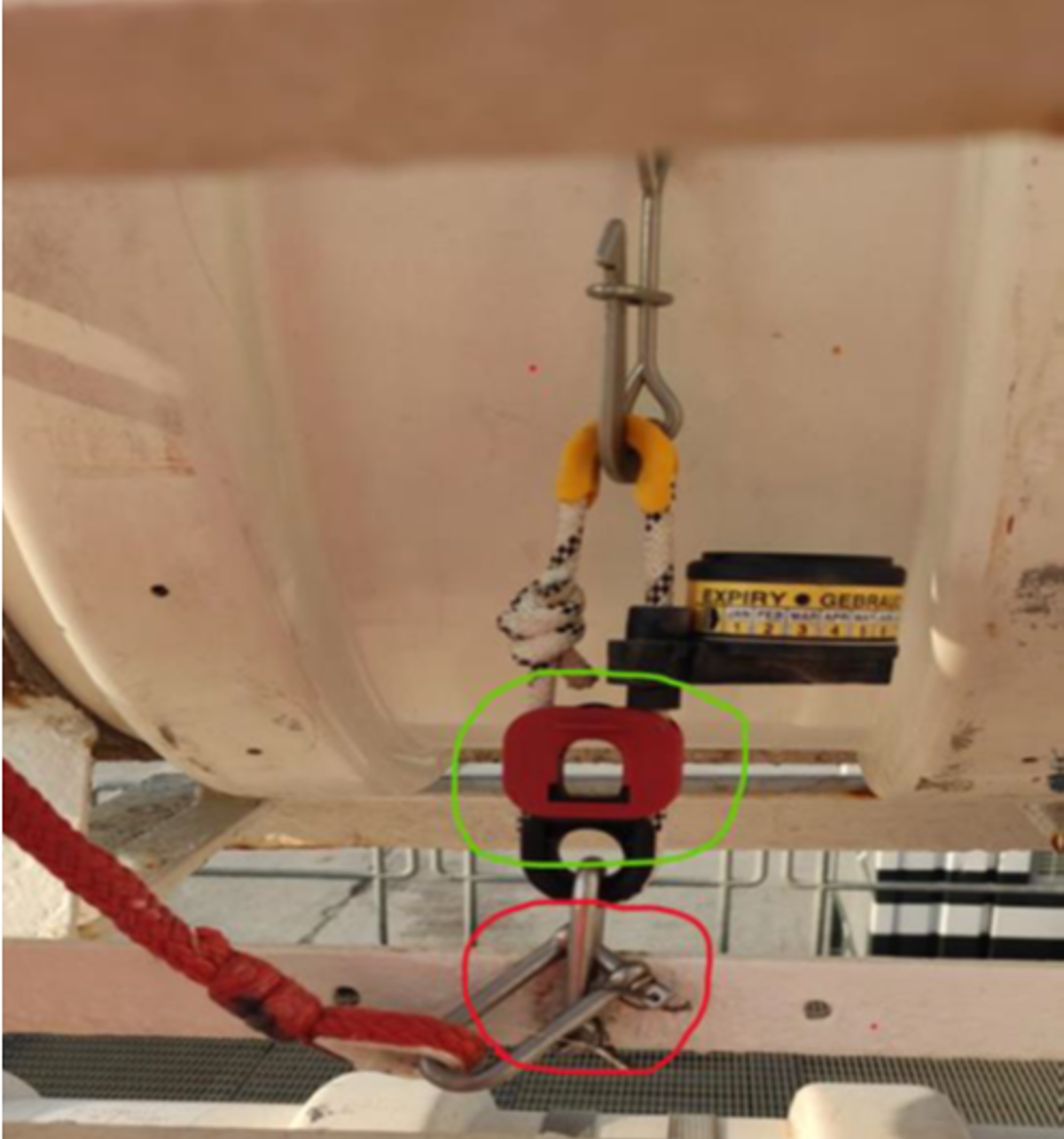
Incorrect connection point in red; correct connection in green
What went wrong?
It was installed incorrectly and there was no post-installation check carried out.
What inspection there had been, had been a visual check of condition with no check of whether the life raft was or was not correctly installed and secured.
Actions taken
Post-installation checks and life-raft weekly inspections added to planned maintenance system.
Related safety flashes
-
IMCA SF 11/21
16 April 2021
-
-
IMCA SF 16/19
5 July 2019
-
-
IMCA SF 21/18
17 September 2018
-
IMCA Safety Flashes summarise key safety matters and incidents, allowing lessons to be more easily learnt for the benefit of the entire offshore industry.
The effectiveness of the IMCA Safety Flash system depends on the industry sharing information and so avoiding repeat incidents. Incidents are classified according to IOGP's Life Saving Rules.
All information is anonymised or sanitised, as appropriate, and warnings for graphic content included where possible.
IMCA makes every effort to ensure both the accuracy and reliability of the information shared, but is not be liable for any guidance and/or recommendation and/or statement herein contained.
The information contained in this document does not fulfil or replace any individual's or Member's legal, regulatory or other duties or obligations in respect of their operations. Individuals and Members remain solely responsible for the safe, lawful and proper conduct of their operations.
Share your safety incidents with IMCA online. Sign-up to receive Safety Flashes straight to your email.