Diver entanglement – uncontrolled equipment in the water column
- Safety Flash
- Published on 28 April 2026
- Generated on 26 October 2026
- IMCA SF 08/26
- 2 minute read
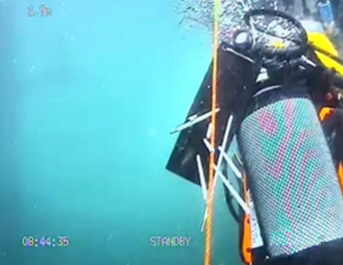
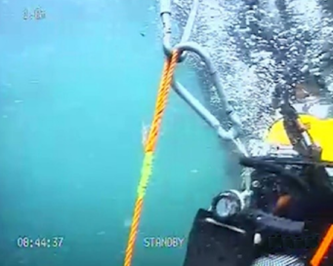
A diver hung a rubber mat with welding rods connected with a rope and carabiner to the rope suspending the welding cables resulting in a compromised work area.
What happened?
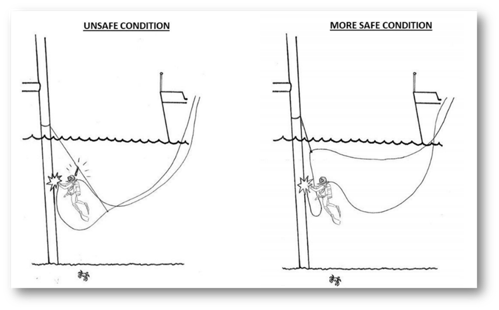
A diver started work welding an anode to a piggy-back riser clamp at 1.5msw. When starting the job, the diver hung a rubber mat with welding rods connected with a rope and carabiner to the rope suspending the welding cables. It resulted in a compromised work area. Due to the swell at 1.5m depth the connected light weight items were floating uncontrolled in the water column.
 |
 |
What went right?
The diver stayed very calm and relaxed during the situation, as there was no time rush. Launch of stand-by diver was done properly and promptly according to Diver Launch and Recovery procedure including Emergency Recovery. The stand-by diver followed diver’s umbilical and untangled the diver. The entanglement was undone without exceeding the planned diving time.
What went wrong?
The first stage regulator of the bail-out bottle got entangled in the rope suspending the rubber mat with welding rods. The diver was unable to free himself. The stand-by diver was launched and freed the diver from the entanglement.
What was the cause?
- Improper placement of tools
- loose ropes floating at the diver’s working area.
- tools positioned at approximately the same depth as the work position of the diver.
- diver working close to water surface, where due to the swell the tools can have uncontrolled movements.
Lessons and actions
- Always avoid having loose rope floating around the diver’s working area.
- Make sure that tools and equipment used on a job, whether during diving or otherwise, are not creating a restricted work area or a “blind spot”.
- Special attention should be given when working close to the water surface due to swell and uncontrolled movement of the diver and his tools.
- Use of lockable carabiners to secure tools may be preferred.
- Situational awareness during planning and executing a diving task.
Related Safety Flashes
-
IMCA SF 11/24
3 June 2024
-
IMCA SF 02/23
11 January 2023
IMCA Safety Flashes summarise key safety matters and incidents, allowing lessons to be more easily learnt for the benefit of the entire offshore industry.
The effectiveness of the IMCA Safety Flash system depends on the industry sharing information and so avoiding repeat incidents. Incidents are classified according to IOGP's Life Saving Rules.
All information is anonymised or sanitised, as appropriate, and warnings for graphic content included where possible.
IMCA makes every effort to ensure both the accuracy and reliability of the information shared, but is not be liable for any guidance and/or recommendation and/or statement herein contained.
The information contained in this document does not fulfil or replace any individual's or Member's legal, regulatory or other duties or obligations in respect of their operations. Individuals and Members remain solely responsible for the safe, lawful and proper conduct of their operations.
Share your safety incidents with IMCA online. Sign-up to receive Safety Flashes straight to your email.