Unsecured sheave pin fell from crane
- Safety Flash
- Published on 28 April 2026
- Generated on 26 October 2026
- IMCA SF 08/26
- 2 minute read
A sheave pin weighing 1.3 kg was found on deck.
What happened?
It fell from a 600 tonne crawler crane supplied by a third party. The pin likely fell from 30m height after the crane wire came into contact with its split pin, causing it to snap or to become dislodged. No-one was in the line of fire at the time, and there were no injuries. However, the incident posed a significant potential risk.
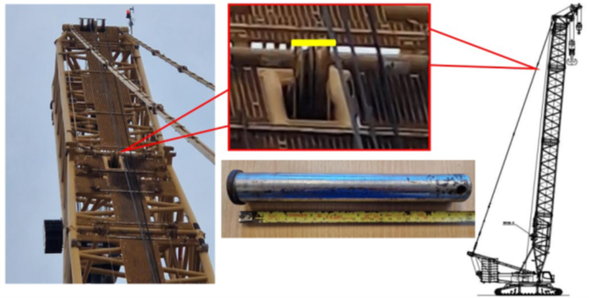
What went wrong?
- The sheave was not required for the crane’s operational configuration and was not referenced in the assembly documentation.
- Assembly instructions did not cover the sheave assembly, and securing methods were not reviewed for this configuration.
- During assembly, it had been verbally agreed to leave the sheave in a raised position, but this agreement was not documented.
- There was no secondary retention present for the pin.
Lessons to learn
- Are all components, including those not required for the current configuration, considered in assembly and operational drawings, procedures and risk assessments.
- How might changes or omissions in equipment setup lead to hazards, such as dropped objects?
- Ensure there is a written record of all configuration justifications during assembly, especially when deviating from standard procedures or manuals.
- Don’t forget the importance of additional safeguards (such as secondary retention) for pins and other parts that could become dropped objects.
- Subcontracted equipment does not mean subcontracted risk ownership – have a clear understanding of risks, roles and responsibilities when dealing with sub-contracted third-party equipment.
A causal factor in all the following incidents is that complex equipment being used was not correctly described in the drawings or documentation.
Related Safety Flashes
-
IMCA SF 05/26
17 March 2026
-
IMCA SF 02/26
22 January 2026
-
IMCA SF 01/26
12 January 2026
-
-
IMCA SF 17/25
17 September 2025
IMCA Safety Flashes summarise key safety matters and incidents, allowing lessons to be more easily learnt for the benefit of the entire offshore industry.
The effectiveness of the IMCA Safety Flash system depends on the industry sharing information and so avoiding repeat incidents. Incidents are classified according to IOGP's Life Saving Rules.
All information is anonymised or sanitised, as appropriate, and warnings for graphic content included where possible.
IMCA makes every effort to ensure both the accuracy and reliability of the information shared, but is not be liable for any guidance and/or recommendation and/or statement herein contained.
The information contained in this document does not fulfil or replace any individual's or Member's legal, regulatory or other duties or obligations in respect of their operations. Individuals and Members remain solely responsible for the safe, lawful and proper conduct of their operations.
Share your safety incidents with IMCA online. Sign-up to receive Safety Flashes straight to your email.