Heaving line snap-back causes injury
- Safety Flash
- Published on 28 April 2026
- Generated on 26 October 2026
- IMCA SF 08/26
- 2 minute read
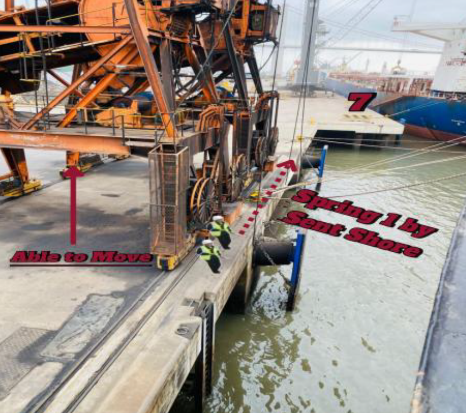
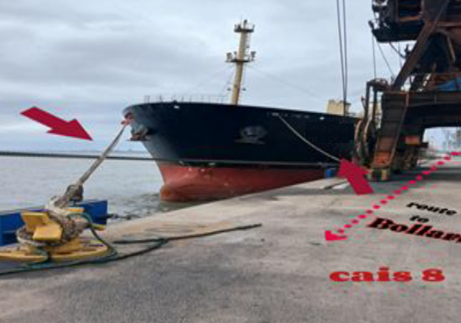
During a berthing operation, a heaving line under tension snapped while being handled by the mooring team on the quay.
What happened?
The sudden release of energy caused several workers to lose balance and fall onto the quay surface. One worker sustained a head impact when falling because their helmet chin strap was not properly secured, allowing the helmet to shift and fail to protect their head.
The injured person was taken to hospital, treated, and released after a short period, and the incident was classified as a Medical Treatment Case.
What went wrong?
The rope snapped and…
- No-one had inspected the mooring and heaving lines before use.
- Workers were stood in snap-back danger zones in a congested berth area.
- More than one rope was being handled at once.
- The snap-back risk was not fully understood by the shore-based workers and had not been discussed before the job.
- There was inadequate supervision and training.
- PPE (hard hat) was not worn correctly.
Lessons to learn
- Always inspect mooring and heaving lines before use - reject damaged or poor-quality lines.
- Ensure everyone on the job – including third-party personnel and shore-basd workers - has a thorough understanding of snap-back zones and the potential consequences of being in them.
- So far as reasonably practical, handle one rope at a time to reduce congestion and risk.
- Position yourself carefully during mooring operations, ensuring you leave adequate space around you.
- Ensure adequate oversight or supervision of mooring operations.
- Stop the job if you think it is unsafe!
Members may wish to refer to:
· IMCA video – mooring incidents
Related Safety Flashes
-
IMCA SF 22/16
1 September 2016
-
IMCA SF 16/22
4 July 2022
-
IMCA SF 03/21
19 January 2021
-
IMCA Safety Flashes summarise key safety matters and incidents, allowing lessons to be more easily learnt for the benefit of the entire offshore industry.
The effectiveness of the IMCA Safety Flash system depends on the industry sharing information and so avoiding repeat incidents. Incidents are classified according to IOGP's Life Saving Rules.
All information is anonymised or sanitised, as appropriate, and warnings for graphic content included where possible.
IMCA makes every effort to ensure both the accuracy and reliability of the information shared, but is not be liable for any guidance and/or recommendation and/or statement herein contained.
The information contained in this document does not fulfil or replace any individual's or Member's legal, regulatory or other duties or obligations in respect of their operations. Individuals and Members remain solely responsible for the safe, lawful and proper conduct of their operations.
Share your safety incidents with IMCA online. Sign-up to receive Safety Flashes straight to your email.