Offshore tank container rigging failure
- Safety Flash
- Published on 1 November 2011
- Generated on 22 July 2026
- IMCA SF 12/11
- 2 minute read
A Member has reported two incidents in which the rigging of an offshore tank container failed as a result of a cold fracture.
In both cases a tank container was rearranged on deck and damage was observed prior to actually lifting the container. There was no other damage than to the link itself.
An approved offshore container is outfitted with an associated rigging set that stays attached for handling. The container and sling are re-certified on an annual basis. For both sets of failed rigging the certification was found to be in order.
- Both containers were lifted in static conditions (deck to deck) in good weather conditions.
- Both containers were full at the time of lifting and the weight of the container did not exceed the safe working load.
- There was no deformation in the link or chain observed in either case; they were so-called cold fractures.
- In both cases it was the master link in a corner fitting of the container that failed.
Following the first incident, the chain link was sent to a laboratory to establish the cause of the failure. It was, at the time, concluded that the most likely scenario that caused the fast sudden fracture was a forging defect in the master link.
Following the second incident some seven months later, the similarities between the two incidents were apparent and it was established that both rigging sets were purchased from a single batch. With reference to similar incidents in the industry, hydrogen induced cracking or manufacturing process errors could not be ruled out. As this failure mechanism could not be determined by non-destructive examination methods, it was decided to replace all rigging sets from this batch (32 off) with new rigging sets.
Laboratory results are awaited on these quarantined rigging sets and the broken link for further action as appropriate.
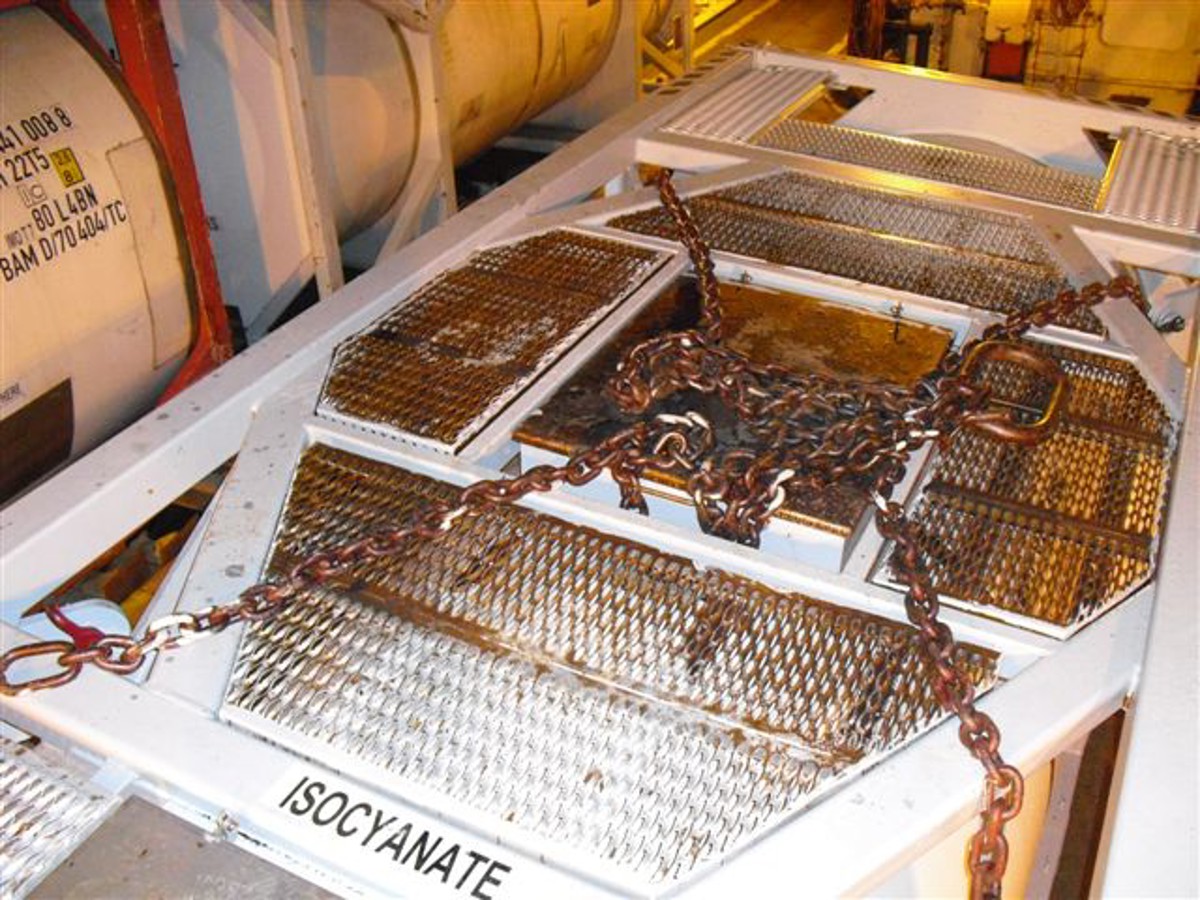
failed chain link
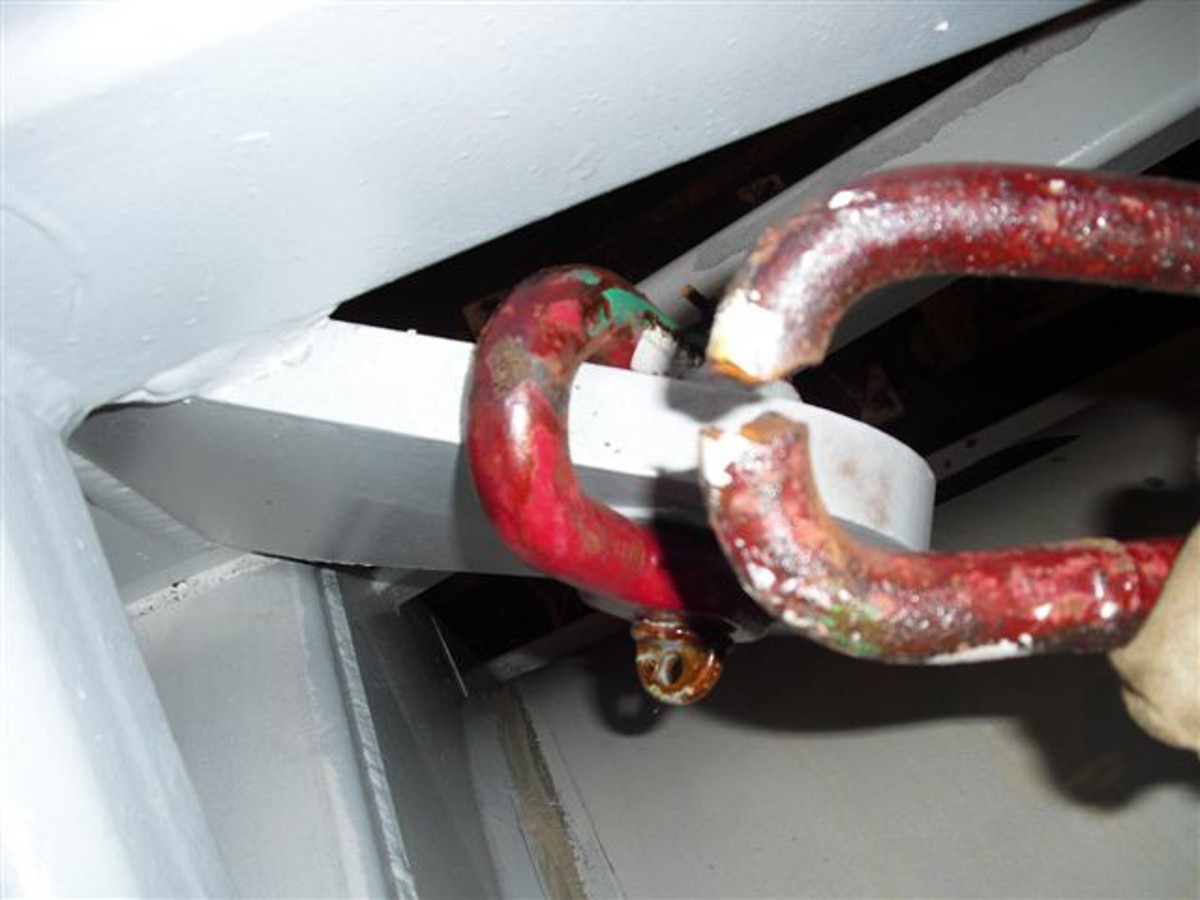
failed chain link
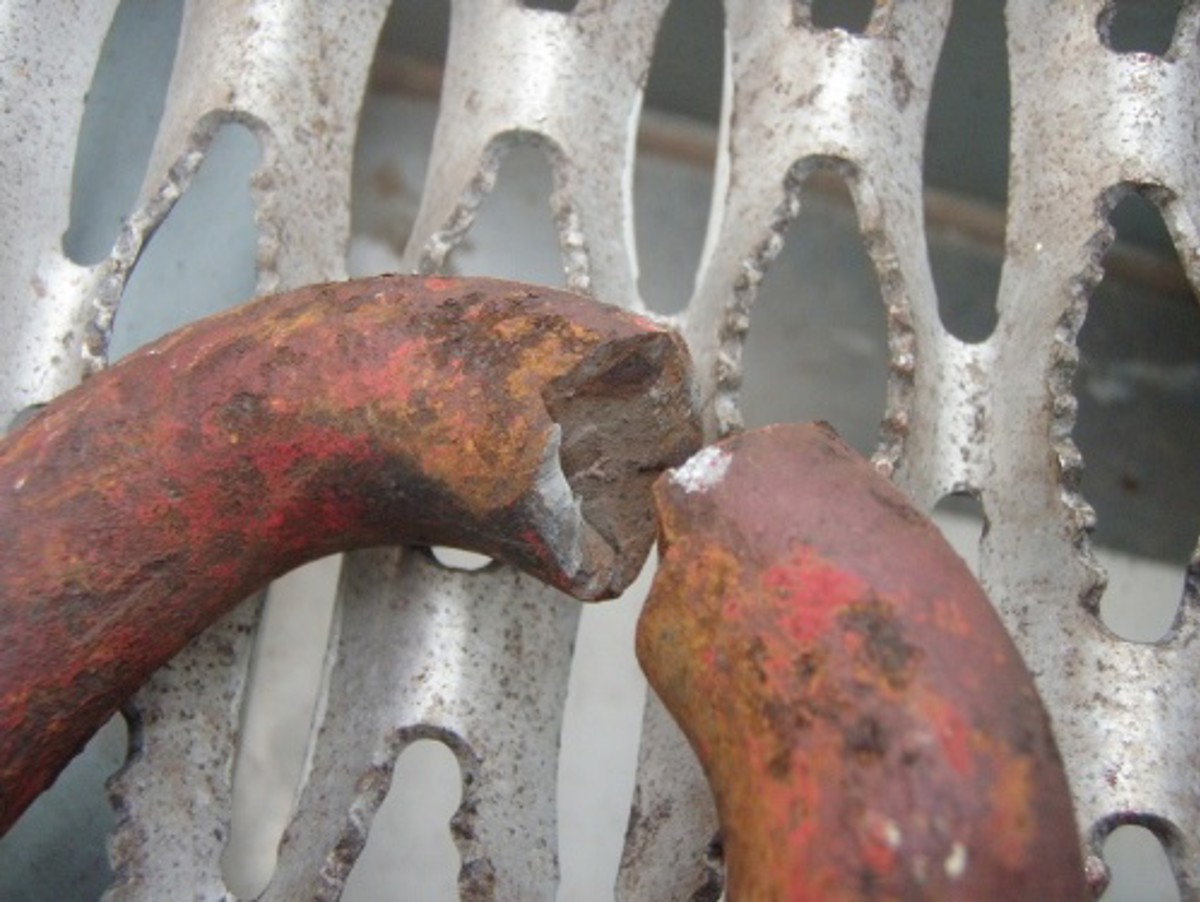
failed chain link
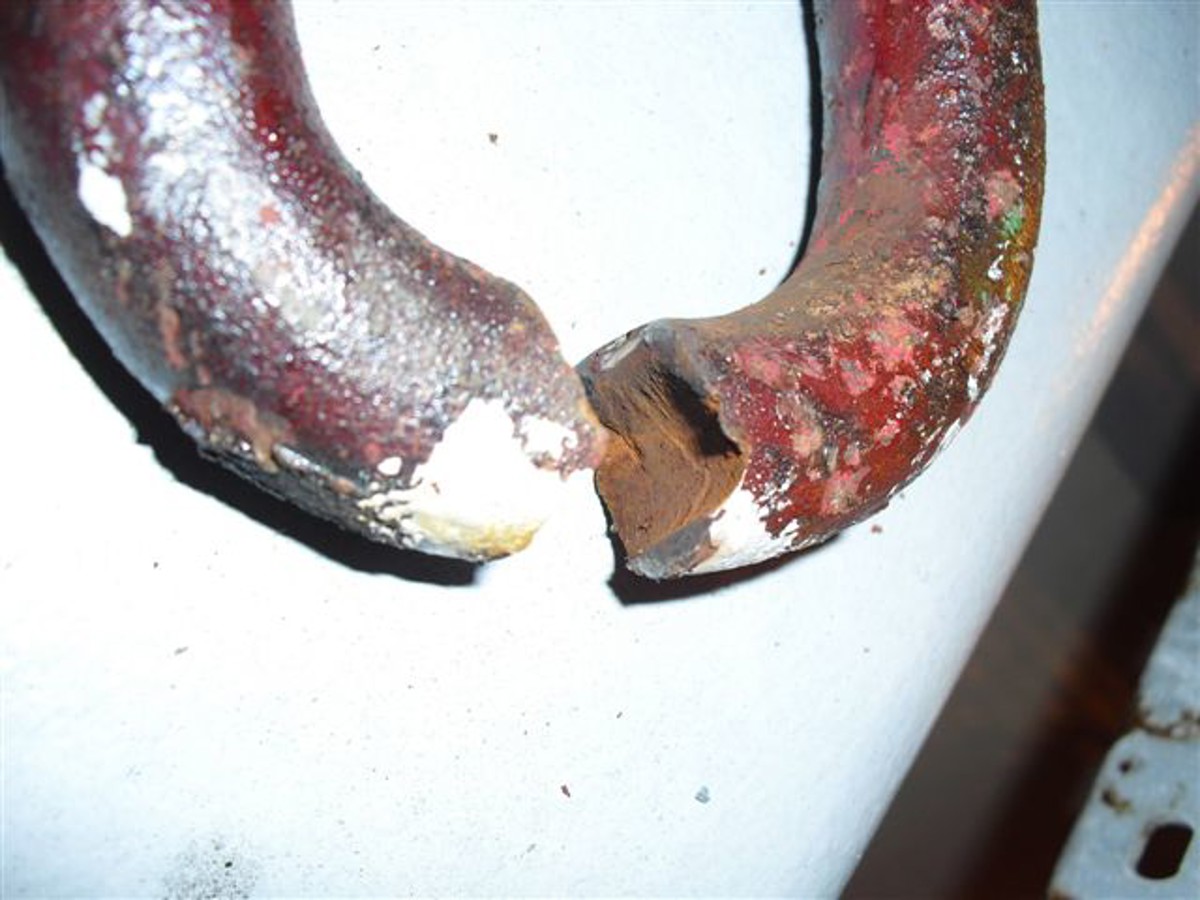
failed chain link
IMCA Safety Flashes summarise key safety matters and incidents, allowing lessons to be more easily learnt for the benefit of the entire offshore industry.
The effectiveness of the IMCA Safety Flash system depends on the industry sharing information and so avoiding repeat incidents. Incidents are classified according to IOGP's Life Saving Rules.
All information is anonymised or sanitised, as appropriate, and warnings for graphic content included where possible.
IMCA makes every effort to ensure both the accuracy and reliability of the information shared, but is not be liable for any guidance and/or recommendation and/or statement herein contained.
The information contained in this document does not fulfil or replace any individual's or Member's legal, regulatory or other duties or obligations in respect of their operations. Individuals and Members remain solely responsible for the safe, lawful and proper conduct of their operations.
Share your safety incidents with IMCA online. Sign-up to receive Safety Flashes straight to your email.