Near-miss: Falling transponder on main deck
- Safety Flash
- Published on 26 June 2013
- Generated on 27 October 2026
- IMCA SF 11/13
- 3 minute read
A Member has reported an incident in which a transponder came into contact with the crane’s sheave, causing the transponder to fall on deck.
The incident occurred during lifting operations, which required overboarding a jumper and its spreader bar – both positioned on deck. The whole assembly was directly slung to the hook on the main line of the vessel’s crane (see Figure 1). The main line and the whip line were both equipped with a transponder that was positioned right above the headache ball and directly secured to the wire rope with two jubilee clips.
Once the assembly was lifted off its stands, the length of the whip line was reduced from approximately 7 m to 3 m, so that it would not get tangled with the main line. The incident happened as the knuckle boom was folded to adjust the rigging. The surface area of the knuckle boom increases when folded and both lines are drawn in as a result. The transponder on the whip line was caught up in the sheave, causing the transponder, which weighed approximately 4 kg, to fall from 30 m to the deck. There were no injuries. The transponder sustained noticeable damage (see Figure 2).
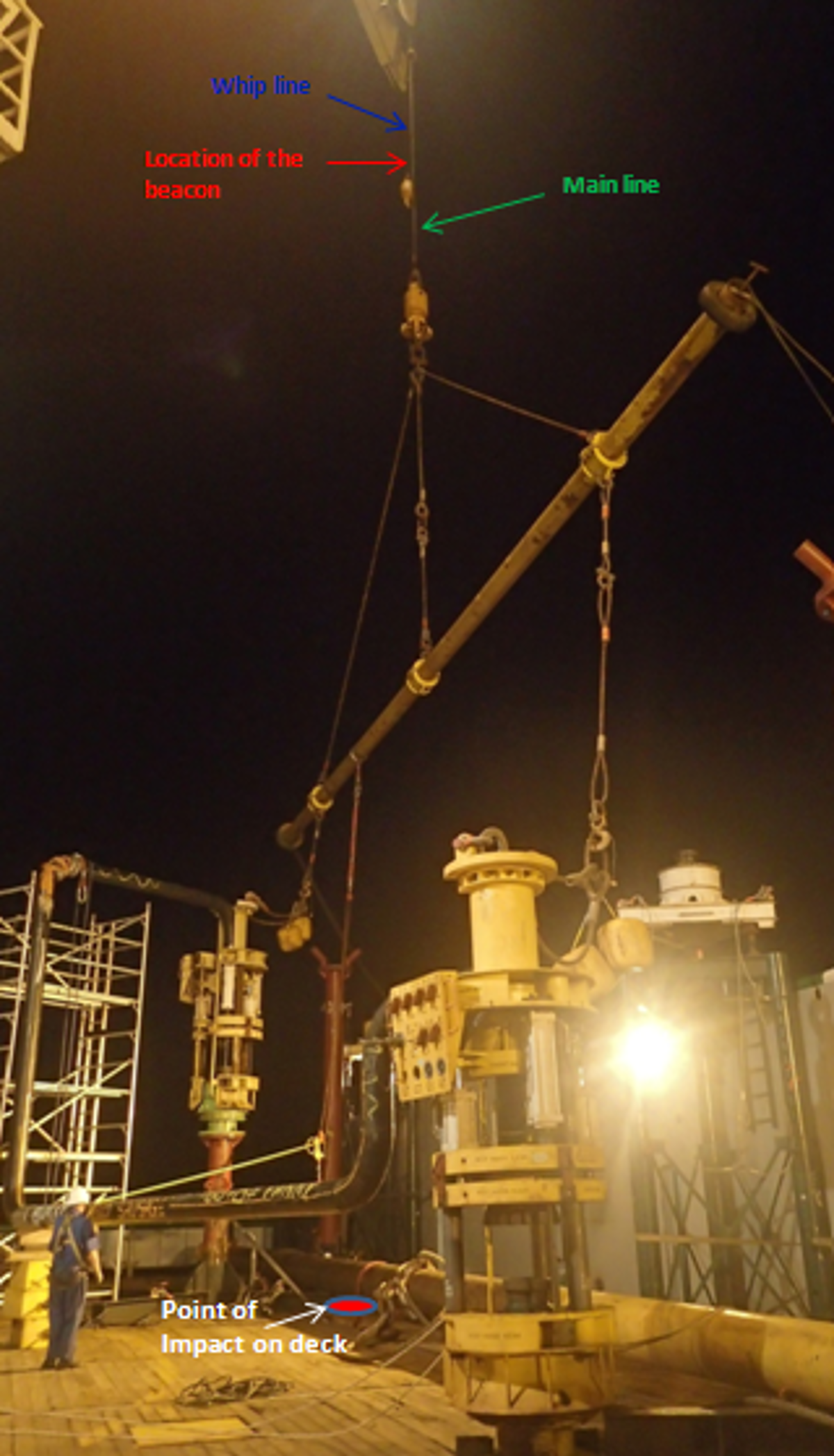
Fig. 1: Spreader bar assembly
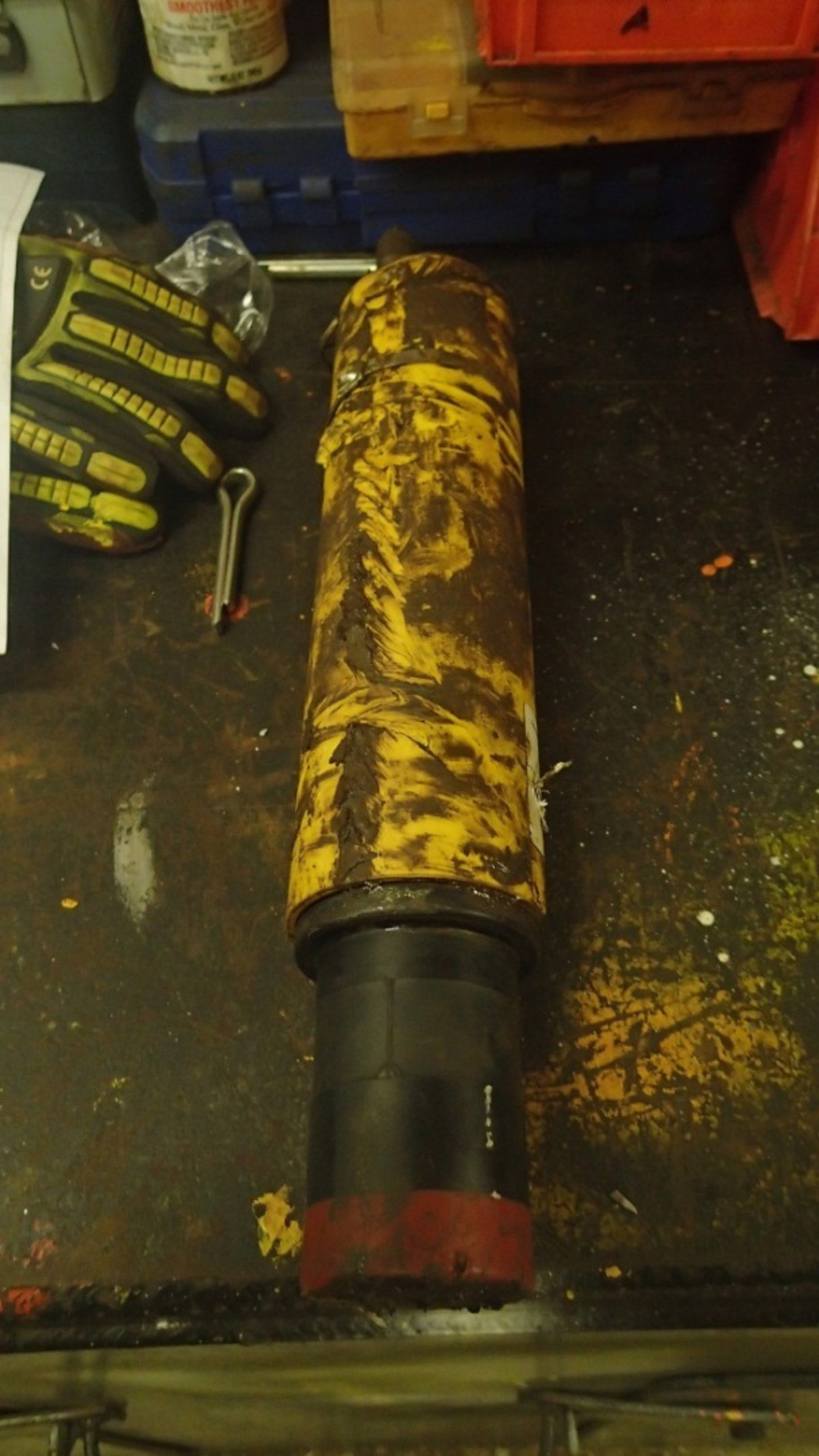
Fig. 2: Damaged transponder
Our Member’s investigation revealed the following:
- The mechanical hook level alarm installed on the whip line was disconnected because it was deemed too sensitive to grease build-up.
- The mechanical hook level alarm installed on the main line was not working because of corroded switches that had not been replaced.
- The above-mentioned switches were not waterproof.
- No-one, prior to or during the operations, spotted the two transponders that were on both lines and/or identified them as hazards associated with a risk of falling object.
- The whip line had been put back into service after three months of unavailability due to a problem with calibration.
- There was no specific procedure regarding the use of transponders on the crane’s lines.
- Existing company safety management system procedures for management of change were not followed.
Actions
Our Member took the following preventive actions:
- Ensured personnel fully comply with existing company safety management system procedures, particularly with reference to management of change.
- Ensured crane operators are fully aware of the workings of their cranes – i.e. that the crane’s lines are automatically drawn in when the knuckle boom is folded.
- Removed unnecessary transponders from crane wires.
Our Member put procedures in place to:
- Ensure that the mechanical hook level alarm installed is tested each time the crane is started, and that this test is included in the vessel’s planned maintenance system (PMS).
- Cover the use of transponders during lifting operations.
IMCA Safety Flashes summarise key safety matters and incidents, allowing lessons to be more easily learnt for the benefit of the entire offshore industry.
The effectiveness of the IMCA Safety Flash system depends on the industry sharing information and so avoiding repeat incidents. Incidents are classified according to IOGP's Life Saving Rules.
All information is anonymised or sanitised, as appropriate, and warnings for graphic content included where possible.
IMCA makes every effort to ensure both the accuracy and reliability of the information shared, but is not be liable for any guidance and/or recommendation and/or statement herein contained.
The information contained in this document does not fulfil or replace any individual's or Member's legal, regulatory or other duties or obligations in respect of their operations. Individuals and Members remain solely responsible for the safe, lawful and proper conduct of their operations.
Share your safety incidents with IMCA online. Sign-up to receive Safety Flashes straight to your email.