Vessel flooding incident
- Safety Flash
- Published on 15 April 2020
- Generated on 23 October 2026
- IMCA SF 13/20
- 3 minute read
What happened?
A vessel suffered flooding and loss of integrity, caused by sea water ingress into the engine room, due to a hole developing in the box cooler bulkhead.
A high level bilge alarm occurred at night. It was found that there was significant water ingress in the engine room. The Master raised the alarm and the crew were mustered. A little over an hour later a hole with diameter 1 cm was found on a box cooler bulkhead. The flooding was brought under control using hand pumps.
The Master and Chief Engineer assessed the situation as an emergency and decided to return the vessel to port immediately. Continuous monitoring and double watch was maintained in the engine room.
The vessel had to be dry-docked for repairs which were estimated would take two days.
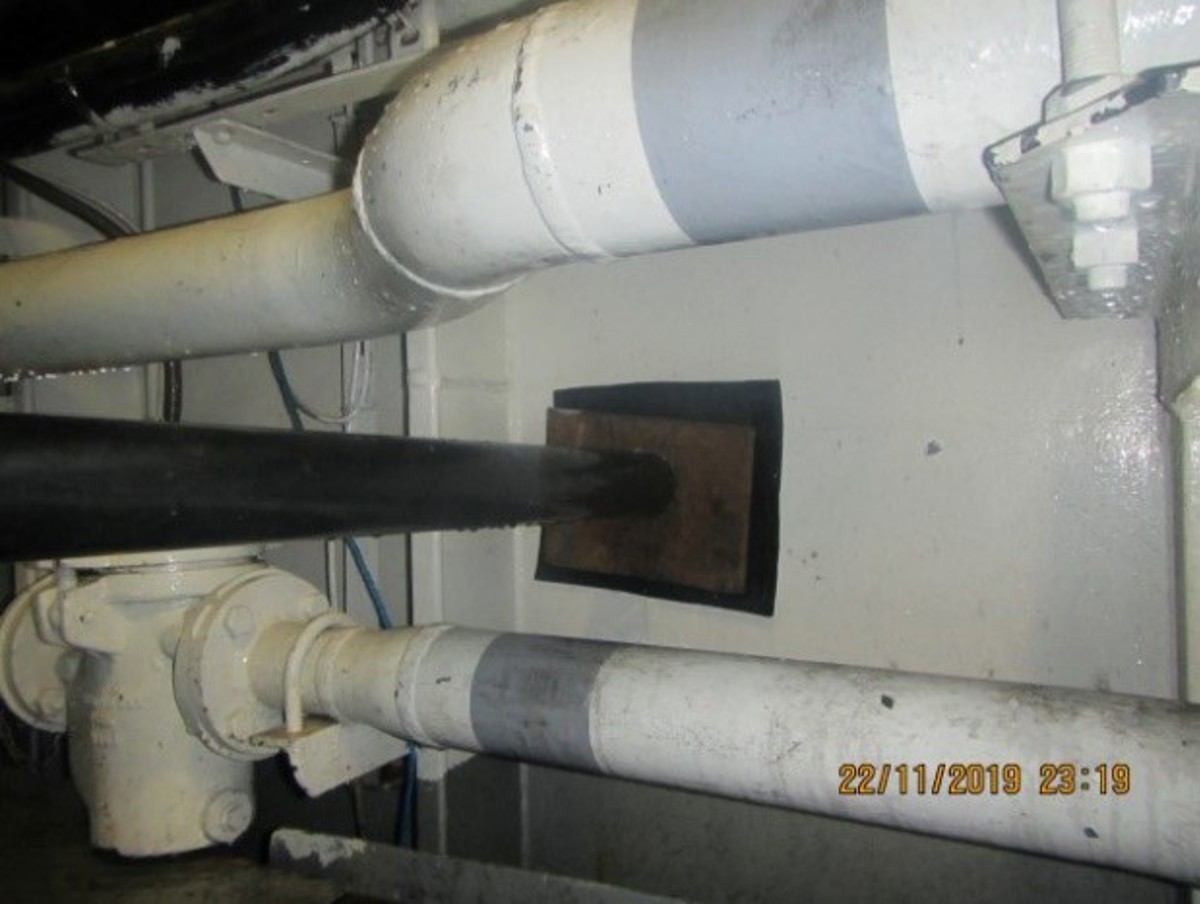
water ingress temporary repair
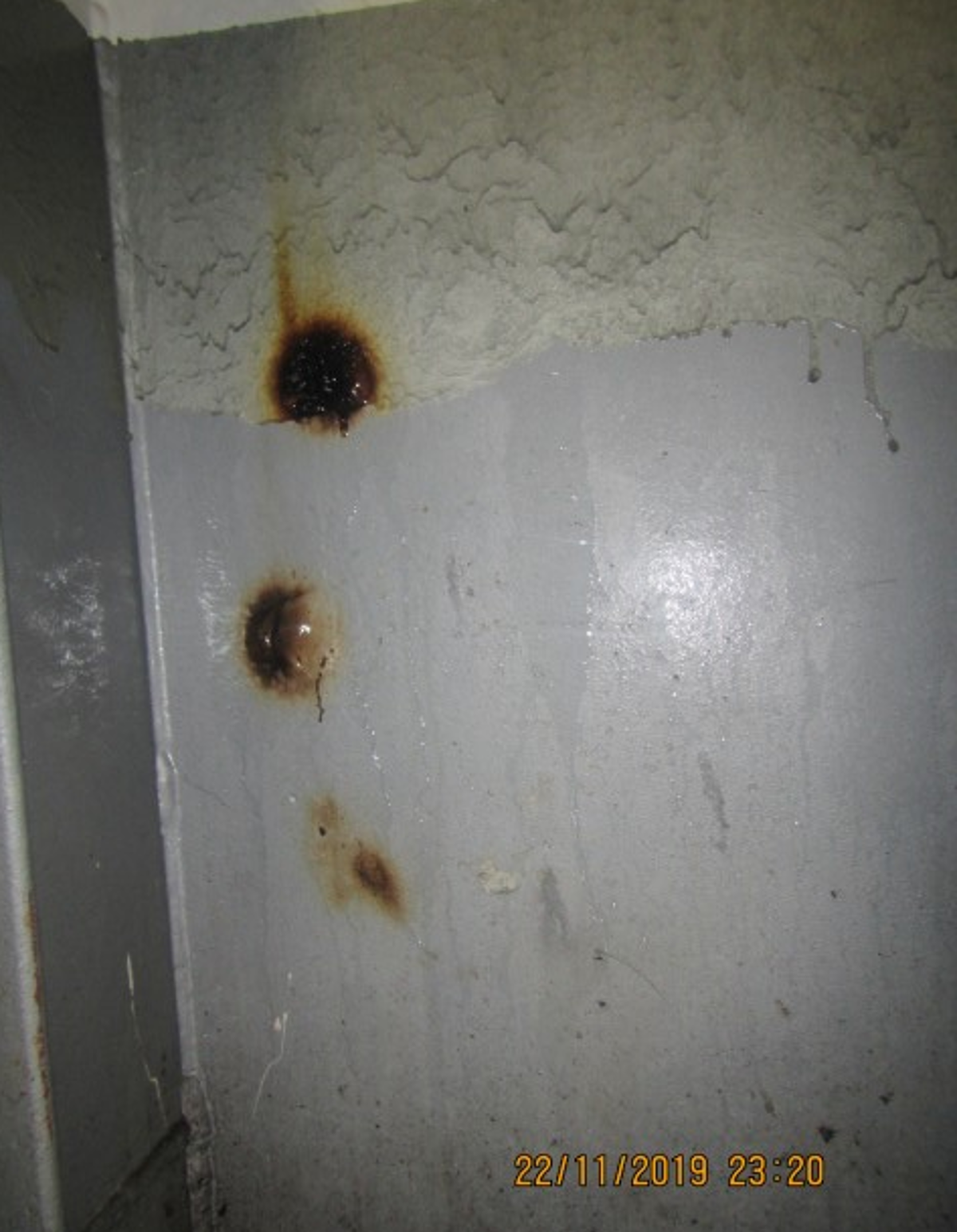
showing condition of sea chest
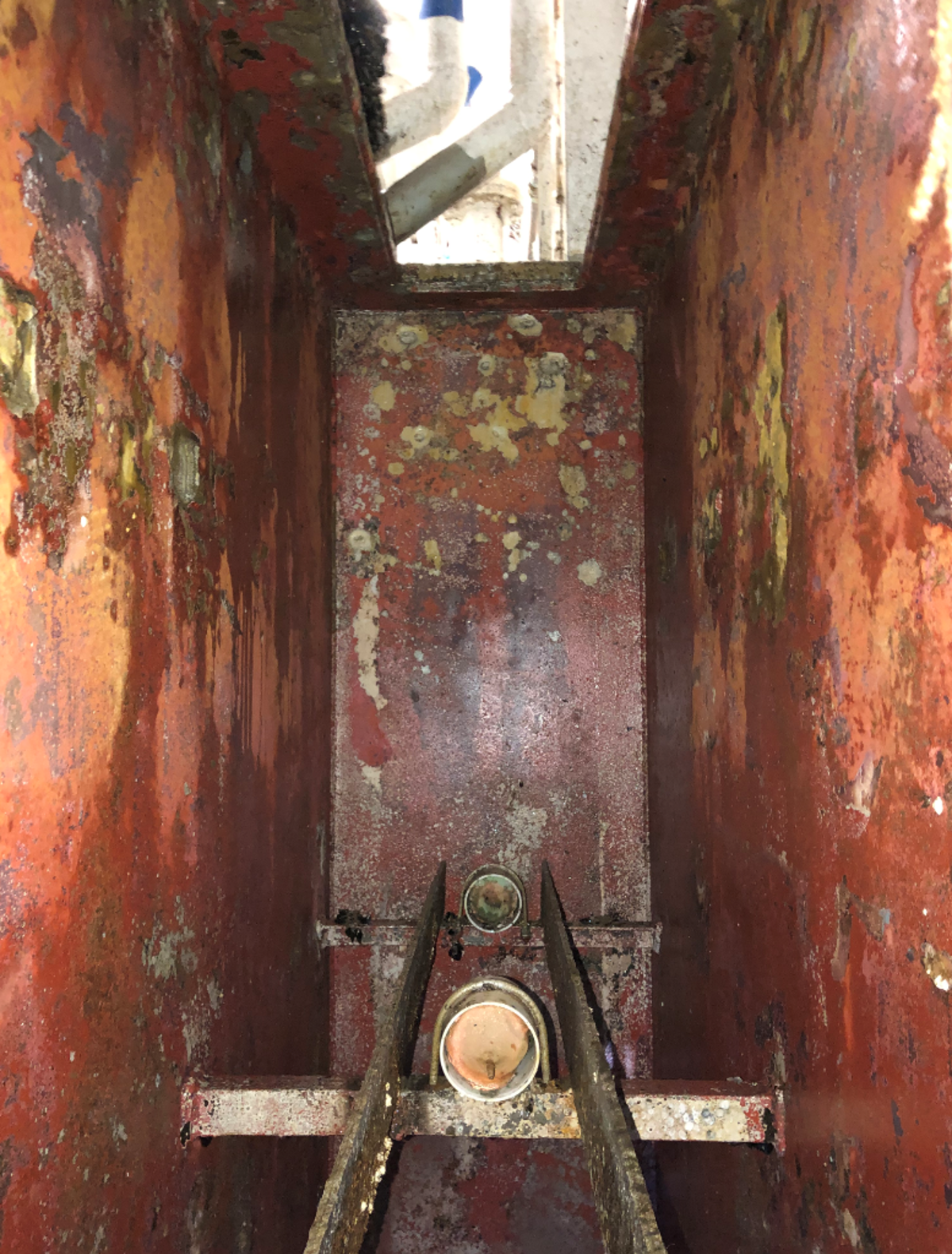
additional anodes installed
What went wrong? What were the causes?
Subsequent inspection in dry dock revealed that the aft bulkhead and inboard longitudinal bulkhead for the aft of the two forward box coolers had more corrosion problems than the one hole in the aft bulkhead.
The inboard longitudinal bulkhead was severely pitted over (approximately) its upper half. The aft bulkhead had isolated areas of deep corrosion, also predominantly at its upper half. All other sea chests were internally examined, and no substantial corrosion found.
There was no indication at survey that the insulators of the copper anodes of the marine growth prevention system (ICAF) had failed or that the power supply wires had failed leading to the possibility of stray currents from the system.
It was not possible to verify the correlation between the reported malfunction of the ICAF system (marine growth protection) and the observed substantial corrosion.
What actions were taken?
- Following repairs, additional sacrificial anodes were installed.
- Possible installation of an impressed current cathodic protection (ICCP) system, which further improves corrosion protection.
Our Member notes that box coolers are sometimes assumed to be maintenance free. However, the incident has shown that a particular attention should be exercised to the area in connection with dry-docking and the system condition and performance should be regularly verified.
Related Safety Flashes
-
IMCA SF 04/18
20 February 2018
-
-
IMCA SF 23/17
21 September 2017
-
-
IMCA SF 22/15
15 December 2015
-
IMCA SF 01/02
1 January 2002


IMCA Safety Flashes summarise key safety matters and incidents, allowing lessons to be more easily learnt for the benefit of the entire offshore industry.
The effectiveness of the IMCA Safety Flash system depends on the industry sharing information and so avoiding repeat incidents. Incidents are classified according to IOGP's Life Saving Rules.
All information is anonymised or sanitised, as appropriate, and warnings for graphic content included where possible.
IMCA makes every effort to ensure both the accuracy and reliability of the information shared, but is not be liable for any guidance and/or recommendation and/or statement herein contained.
The information contained in this document does not fulfil or replace any individual's or Member's legal, regulatory or other duties or obligations in respect of their operations. Individuals and Members remain solely responsible for the safe, lawful and proper conduct of their operations.
Share your safety incidents with IMCA online. Sign-up to receive Safety Flashes straight to your email.