Near miss: High voltage arc inside tether termination manifold
- Safety Flash
- Published on 31 July 2025
- Generated on 5 October 2026
- IMCA SF 13/25
- 3 minute read
A high voltage arc occurred inside a ROV tether termination manifold.
What happened?
A high voltage arc occurred inside a ROV tether termination manifold. The ROV HPU Breaker tripped during the return of the ROV to the TMS. Initial investigation into the trip was conducted and findings indicated no hard fault was present. The ROV crew performed a reset of the breakers and restarted the ROV HPU to recover it to the TMS.
Approximately 3 hours later, it was noted that the line insulation monitoring system for the ROV HPU was reading 12 M/Ohms, which under normal operation would read >60 M/Ohms. Upon investigation after recovery to deck, the crew found there was approx. 80mm of gas at the top of the tether termination manifold.
The system was isolated; the gas was vented out and the oil was drained out of the manifold. Inside the manifold it was noticed that one of the ROV HPU conductors had dislodged from its crimp which had in turn caused electrical arcing in the manifold.
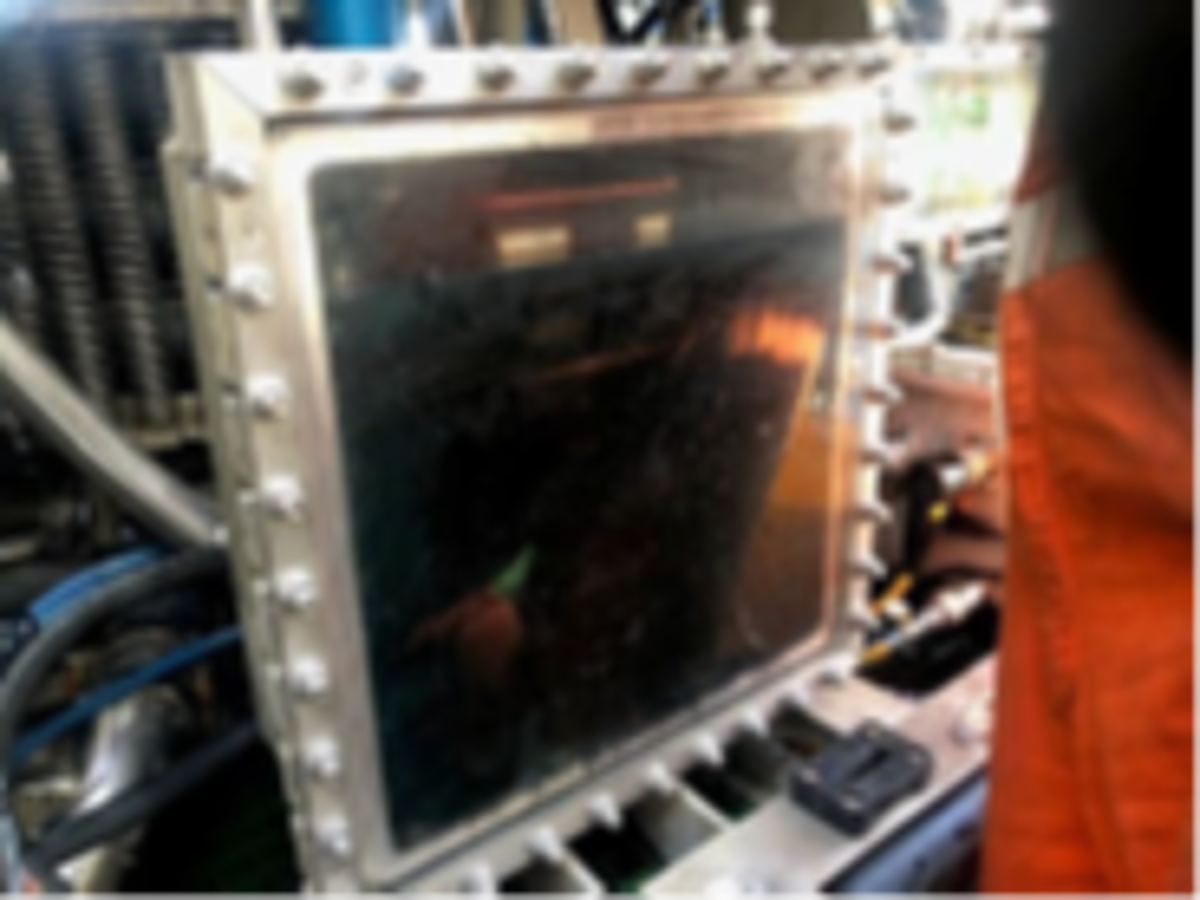
Condition of Tether Termination Manifold found on recovery
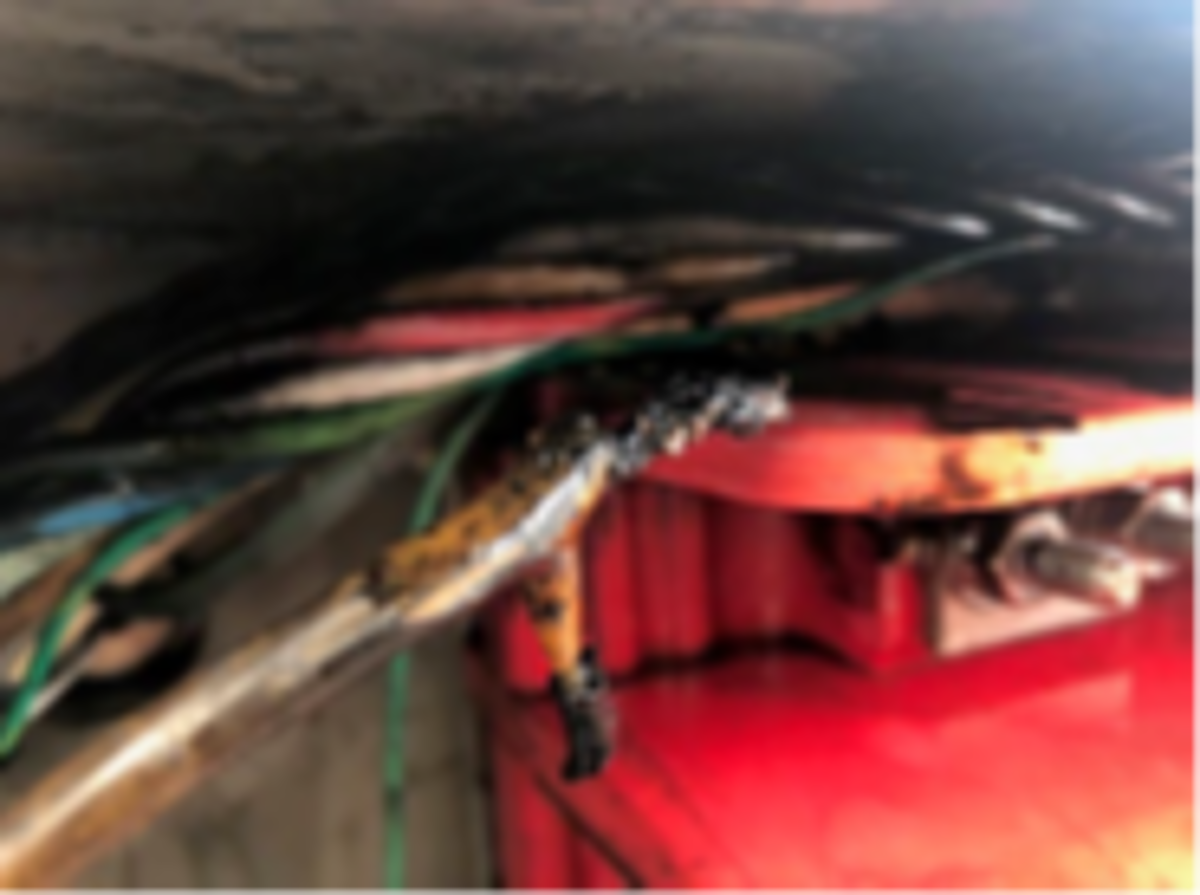
Conductor crimp dislodged and evidence of electrical arcing
Electric arcing in hydraulic oil
When electrical arcing occurs in hydraulic oil, the intense heat and energy from the arc may cause thermal decomposition (pyrolysis) of the oil's hydrocarbon molecules.
This process generates a range of gases, though the exact composition can vary depending on the oil's formulation and additives.
Gas testing is required to confirm exact composition, in this case gas testing was not performed, so it cannot be confirmed as being caused by the arcing.
What went wrong?
- While the drawings indicated that a 6x8mm lug should be used, it had become common practice to use the 4x8mm lug as this provides a tighter fit before crimping. As part of the investigations, both sizes of lugs were tested onshore, and no issues or concerns, regarding fitment, were identified using either lug size.
- The conductors had been terminated approximately 3 months ago as part of planned maintenance.
- The lugs were not of an approved type.
Recommendations and actions
- The dislodged conductor was re-terminated, along with the other 2 phase wires for the HPU. The system was fully tested; no issues or faults were found and the ROV was back into normal operation.
- Removed lugs that were not of the approved type from stock and require offshore crew to only use the approved type.
- Assess suitability of any crimping tool used on site.
- Review the Re-Termination procedure/s to confirm details of approved lugs are provided.
- Review of precautions on gas venting.
Related Safety Flashes
-
IMCA SF 16/17
27 June 2017
-
-
IMCA SF 28/23
6 December 2023
-

IMCA Safety Flashes summarise key safety matters and incidents, allowing lessons to be more easily learnt for the benefit of the entire offshore industry.
The effectiveness of the IMCA Safety Flash system depends on the industry sharing information and so avoiding repeat incidents. Incidents are classified according to IOGP's Life Saving Rules.
All information is anonymised or sanitised, as appropriate, and warnings for graphic content included where possible.
IMCA makes every effort to ensure both the accuracy and reliability of the information shared, but is not be liable for any guidance and/or recommendation and/or statement herein contained.
The information contained in this document does not fulfil or replace any individual's or Member's legal, regulatory or other duties or obligations in respect of their operations. Individuals and Members remain solely responsible for the safe, lawful and proper conduct of their operations.
Share your safety incidents with IMCA online. Sign-up to receive Safety Flashes straight to your email.