Fire in engine room and subsequent collision with structure on transport barge
- Safety Flash
- Published on 28 April 2020
- Generated on 25 October 2026
- IMCA SF 14/20
- 2 minute read
What happened?
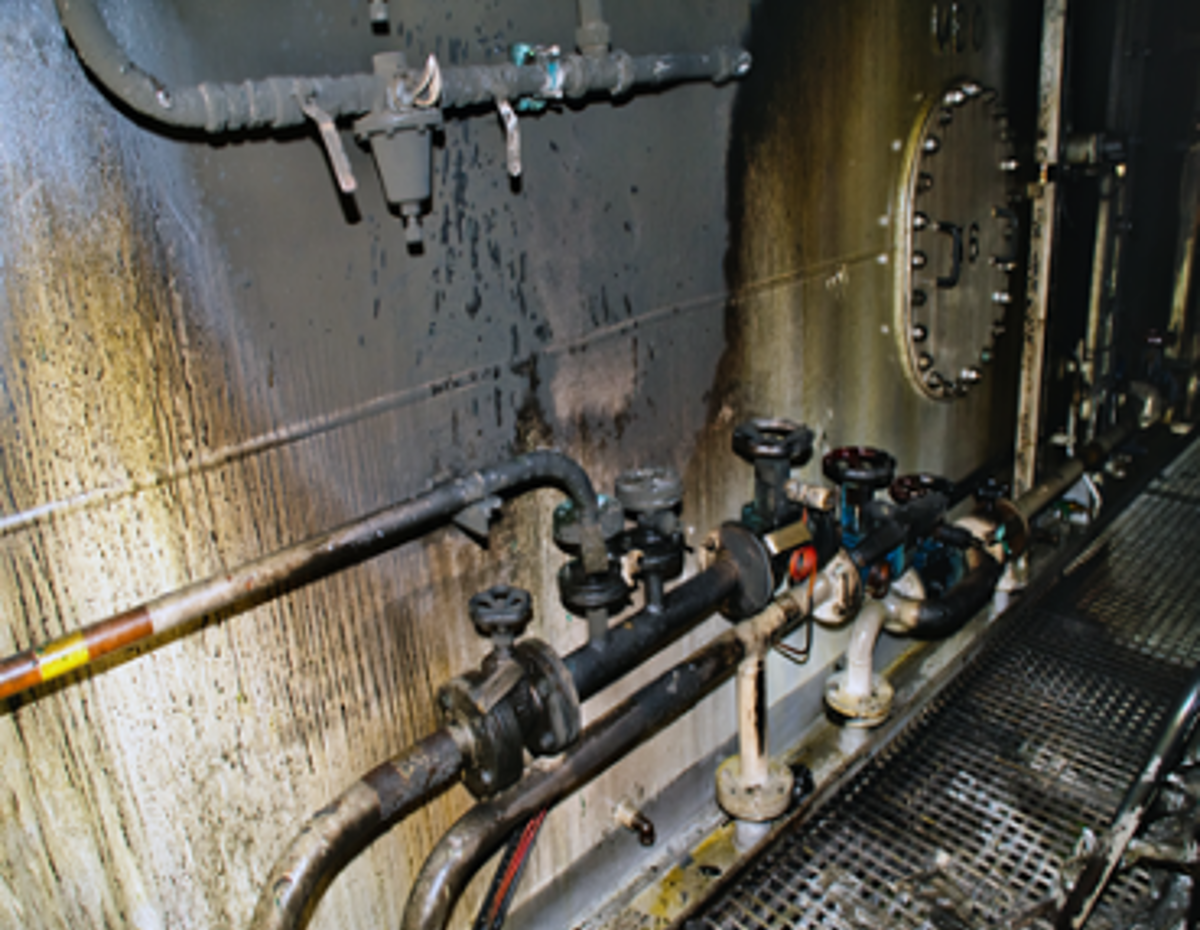
During the tow of a structure to location, a fire occurred in the engine room of the tow tug. This led to a blackout resulting in a collision with the structure on the transport barge.
The crew’s interpretation of a project specific requirement led to a pressure test being conducted on the fuel oil system. During this test fuel oil started spraying out of a gasket in the engine room. The fuel oil spray was eventually ignited by the heat of the engines.
The fire in the engine room caused a short circuit which was followed by a blackout. With the failing of the power supply, the tow tug started drifting.
The transport barge drifted past the tow tug; however, the structure, which protruded outside the stern of the transport barge, struck the tow tug.

What were the causes? What went wrong?
Contributing factors include:
- The emergency generator failed to start, resulting in a black out.
- The fire extinguisher system did not activate (the fire was extinguished with a combination of the sprinkler system and the residue fuel oil burning out).
- Crew members were not familiar with characteristics of fire-fighting systems on-board.
- Unreliable gasket material used in the FO system.
- The engine emergency stop button in the engine control room could not be accessed by the crew as too much smoke had escaped from the engine room.
- The permit to work (PTW) failed to address or communicate the specific situation related risks.
- There was reliance on third-parties’ expertise during design, build, commissioning and operations.


What actions were taken?
- Any non-standard activity should be subject to control of work procedures.
- Offshore and onshore organisation need to communicate proactively when non-standard activities are considered/required.
- There should be thorough familiarisation of emergency and fire-fighting systems on-board – this is a must. Not only how they are operated, but also specific characteristics of the system and the effectiveness of the medium used.
- Ensure that the PTW is also used as an effective communication tool.
Members may wish to refer to:
IMCA Safety Flashes summarise key safety matters and incidents, allowing lessons to be more easily learnt for the benefit of the entire offshore industry.
The effectiveness of the IMCA Safety Flash system depends on the industry sharing information and so avoiding repeat incidents. Incidents are classified according to IOGP's Life Saving Rules.
All information is anonymised or sanitised, as appropriate, and warnings for graphic content included where possible.
IMCA makes every effort to ensure both the accuracy and reliability of the information shared, but is not be liable for any guidance and/or recommendation and/or statement herein contained.
The information contained in this document does not fulfil or replace any individual's or Member's legal, regulatory or other duties or obligations in respect of their operations. Individuals and Members remain solely responsible for the safe, lawful and proper conduct of their operations.
Share your safety incidents with IMCA online. Sign-up to receive Safety Flashes straight to your email.