Injury sustained while operating steel lifting magnet
- Safety Flash
- Published on 14 August 2025
- Generated on 5 October 2026
- IMCA SF 14/25
- 2 minute read
While preparing to transfer steel plates using a steel lifting magnet, a crew person was injured.
What happened?
The crew person attempted to adjust a magnet by releasing a locking lever that was located low and far from their reach. As they adjusted the lever, it recoiled suddenly because of the spring-loaded tension, hitting them in the face. They sustained a cut to the left cheek requiring fifteen stitches. It could have been worse: it might have been damaged or broken teeth or facial bones in this incident.
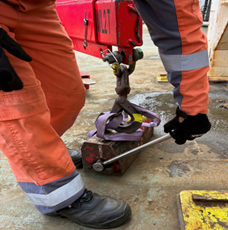 |
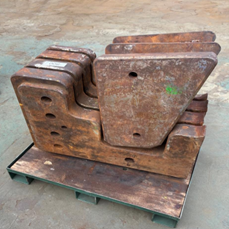 |
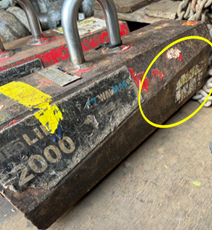 |
| Recoiling lever of the lifting magnet | Steel plates being moved | Faded Caution sticker |
Our member noted that a similar incident had occurred a year before, involving a different crew member, who suffered a minor cut on the chin when the handle of the same lifting magnet hit them.
Investigation revealed
- The lifting magnet was chosen for the task due to its perceived efficiency.
- The design of the operating lever meant that tension allowed it to spring back sharply.
- The lifting magnet normally underwent annual inspection but was not subject to regular maintenance, relying solely on user reports for faults.
- A similar incident happened a year ago.
- The original warning stickers, placed when the previous incident happened, had faded and became illegible.
Actions and discussion points
- Implement a regular inspection regime for lifting magnets that includes periodic inspections, fault reporting and replacement of faded warning stickers;
- Evaluate equipment efficiency before use: Is this the best tool for the job on this occasion?
Related Safety Flashes
-
IMCA SF 11/24
3 June 2024
-
-
IMCA SF 24/18
30 October 2018
-
IMCA Safety Flashes summarise key safety matters and incidents, allowing lessons to be more easily learnt for the benefit of the entire offshore industry.
The effectiveness of the IMCA Safety Flash system depends on the industry sharing information and so avoiding repeat incidents. Incidents are classified according to IOGP's Life Saving Rules.
All information is anonymised or sanitised, as appropriate, and warnings for graphic content included where possible.
IMCA makes every effort to ensure both the accuracy and reliability of the information shared, but is not be liable for any guidance and/or recommendation and/or statement herein contained.
The information contained in this document does not fulfil or replace any individual's or Member's legal, regulatory or other duties or obligations in respect of their operations. Individuals and Members remain solely responsible for the safe, lawful and proper conduct of their operations.
Share your safety incidents with IMCA online. Sign-up to receive Safety Flashes straight to your email.