Shore-side crane boom collides with vessel mast
- Safety Flash
- Published on 14 August 2025
- Generated on 6 October 2026
- IMCA SF 14/25
- 2 minute read
During shipyard lifting operations, the boom of a dock crane made contact with the vessel mast.
What happened?
As a result of the collision, a wind sensor and GPS sensor were dislodged and fell to deck. Additionally, a fixing clamp was later found on the main deck, approximately 30m away.
|
|
|
|
Boom adjacent to mast after the incident |
Damage on the mast |
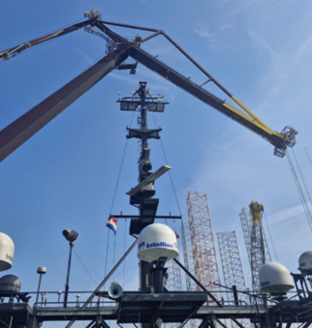
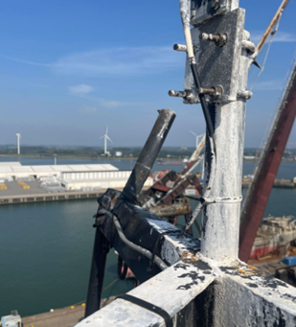
This was a high potential incident; both the wind sensor and the fixing clamp could have struck a person, potentially causing serious injury or even fatality.
What went wrong?
- The yard crane operator was simultaneously driving the dock crane, slewing, and booming out, without maintaining visual control during the operation. This was in contravention of the yard’s own lifting procedures.
- The dockyard crane operated independently, without waiting for signals from the banksman on the vessel.
- The banksman was not positioned to effectively observe potential obstacles.
- The dockyard crane operator lacked clear visibility and could not see any potential clashes.
Actions and topics for discussion
- Ensure that all stakeholders – vessel crew, third party crew, dockyard crew, management - understand just how critical is the role of the banksman in lifting operations.
- It is vital to have clear communication between the banksman and crane operator.
- Ensure the dockyard management have received all the right information they need before the vessel goes into dock and before operations begin. This should include:
- Vessel “General Arrangement” drawings, including details of potential obstacles;
- Vessel dimensions.
Members should refer to:
Related Safety Flashes
-
IMCA SF 11/25
18 June 2025
-
IMCA SF 29/22
21 December 2022
-
IMCA Safety Flashes summarise key safety matters and incidents, allowing lessons to be more easily learnt for the benefit of the entire offshore industry.
The effectiveness of the IMCA Safety Flash system depends on the industry sharing information and so avoiding repeat incidents. Incidents are classified according to IOGP's Life Saving Rules.
All information is anonymised or sanitised, as appropriate, and warnings for graphic content included where possible.
IMCA makes every effort to ensure both the accuracy and reliability of the information shared, but is not be liable for any guidance and/or recommendation and/or statement herein contained.
The information contained in this document does not fulfil or replace any individual's or Member's legal, regulatory or other duties or obligations in respect of their operations. Individuals and Members remain solely responsible for the safe, lawful and proper conduct of their operations.
Share your safety incidents with IMCA online. Sign-up to receive Safety Flashes straight to your email.