High potential near-miss: Damage to small boat during offshore survey operations
- Safety Flash
- Published on 27 June 2016
- Generated on 13 July 2026
- IMCA SF 16/16
- 3 minute read
A member has reported an incident in which a small boat was damaged during offshore survey operations.
What happened?
The incident occurred during offshore transit to port. The boat experienced a ‘following wave’ that overtook it, causing the boat to drop into the trough of the next wave, causing the foredeck to partially detach from the hull.
The Helmsman immediately stopped the boat and turned the stern into the waves to reduce any further water ingress. The crew activated the ’emergency response plan’ and performed an immediate inspection of the damage. Due to the potential for further water ingress, the Helmsman altered course and the boat was routed to the nearest port in liaison with the local coastguard.
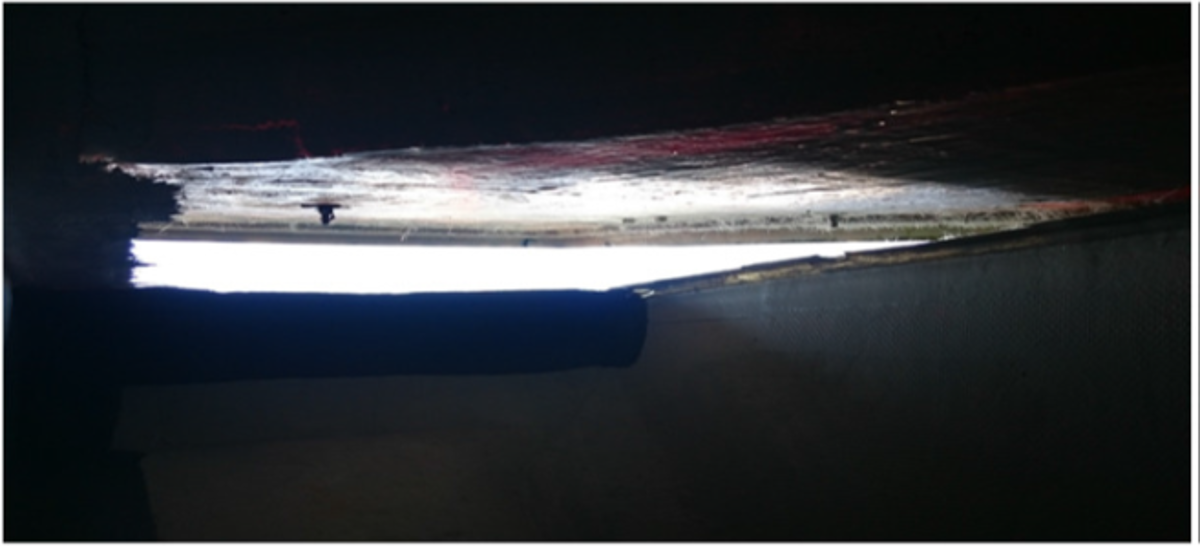
Our member’s investigation revealed the following:
The foredeck and the hull section was insufficiently bonded together when the boat was built in 2011. A detailed analysis indicated that: . Less than 10% of the bonding surfaces showed signs of aggravated rupture by splintering or de-lamination, indicating that they were incorrectly bonded at build stage . The GRP (glass-reinforced plastic or fibre-glass) bonding was likely to have been incorrectly performed due to the restricted space available in the foredeck . The vessel had undergone a competent and third party inspection that had concluded that no structural defects were identified in the GRP construction.The cause of the incident was found to be a material failure of the hull as a result of insufficient bonding during the build phase of the vessel. Whilst the weather, as with most marine operations, was an influence, this was not a major contributing factor given that hull designs of this nature should be able to operate under the experienced conditions.
Our member took the following actions:
- Plan and implement better QC for bonding processes during construction of these boats.
- Planned regular Inspections for significant indicators (cracks in secondary internal bonding) to be included in maintenance routines.
- This particular boat underwent additional bonding and stiffening processes and was subjected to both marine and authority assessments before it was returned to operations.
- Further careful checking and verifying of the competence of third-party inspectors who carry out vessel surveys. Crews, owners, charterers and auditors need to be able to satisfy themselves that these surveys are carried out to the highest standard.
Further information on construction standards for small boats can be found here.
IMCA Safety Flashes summarise key safety matters and incidents, allowing lessons to be more easily learnt for the benefit of the entire offshore industry.
The effectiveness of the IMCA Safety Flash system depends on the industry sharing information and so avoiding repeat incidents. Incidents are classified according to IOGP's Life Saving Rules.
All information is anonymised or sanitised, as appropriate, and warnings for graphic content included where possible.
IMCA makes every effort to ensure both the accuracy and reliability of the information shared, but is not be liable for any guidance and/or recommendation and/or statement herein contained.
The information contained in this document does not fulfil or replace any individual's or Member's legal, regulatory or other duties or obligations in respect of their operations. Individuals and Members remain solely responsible for the safe, lawful and proper conduct of their operations.
Share your safety incidents with IMCA online. Sign-up to receive Safety Flashes straight to your email.