Fatality – explosive failure of corroded fire extinguisher
- Safety Flash
- Published on 9 June 2021
- Generated on 21 October 2026
- IMCA SF 16/21
- 2 minute read
A person was killed when there was a catastrophic explosive failure of a corroded fire extinguisher.
What happened?
The incident occurred when the person was discharging a corroded hand-held cartridge-type, dry chemical powder fire extinguisher which had been condemned during an annual third party inspection.
When the internal CO2 cylinder was activated (225 psi / 17 bar) to energise the fire extinguisher, the unit ruptured at the corroded base, exploded and struck the person causing critical and fatal head injuries.
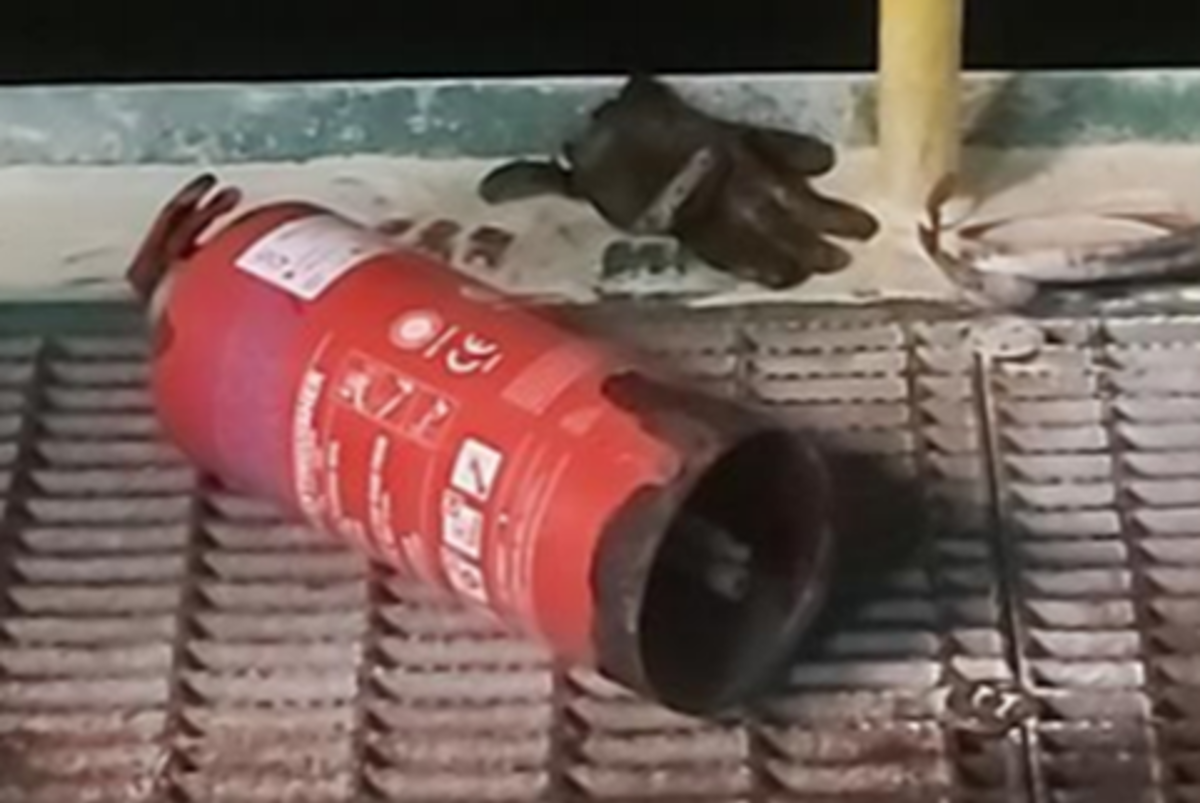
Base of the fire extinguisher was badly corroded
What went wrong? What were the causes?
A condemned fire extinguisher was discharged. Those discharging the extinguisher did not appreciate the danger involved and did not adequately plan the job.
The base of the extinguisher was badly corroded. Although condemned during a third party inspection and moved to an isolated storage area, a decision was made to discharge the extinguisher to ‘make it safe’ before transporting it to shore.
Lessons and actions
The following points were made by the company involved:
- Minimise Corrosion
- Regular monthly inspection of fire extinguishers, particularly if exposed to the elements.
- Mount fire extinguishers off the deck/floor in manufacturer-approved mounting devices that reduce the chance of moisture from being trapped under the fire extinguisher base.
- Regular monthly inspection of fire extinguishers, particularly if exposed to the elements.
- Third-party inspections and condemnations
- Ensure that fire extinguisher disposal is managed and conducted by qualified third party personnel as per the manufacturer’s specifications, or any local regulatory requirements.
- Condemned fire extinguishers should not be discharged by crew.
- Ensure that fire extinguisher disposal is managed and conducted by qualified third party personnel as per the manufacturer’s specifications, or any local regulatory requirements.
- Fire extinguishers using a cartridge to charge the main fire extinguisher cylinder should be handled with care
- The fire extinguisher should be placed on the deck at arm’s length from the body.
- Point the top of the extinguisher away from the body while holding the handle and hose in one hand.
- Trigger the CO2 charging cylinder with the other hand.
- Do not energise these types of fire extinguishers near the body.
- Consideration may be given to using stored pressure type extinguishers rather than the CO2 cartridge type.
- The fire extinguisher should be placed on the deck at arm’s length from the body.
Related Safety Flashes
-
IMCA SF 08/21
17 March 2021
-
IMCA SF 14/18
9 July 2018
-
-
IMCA SF 12/16
6 May 2016
-
IMCA SF 13/12
11 December 2012

IMCA Safety Flashes summarise key safety matters and incidents, allowing lessons to be more easily learnt for the benefit of the entire offshore industry.
The effectiveness of the IMCA Safety Flash system depends on the industry sharing information and so avoiding repeat incidents. Incidents are classified according to IOGP's Life Saving Rules.
All information is anonymised or sanitised, as appropriate, and warnings for graphic content included where possible.
IMCA makes every effort to ensure both the accuracy and reliability of the information shared, but is not be liable for any guidance and/or recommendation and/or statement herein contained.
The information contained in this document does not fulfil or replace any individual's or Member's legal, regulatory or other duties or obligations in respect of their operations. Individuals and Members remain solely responsible for the safe, lawful and proper conduct of their operations.
Share your safety incidents with IMCA online. Sign-up to receive Safety Flashes straight to your email.