Serious finger injury in power operated watertight sliding door
- Safety Flash
- Published on 13 July 2023
- Generated on 25 October 2026
- IMCA SF 17/23
- 2 minute read
A crew person suffered a very serious finger injury in a watertight sliding door.
What happened?
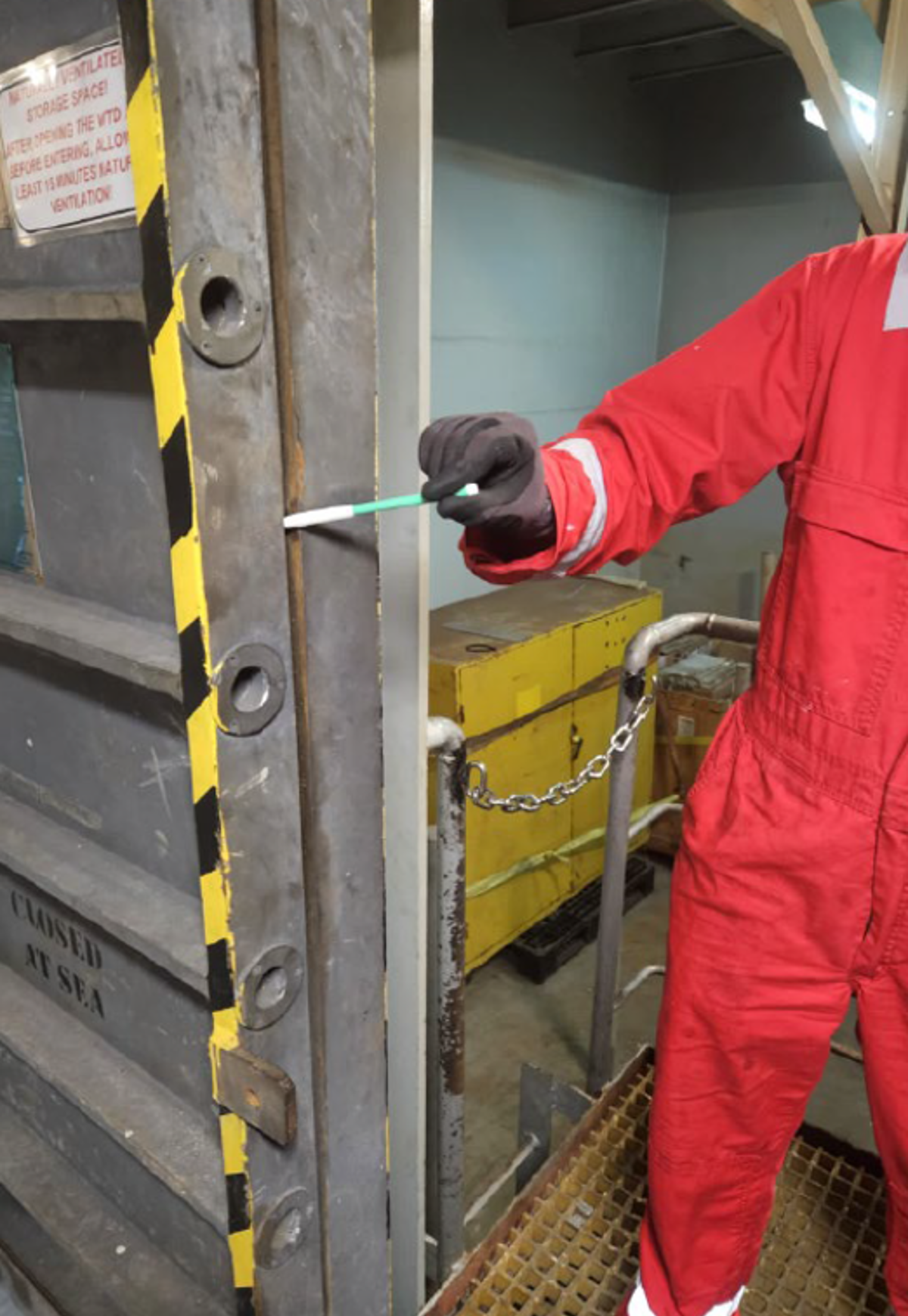
The incident occurred when engine crew were heading to a storage area for an inventory check. As they passed through a power operated watertight sliding door, a team member pushed the “open” button, and at the same time the vessel rolled with the swell.
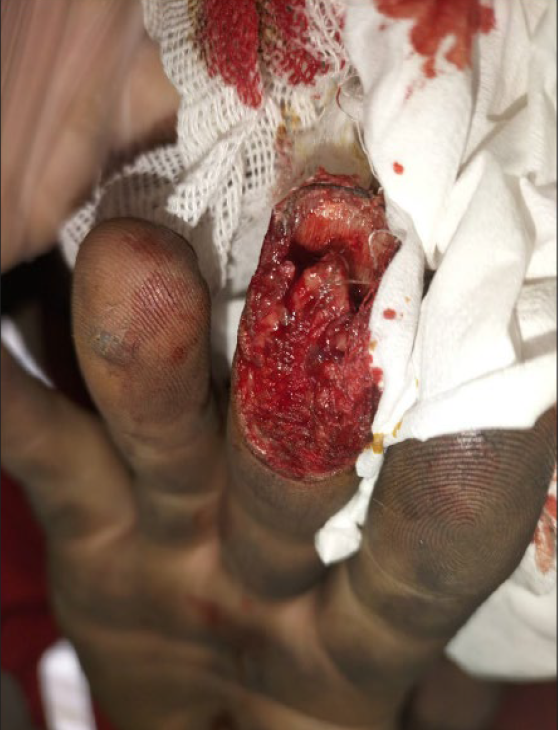
The injured person lost balance and reached out to grab for support. He caught the sliding door while opening and trapped his middle right finger between the door and the bulkhead resulting in a serious injury.
Our Member classified the injury as a Restricted Workday case (RWC).
There is a graphic image of the injured finger here for reference purposes (not for the squeamish).
What went wrong?
- Improper communication of hazards in the working area.
- Lack of a hazard zone to limit people in the “line of fire” area.
What was the cause?
- Our member noted that the injured person was in an improper position for the task he was conducting, at a time of adverse sea conditions.
- Perhaps because it was “only a door” the crew did not take seriously enough, the dangers of being too close to powered machinery in motion.
- There was a lack of:
- Instruction and understanding of how to behave near powered watertight doors.
- Identification of the risk involved in being near the door whilst it was in motion.
- Engineered barriers to prevent the incident from having happened at all.
- Instruction and understanding of how to behave near powered watertight doors.
Actions
- Powered watertight doors are potentially very hazardous, and can be lethal if not treated properly. Keep a strong focus on watertight door safety.
- Keep away from powered watertight doors whilst they are in motion: our member marked up and enforced a “no-go zone during door operation” policy for watertight sliding doors.
- Stop and think:
- Where else might there be similar entrapment/crush hazards?
- What might you have done personally, to avoid this from happening to you?
- Is a powered sliding door any different from any other moving machine part that which would be barriered off and guarded?
- Where else might there be similar entrapment/crush hazards?
Related safety flashes
-
IMCA SF 09/23
4 April 2023
-
-
IMCA SF 05/23
16 February 2023
-
-
IMCA SF
15 January 2016
-
IMCA SF 05/01
1 April 2001
-
IMCA SF 01/01
1 January 2001

IMCA Safety Flashes summarise key safety matters and incidents, allowing lessons to be more easily learnt for the benefit of the entire offshore industry.
The effectiveness of the IMCA Safety Flash system depends on the industry sharing information and so avoiding repeat incidents. Incidents are classified according to IOGP's Life Saving Rules.
All information is anonymised or sanitised, as appropriate, and warnings for graphic content included where possible.
IMCA makes every effort to ensure both the accuracy and reliability of the information shared, but is not be liable for any guidance and/or recommendation and/or statement herein contained.
The information contained in this document does not fulfil or replace any individual's or Member's legal, regulatory or other duties or obligations in respect of their operations. Individuals and Members remain solely responsible for the safe, lawful and proper conduct of their operations.
Share your safety incidents with IMCA online. Sign-up to receive Safety Flashes straight to your email.