Uncoordinated Emergency Shutdown due to pipe failure
- Safety Flash
- Published on 17 September 2025
- Generated on 6 October 2026
- IMCA SF 17/25
- 2 minute read
All cargo pumps (No. 1, 2, and 3) tripped simultaneously due to Emergency Shutdown (ESD) activation.
What happened?
During tanker cargo discharging operations at a terminal, all three cargo pumps (No. 1, 2, and 3) tripped simultaneously due to Emergency Shutdown (ESD) activation. The duty AB observed a minor leak during a routine pump room patrol and triggered an emergency stop for all cargo pumps without prior coordination with the Cargo Control Room (CCR). This led to an immediate halt in operations, although the situation was later assessed to be non-critical. No injuries were reported, and cargo discharge resumed after safety confirmation.
The duty AB had “stopped the job” by activating the ESD but did not communicate the situation with the CCR before acting.
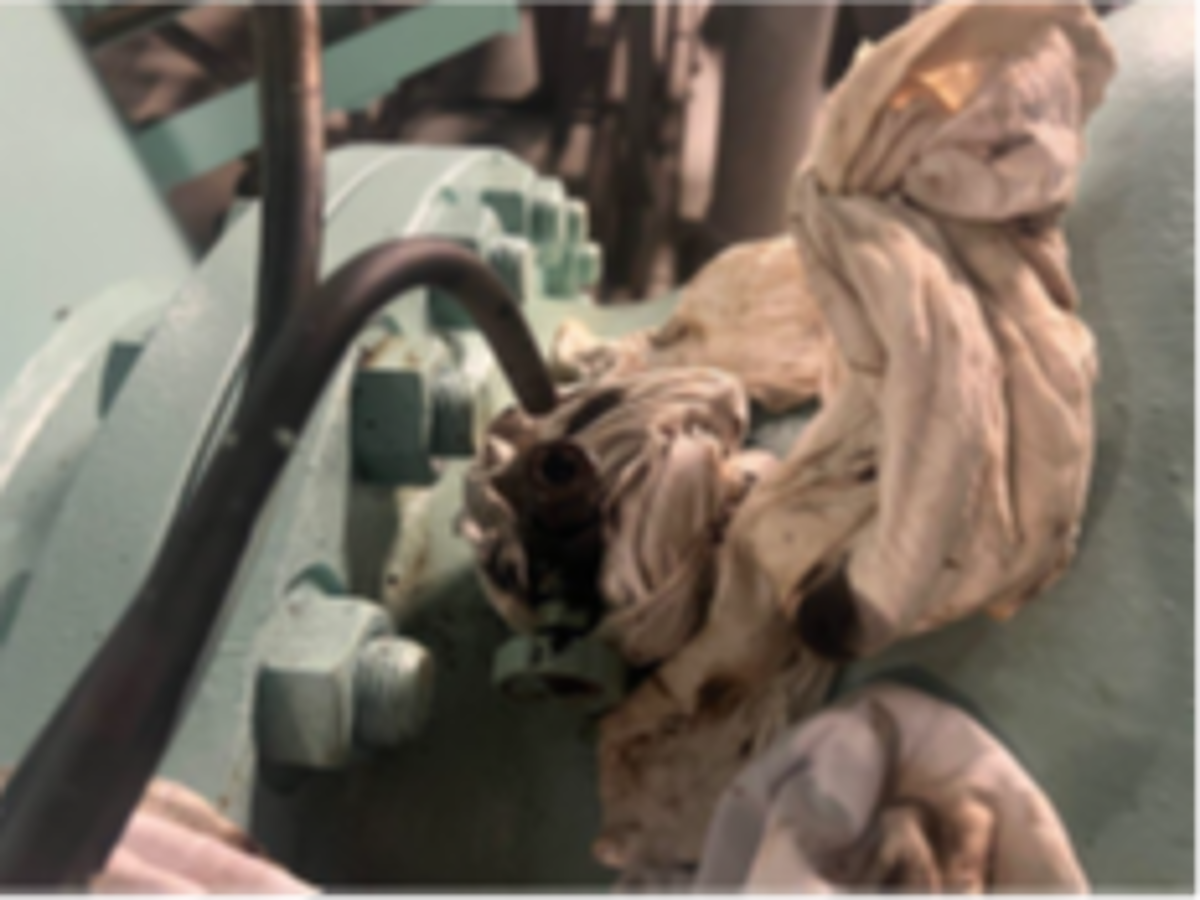
Showing fractured copper tube
What went wrong?
- The copper tube on the suction side of Cargo Pump No.3 had fractured due to prolonged vibration fatigue.
- There was no documented procedure for Emergency shutdown activation criteria in such leakage cases.
- The Cargo control room operators were not prepared for the sudden shutdown, resulting in a brief operational confusion.
What was the cause?
- The direct cause was vibration-induced fatigue failure of a copper tube in the suction line.
- Contributing Causes were found to be:
- Inadequate procedural guidance on how to do an emergency shutdown of cargo transfer.
- Insufficient training on communication protocols when in extraordinary conditions.
- The Root Cause was found to be a lack of structured decision-making process for emergency activation, and an insufficient fatigue monitoring system.
Lessons
- Quick and decisive action is vital in emergencies, but should be supported by coordinated communication with other key stakeholders.
- Emergency shutdown systems, while crucial, should have clear usage thresholds and personnel should be trained in their use.
- Shipboard ESD activation procedures were amended to include communication and verification steps.
- Additional training on emergency response coordination was implemented for deck crew and CCR operators.
- Regular inspections play a key role in identifying early-stage risks like vibration fatigue.
- Periodic vibration risk assessments were implemented for suction-side pipelines and components.
- Fatigue-related component degradation should be routinely reviewed, especially on critical systems like cargo pumps.
- Consideration is being given to installing vibration dampers or supports for vulnerable tubing sections.
Related Safety Flashes
-
IMCA SF 15/18
20 July 2018
-
IMCA SF 12/16
6 May 2016
-
IMCA SF 02/14
20 February 2014
IMCA Safety Flashes summarise key safety matters and incidents, allowing lessons to be more easily learnt for the benefit of the entire offshore industry.
The effectiveness of the IMCA Safety Flash system depends on the industry sharing information and so avoiding repeat incidents. Incidents are classified according to IOGP's Life Saving Rules.
All information is anonymised or sanitised, as appropriate, and warnings for graphic content included where possible.
IMCA makes every effort to ensure both the accuracy and reliability of the information shared, but is not be liable for any guidance and/or recommendation and/or statement herein contained.
The information contained in this document does not fulfil or replace any individual's or Member's legal, regulatory or other duties or obligations in respect of their operations. Individuals and Members remain solely responsible for the safe, lawful and proper conduct of their operations.
Share your safety incidents with IMCA online. Sign-up to receive Safety Flashes straight to your email.