Positive: Worn mooring lines spotted and replaced before they parted
- Safety Flash
- Published on 2 October 2025
- Generated on 5 October 2026
- IMCA SF 18/25
- 2 minute read
It was observed that mooring ropes had nearly reached breaking point.
What happened?
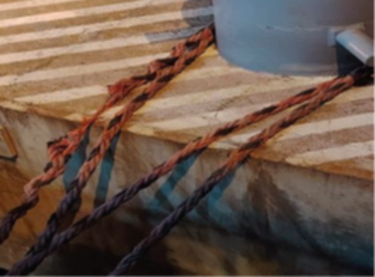
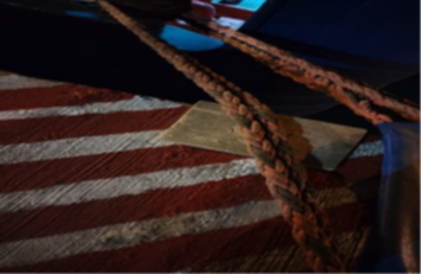
On a vessel alongside on a windy night, hourly walkarounds were being conducted as instructed by the Officer of the watch. During one of these inspections, it was observed that one of the mooring ropes had nearly reached its breaking point due to the strong wind and the structural characteristics of the berth.
What did they do next?
The crew member spotting the problem informed the Officer of the watch and the Bosun. The mooring rope that was at risk of breaking was replaced with a new one. Additionally, wooden boards were placed under the ropes that were rubbing against the bridge structure to minimize friction and prevent further wear.
 |
 |
What do we learn?
In adverse weather conditions, even the provision of additional mooring ropes cannot fully guarantee the vessel’s safety—particularly when no measures are taken at certain berths where friction may be a particular issue and ropes are likely to be in contact with rough surfaces.
Timely detection of such issues is crucial for ensuring the safety of the vessel. To prevent similar situations, it is may be necessary to increase the frequency of vessel walkarounds—especially during adverse weather conditions—and for the crew to exercise heightened vigilance.
The most effective preventive measure, however, would be the installation of protective equipment on the jetties by the port authorities to minimize rope friction and reduce the risk of mooring line damage.
Related Safety Flashes
-
IMCA SF 29/20
9 October 2020
IMCA Safety Flashes summarise key safety matters and incidents, allowing lessons to be more easily learnt for the benefit of the entire offshore industry.
The effectiveness of the IMCA Safety Flash system depends on the industry sharing information and so avoiding repeat incidents. Incidents are classified according to IOGP's Life Saving Rules.
All information is anonymised or sanitised, as appropriate, and warnings for graphic content included where possible.
IMCA makes every effort to ensure both the accuracy and reliability of the information shared, but is not be liable for any guidance and/or recommendation and/or statement herein contained.
The information contained in this document does not fulfil or replace any individual's or Member's legal, regulatory or other duties or obligations in respect of their operations. Individuals and Members remain solely responsible for the safe, lawful and proper conduct of their operations.
Share your safety incidents with IMCA online. Sign-up to receive Safety Flashes straight to your email.