Fault in high voltage equipment
- Safety Flash
- Published on 30 July 2021
- Generated on 25 October 2026
- IMCA SF 21/21
- 3 minute read
A serious fault was discovered in high voltage (-5600V) equipment; the fault caused sparks to be observed across the high voltage terminals.
What happened?
Portable seismic survey “sparker” equipment was mobilised on a vessel. During initial tests of equipment, a spark was observed on the -5600V high voltage terminals.
The issue was not reported to the bridge, nor was a near miss or incident report submitted. There was a delay of four weeks between when the incident happened and when it was officially reported.
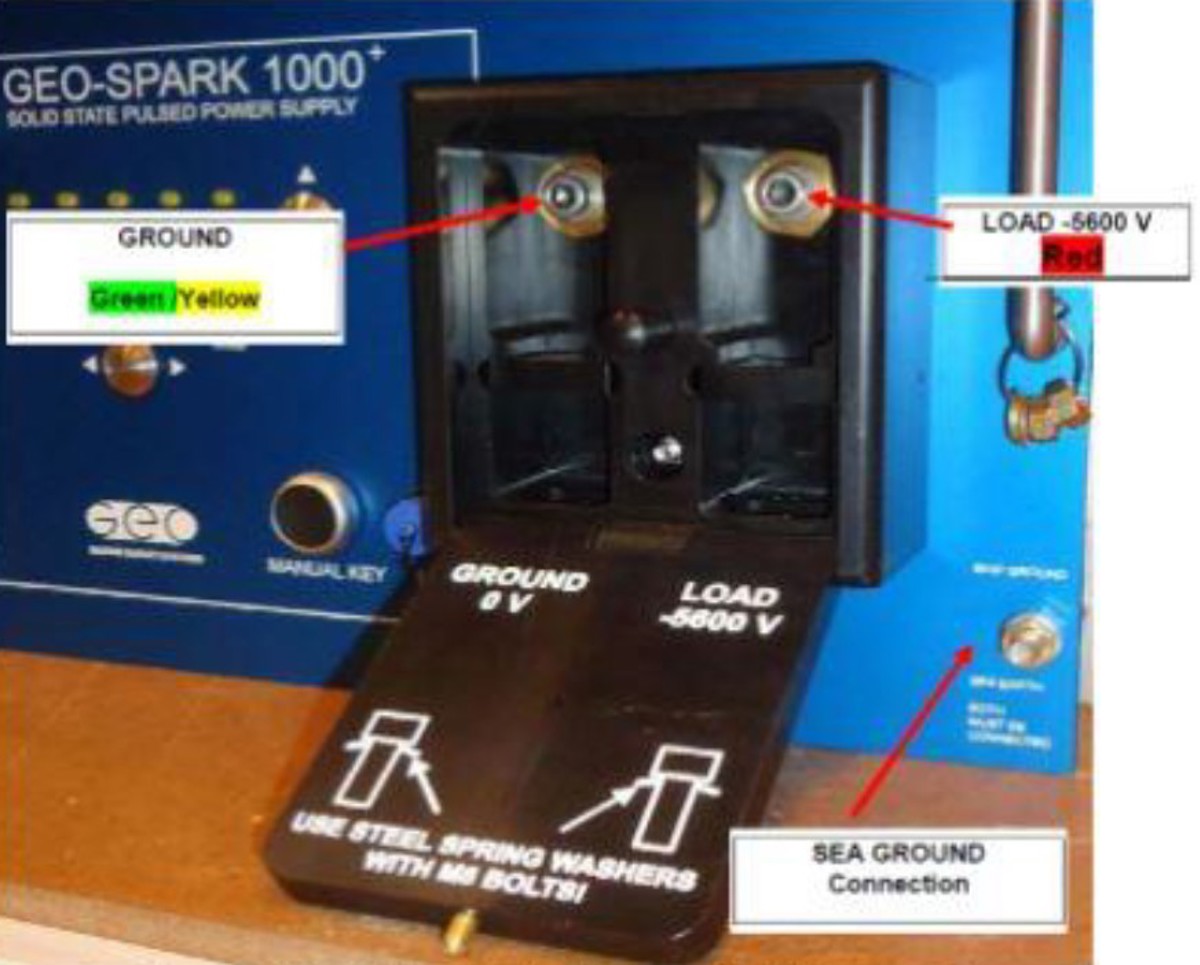
During initial tests of equipment, a spark was observed
on the -5600V high voltage terminals
What were the causes?
Preliminary investigation revealed that:
- This issue presents if the terminals are loose. They were tightened but the issue persisted.
- The incorrect washer type was used on the high voltage terminals. The manufacturer recommends conical spring washers. Standard split spring washers were used instead on the terminals. Also, a specific brass flat washer is recommended by manufacturer.
- After servicing by the manufacturer and feeding back the details of the fault observed, the manufacturer confirmed the bolts on the high voltage terminals were not threaded all the way to base of bolt. As a result, if incorrect thickness washers were being used this would not allow the terminals to be fully tightened.
- Three days had been planned for training. Owing to delays caused by poor weather only three hours was available for training – there was perceived pressure to get the job done in a rushed way.
Recommendations
- Ensure crew working with high voltage systems are trained and competent to work on the respective type of system.
- Ensure crew are familiar with risk assessments and safe systems of work for the type of equipment they are working with.
- When a safety issue presents on a high voltage system “STOP WORK”, isolate the power and report it to the appropriate authority.
- Report and investigate in a timely way: the delay in reporting this incident led to issues during the investigation. Crew could not remember the detail due to extended period of time. Immediate investigation post-incident is extremely important to ensure accurate information can be collated on what happened from all witnesses.
Members may wish to refer to:
- IMCA Be prepared to work safely short video on Electrical Hazards
- IMCA HSS016 Guidance on the investigation and reporting of incidents
- IMCA HSS031, M217 Offshore vessel high voltage safety
- IMCA R005 Guidance on safety procedures for isolation of ROV high voltage equipment (above 1 kV)
- IMCA C010 High voltage training: A syllabus for training offshore workers involved with high voltage equipment
Related Safety Flashes
-
IMCA SF 06/20
19 February 2020
-
IMCA Safety Flashes summarise key safety matters and incidents, allowing lessons to be more easily learnt for the benefit of the entire offshore industry.
The effectiveness of the IMCA Safety Flash system depends on the industry sharing information and so avoiding repeat incidents. Incidents are classified according to IOGP's Life Saving Rules.
All information is anonymised or sanitised, as appropriate, and warnings for graphic content included where possible.
IMCA makes every effort to ensure both the accuracy and reliability of the information shared, but is not be liable for any guidance and/or recommendation and/or statement herein contained.
The information contained in this document does not fulfil or replace any individual's or Member's legal, regulatory or other duties or obligations in respect of their operations. Individuals and Members remain solely responsible for the safe, lawful and proper conduct of their operations.
Share your safety incidents with IMCA online. Sign-up to receive Safety Flashes straight to your email.