Slipped on stairs, broken finger
- Safety Flash
- Published on 17 November 2025
- Generated on 5 October 2026
- IMCA SF 21/25
- 2 minute read
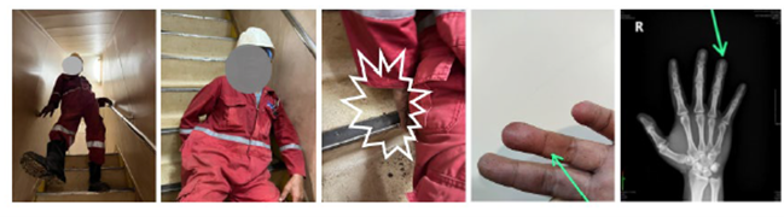
A worker slipped while descending the staircase, and broke his finger as a result
What happened?
As he fell he reflexively used his right hand to support his body, and it was pinned under his weight, causing a fracture at the tip of his right ring finger.
What went well?
- Immediate first aid was provided on board (ice compression to reduce swelling).
- The worker was quickly taken to hospital for an X-ray and diagnosis, and further medical treatment, including surgery, was arranged the same day.
How could this outcome have been better?
- Had the worker held onto the hand rail properly in descending, whilst he might still have slipped, his fall could have been more easily arrested – and he wouldn’t now have a broken finger.
What do we learn?
- There’s a right way and a wrong way to go down a narrow staircase – particularly on a vessel which may be moving in a seaway.
- Keep three points of contact – don’t go down stairs without using the hand-rail.
- Familiarity breeds contempt, as they say: don’t underestimate the importance of safety observance in everyday matters like going down stairs, opening and closing heavy doors etc.
Members may wish to refer to:
Related Safety Flashes
-
IMCA SF 16/23
1 July 2023
-
IMCA SF 19/20
23 June 2020
-
-
IMCA SF 21/21
30 July 2021
IMCA Safety Flashes summarise key safety matters and incidents, allowing lessons to be more easily learnt for the benefit of the entire offshore industry.
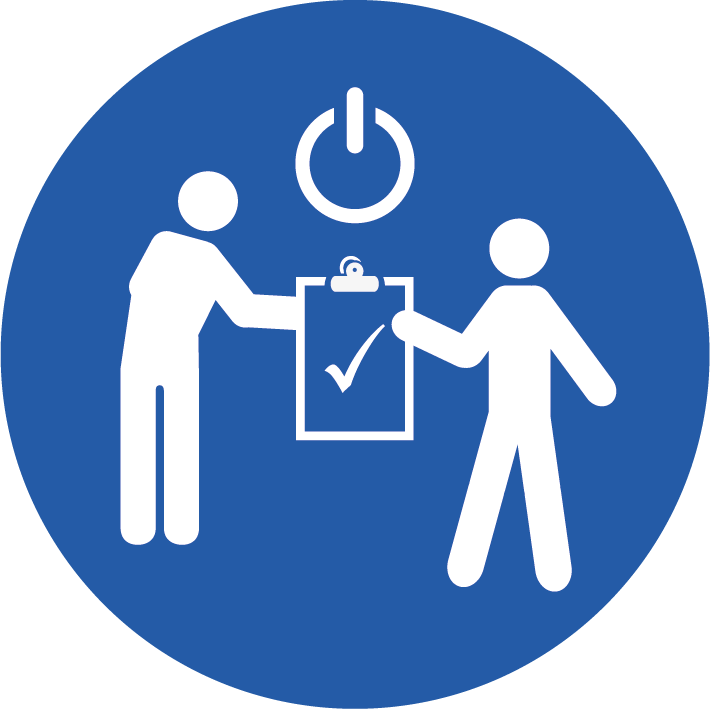
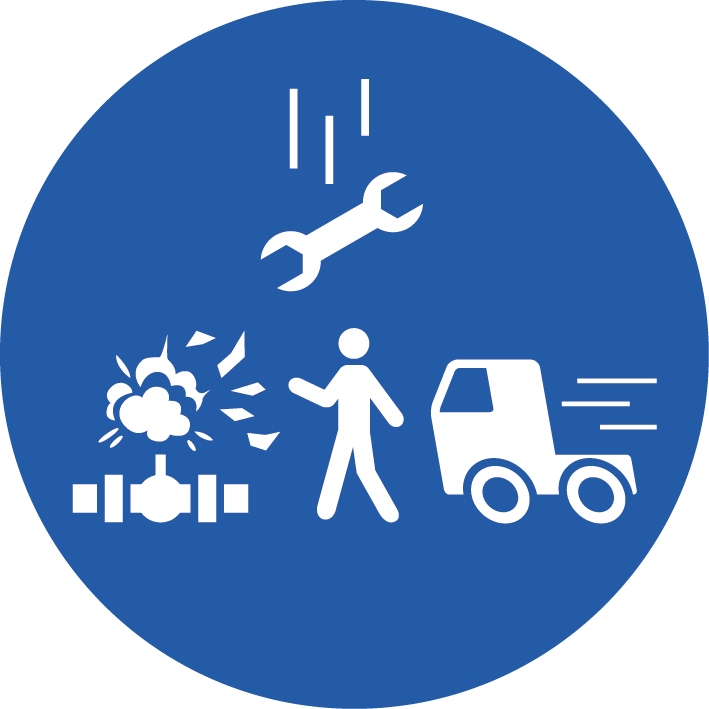
The effectiveness of the IMCA Safety Flash system depends on the industry sharing information and so avoiding repeat incidents. Incidents are classified according to IOGP's Life Saving Rules.
All information is anonymised or sanitised, as appropriate, and warnings for graphic content included where possible.
IMCA makes every effort to ensure both the accuracy and reliability of the information shared, but is not be liable for any guidance and/or recommendation and/or statement herein contained.
The information contained in this document does not fulfil or replace any individual's or Member's legal, regulatory or other duties or obligations in respect of their operations. Individuals and Members remain solely responsible for the safe, lawful and proper conduct of their operations.
Share your safety incidents with IMCA online. Sign-up to receive Safety Flashes straight to your email.