NTSB: Crane wire failure
- Safety Flash
- Published on 27 November 2024
- Generated on 27 October 2026
- IMCA SF 23/24
- 3 minute read
The National Transportation Safety Board of the United States (NTSB) published "Safer Seas Digest 2023", which includes a number of incidents which may be of interest to IMCA members. This is one of them.
What happened?
A crane wire on a cargo vessel parted whilst the vessel was offloading a wind turbine nacelle. The nacelle, weighing 69 tonnes, dropped back into the vessel’s cargo hold. There was no pollution nor injury, but damage to the vessel and to the dropped load were estimated at US$3–5 million.
Photo 1
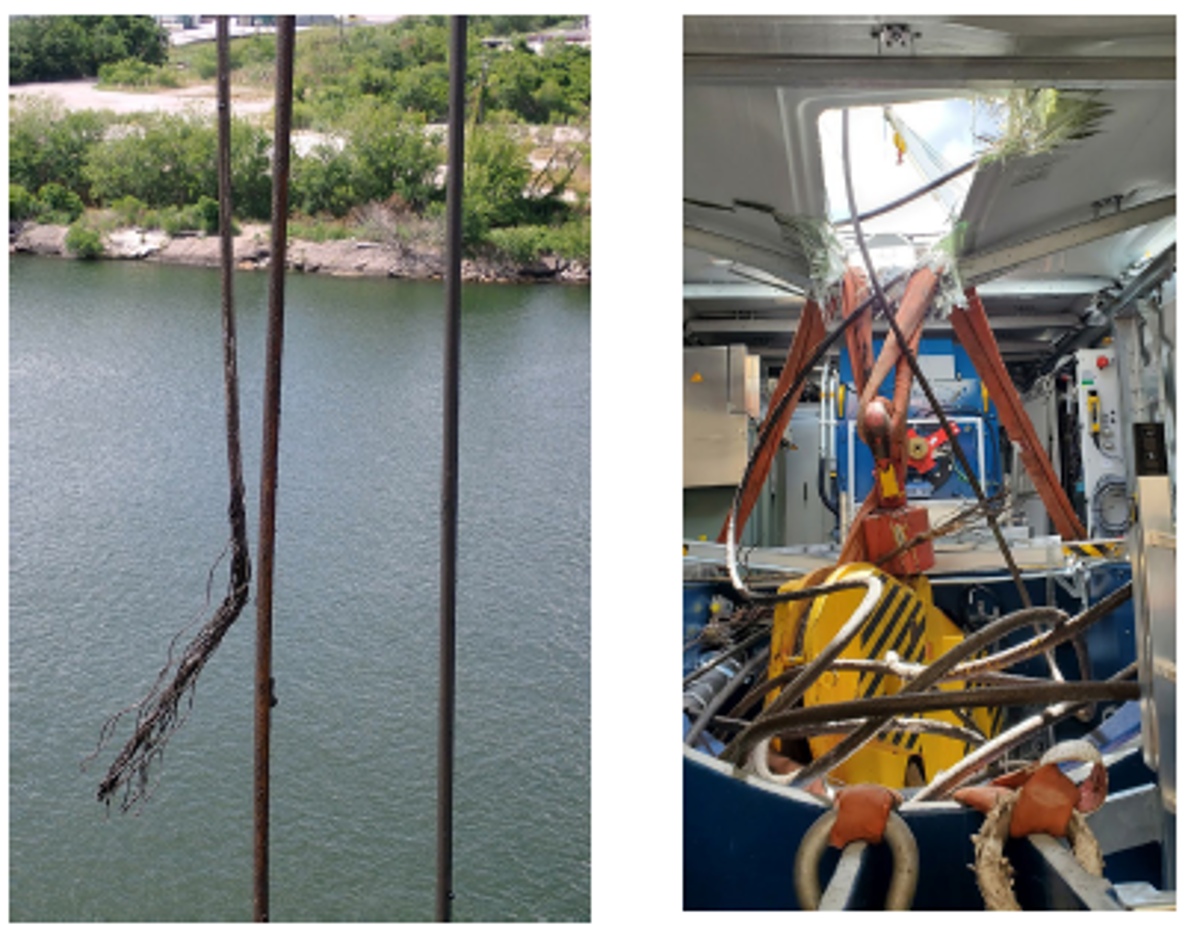
Parted wire rope on the crane side, along with the crane block that smashed into the top of the damaged nacelle
Photo 2
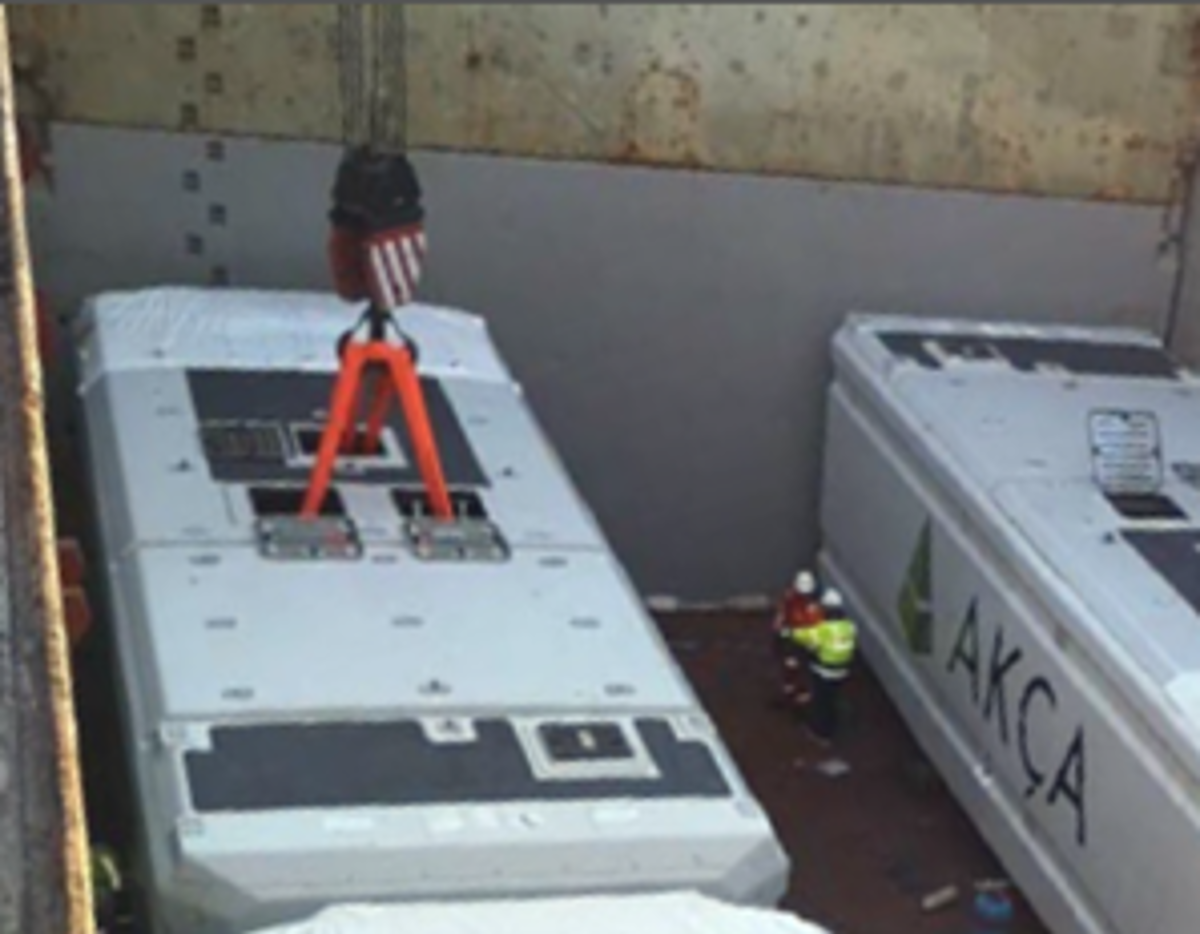
Similar nacelle in another vessel’s cargo hold rigged in accordance with manufacturer-recommended guidance
Facts about the incident
- The load was 86% of the crane’s Maximum Rated Capacity (MRC) of 80 tonnes at less than 19m from the crane base (as certified by third-party contractors in 2019);
- The crane had completed two identical lifts without incident before this lift;
- Post-incident inspection found no issues with any of the equipment and no evidence that the hoisting wire rope or the crane were shock-loaded— either through sudden crane movement or failure of nacelle rigging—in such a way as to create a dynamic load on the wire rope during the lift;
What was the probable cause
The probable cause of the failure of the hoisting wire was undetected corrosion and wear in strand wires.
- Examination of the hoisting crane wire found significant external corrosion, as well as roughness and pitting, and “uniform corrosion of internal surfaces” of the hoisting wire rope. This corrosion and wear caused some of the individual wires comprising the strands of the hoisting wire rope to part when the crane lifted the nacelle unit, subsequently causing the strand and then the remaining wire strands to become overloaded and fail.
- Analysis of the wire rope noted that that visible signs of external corrosion could not be fully appreciated until the grease was removed.
- The vessel’s cranes and wire ropes had been examined annually by third-party contractors but these surveys primarily involved visual inspections limited to obvious indications of wear (such as broken wires, visible corrosion, or observable degradation to outer strands and surfaces) and therefore would not have identified the corrosion.
- The vessel’s cranes and wire ropes had been examined annually by third-party contractors but these surveys primarily involved visual inspections limited to obvious indications of wear (such as broken wires, visible corrosion, or observable degradation to outer strands and surfaces) and therefore would not have identified the corrosion.
- The wire rope had been regularly maintained in accordance with the operating company’s planned maintenance system, and the required daily and monthly checks had been performed according to maintenance records; however, the vessel’s PMS did not require the removal of grease from the wire rope (as recommended by the manufacturer). Without removing the grease to examine the wire rope, the corrosion on the wire rope could not be detected.
Lessons (NTSB)
- Saltwater and humid ocean air cause corrosion of metals, presenting challenges for the maintenance of high-strength steel wire ropes on vessels. A deteriorated wire rope directly affects a crane’s ability to safely and reliably handle loads up to the crane’s rated capacity (safe working load). Therefore, diligent inspection, maintenance, and management of wire ropes are essential. Working wires should be changed at recommended intervals, or more frequently, depending on operating conditions and use.
IMCA Safety Flashes summarise key safety matters and incidents, allowing lessons to be more easily learnt for the benefit of the entire offshore industry.
The effectiveness of the IMCA Safety Flash system depends on the industry sharing information and so avoiding repeat incidents. Incidents are classified according to IOGP's Life Saving Rules.
All information is anonymised or sanitised, as appropriate, and warnings for graphic content included where possible.
IMCA makes every effort to ensure both the accuracy and reliability of the information shared, but is not be liable for any guidance and/or recommendation and/or statement herein contained.
The information contained in this document does not fulfil or replace any individual's or Member's legal, regulatory or other duties or obligations in respect of their operations. Individuals and Members remain solely responsible for the safe, lawful and proper conduct of their operations.
Share your safety incidents with IMCA online. Sign-up to receive Safety Flashes straight to your email.